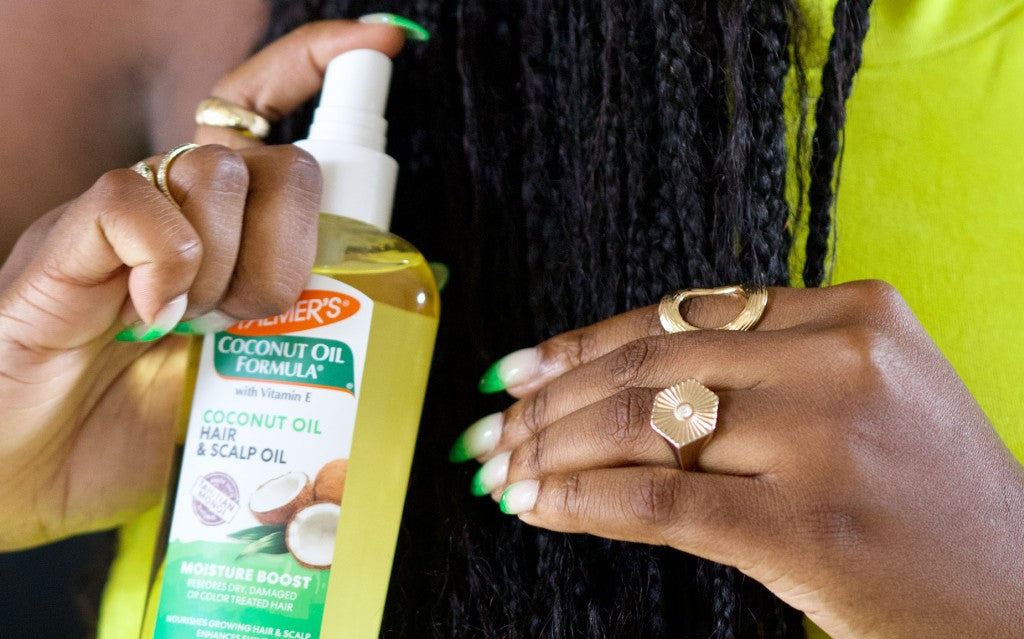
Protective styles tuck away hair ends to reduce breakage and retain length, but only work when installed without excessive tension and maintained with regular scalp care.
What Are Protective Styles for Natural Hair — and Do They Actually Prevent Breakage?
A protective style is any hairstyle engineered to shield the hair from damage, over-manipulation, heat, and environmental stressors by keeping the ends of the strands tucked away and minimizing daily friction. Hair grows roughly 1 centimeter per month on average, and protective styles don't accelerate that rate — but they can dramatically improve how much of that growth you actually keep by reducing the breakage that erases it.
For people with tightly coiled or coily hair, this matters more than for most. The scalp's natural sebum has a harder time traveling down tightly curved strands to coat and fortify them, making curly and coily hair types inherently more fragile and prone to damage. Protective styles address this vulnerability by reducing the number of times those strands are handled, stretched, combed, or exposed to the elements each week.
Before diving into the individual styles, here's a quick comparison of the most popular options across the dimensions that matter most to buyers:
| Style | Typical Wear Time | Tension Risk | DIY-Friendly? | Extensions Needed? | Best For |
|---|---|---|---|---|---|
| Box Braids | 4–8 weeks | Medium (knot method) / Low (knotless) | Moderate | Optional | Length retention, versatility |
| Knotless Braids | 4–8 weeks | Low | Moderate | Yes | Scalp sensitivity, fine hair |
| Cornrows | 1–4 weeks | Medium–High | Yes (basic) | Optional | Base for wigs/weaves, short styles |
| Two-Strand Twists | 1–4 weeks | Very Low | Yes | No | Beginners, moisture retention |
| Senegalese Twists | 4–6 weeks | Medium | No (recommended) | Yes | Long-term wear, smooth finish |
| Faux Locs | 4–8 weeks | Medium–High | No (recommended) | Yes | Loc look without commitment |
| Wigs / Sew-ins | 2–6 weeks | Low (if cornrows underneath aren't tight) | Moderate | Yes | Maximum hair protection |
| Bantu Knots | 1–2 weeks | Low–Medium | Yes | Optional | Heatless curl definition |
| Low Bun / Updo | Days–1 week | Low | Yes | No | Quick, everyday protection |
What exactly is a protective style, and how does it work?
A protective style minimizes mechanical stress on the hair shaft by reducing manipulation, limiting friction, and shielding the ends from environmental damage. New York-based cosmetologist and curly hair expert Cataanda James describes these styles as designed to protect the hair from damage, over-manipulation, heat, environmental stressors, and anything that can cause damage to the hair shaft.
The mechanism is straightforward: the ends of your hair are the oldest section of each strand. They've been through the most washing cycles, the most heat, the most friction from clothing and pillowcases. Tucking them inside a braid, twist, or under a wig dramatically reduces the cumulative damage they absorb each day. Research from 2024 confirms that repeated friction and styling stress can damage the hair shaft, and research from 2025 links frequent heat styling to structural changes in the hair shaft — both of which protective styles directly address.
One distinction worth making: protective styles are not the same as natural hairstyles. Natural hairstyles celebrate the hair's natural curl pattern without chemical straightening. Protective styles describe the function of the style — they can be worn on natural or relaxed hair, and the goal is always to reduce damage, not to show texture.
What are the most popular types of protective styles?
Braids
Braids are the poster child of protective styling, and for good reason. Braids are typically formed with three or more sections of hair woven over and around one another, and they can last well over a month with proper maintenance. Their longevity is a key advantage: fewer reinstallation sessions means less manipulation overall.
The range within braided styles is enormous. Cornrows sit close to the scalp, often in straight lines, and serve as an excellent base for wigs and weaves. Box braids can be worn at any length and customized with color and texture. Knotless braids — where extension hair is gradually fed into the plait rather than tied in at the base — create a lighter, more flexible feel and reduce tension on the scalp, making them especially popular for people with fine or sensitive scalps.
Goddess and boho braids fall under the knotless umbrella and incorporate curly, free-flowing extension hair for a more textured look. Fulani-inspired styles cornrow the front and cascade into loose plaits at the back. Many braided styles can also be restyled into buns, ponytails, or updos, giving multiple looks from one installation — a practical advantage for anyone who gets bored easily.
One critical caveat: it's better to get a good cut or trim before braiding so your hair can withstand any tension, and the foundation must not be too tight. Overt tightness can cause traction alopecia — the exact opposite of what you want from a protective style.
Twists
Twists are created by wrapping two sections of hair around each other, and they tend to place less tension on the scalp than three-strand braids. With or without added hair, twists offer a natural-looking, versatile style, and classic two-strand twists have the added bonus of producing a twist-out when unraveled — effectively two styles for the effort of one installation.
Popular extension-free options include flat twists (which sit close to the scalp like cornrows but with less tension) and mini twists, which use very small sections of hair and can last weeks with proper care. When extensions are added, Senegalese, passion, and Marley twists are the go-to choices. Senegalese twists use Kanekalon or Toyokalon braiding hair to create a smooth, rope-like finish. Passion twists combine twists with curly extensions for a more textured look. Marley twists mimic the natural hair's texture for a smooth blend.
An important nuance: Senegalese, Marley, and passion twists are almost always worn with extension hair, which can add increased tension to the scalp depending on the amount and length used. That means they carry a higher traction alopecia risk than simpler two-strand twists on natural hair alone — something to discuss with your stylist before installation.
Locs
Locs are a long-term protective option, created as sections of hair intentionally intertwine and form together over time. Unlike most protective styles, they are not removed and reinstalled on a regular cycle. Starting a loc journey typically involves a comb coil appointment with a loctician, who sections the hair based on density and preferred parting, then uses a tapered comb to coil each section before setting it under a hooded dryer for 30–45 minutes.
Locs reduce the need for frequent detangling and daily styling, which is protective in its own right — though they are not "protective" in the same temporary, removable sense as box braids or wigs. For those not ready to commit, faux locs and soft locs offer a temporary version of the look. However, faux locs are often heavy and create added tension at the root, making them less reliably protective than they appear. Sisterlocks — a trademarked system of very small, precisely parted locs — are generally protective when maintained properly, but over-tightening during re-tightening sessions is a real risk.
Bantu Knots
Named after the Bantu people of Sub-Saharan Africa, Bantu knots are buns created by tightly (but not too tightly) winding hair upon itself. After parting the hair into sections, each section is twisted or braided, then wrapped into a bun. They can be small, medium, or large, and can be done on natural hair or with extensions.
Like two-strand twists, Bantu knots offer a two-in-one benefit: they're a great way to create heatless waves or preserve curls overnight. When unraveled, the knots leave behind defined, bouncy texture. Their relatively short wear time — typically one to two weeks — makes them a good rotation option between longer-term styles.
Wigs and Weaves
Wigs and weaves represent the most complete form of hair protection because they can fully conceal and shield the natural hair. A weave is a protective style that interlocks, attaches, connects, or weaves extension hair — usually human hair — to natural hair in some form. The most popular method for coily hair is the sew-in, where the natural hair is cornrowed flat and extension hair is sewn directly into the braids. Since the natural hair is completely tucked away and secured, it's the least exposed to environmental damage.
Wigs — including lace wigs, headband wigs, and half wigs — can also be protective, but with an important condition: full wigs that cover the entire head block oxygen and nutrients to the follicle, which eventually impacts hair growth. Wigs "count" as protective styles only when worn responsibly and not left on for excessive periods.
The protective value of both wigs and weaves depends entirely on what's happening underneath. The braids underneath should not be tight, leave-out sections should be minimal, the hair underneath should be well moisturized, and the extensions or wig should not be too heavy. A poorly installed sew-in with tight cornrows underneath is not a protective style — it's a recipe for traction alopecia.
Updos and Buns
Often overlooked in favor of more elaborate styles, simple updos and buns are legitimate protective styles. Even a tucked bun can be protective, and low buns, French rolls, chignons, and halo braids all qualify when they keep the ends secured and minimize daily manipulation. These work best as short-term styles or as part of a rotation between longer-term protective installations.
Do protective styles actually prevent breakage — what does the science say?
The short answer is yes, when done correctly. The longer answer requires understanding what "breakage" actually means in this context.
Hair breakage is the fracturing of the hair shaft at any point along its length, as opposed to shedding, which is the natural release of the hair at the root after the growth cycle completes. Breakage is caused primarily by mechanical stress (combing, brushing, friction), chemical damage (relaxers, color), heat damage, and environmental exposure (UV, wind, humidity). Research from 2024 confirms that repeated friction and styling stress can damage the hair shaft, and research from 2025 links frequent heat styling to structural changes in the hair shaft.
Protective styles address the mechanical and environmental causes directly. By reducing the number of times you comb, brush, or otherwise handle your hair each week, you cut down on the friction events that chip away at the cuticle layer. Tucking the ends away prevents them from rubbing against clothing, pillowcases, and other surfaces. Reducing heat styling preserves the protein structure of the shaft.
Curly and coily hair often loses moisture more easily because its tightly coiled shape makes it harder for natural oils to move down the hair shaft. Protective styles help here too — sealed ends lose moisture more slowly than loose, exposed ends, and some styles (particularly twists and braids without extensions) actively help lock in whatever moisture you apply before installation.
The result, when everything is done right, is length retention. Hair grows about 1 centimeter per month on average, and protective styles don't make hair grow faster, but they may help you keep more of the length you grow by reducing breakage. For someone whose hair seems to "stay the same length" no matter what, this is often the missing piece — the hair is growing, but breaking off at roughly the same rate it grows.
Who should be cautious about protective styles?
Protective styles are not universally safe for everyone, and the risks are real enough to warrant honest discussion.
Traction alopecia is the most serious risk. It is hair loss caused by repeated or prolonged tension on the hair follicle, and it can be permanent if the follicle is damaged over time. Overt tightness can cause traction alopecia, headaches, and scalp soreness — and many people grew up believing that pain during braid installation was normal. It is not. Pain during or after installation signals that the tension is too high.
People with already-thinning edges, existing scalp inflammation, or a history of traction alopecia should be especially cautious about styles that pull at the hairline, including tight cornrows, heavy faux locs, and high-tension sew-ins. A style can be truly protective only if it minimizes manipulation, reduces mechanical stress, avoids tension at the follicle, allows scalp access, and doesn't add excessive weight to the head and scalp.
Folliculitis — inflammation of the hair follicles — is another risk, particularly with styles that use a lot of extension hair or that are kept in for too long without scalp cleansing. Synthetic hair can draw moisture away from the natural hair and scalp, creating conditions where bacteria or fungi can proliferate.
People with very fine or fragile natural hair may find that the weight of heavy extensions (long faux locs, thick Senegalese twists) causes more damage than the style prevents. In these cases, extension-free styles like two-strand twists, flat twists, or simple buns are better choices.
How long should you keep a protective style in?
Wear time varies by style, but longer is not always better. Styles with extensions like knotless box braids can typically last up to two months, while feed-in cornrows are best removed after about a week. Keeping any style in longer than recommended risks dehydrating the hair, causing matting, and creating conditions for scalp buildup or infection.
A practical framework:
- Cornrows (no extensions): 1–2 weeks
- Box braids / knotless braids: 4–8 weeks
- Two-strand twists (natural hair): 1–3 weeks
- Senegalese / passion / Marley twists: 4–6 weeks
- Faux locs: 4–8 weeks (monitor tension)
- Sew-in weaves: 4–6 weeks
- Wigs: Rotate regularly; avoid continuous wear beyond a few days at a time without removing to care for the scalp
- Bantu knots: 1–2 weeks
How do you maintain natural hair while wearing a protective style?
Installation is only half the equation. What you do during the weeks your hair is in a protective style determines whether the style actually delivers its promised benefits.
Scalp care is non-negotiable. Apply oils directly to your scalp and edges and give yourself a scalp massage at least twice a week. Synthetic extension hair tends to draw moisture away from your natural hair, so regular oiling compensates for that loss. Products like scalp oils and lightweight sprays work well here — if you're looking for a deeper scalp care routine, our guide to best amino acid scalp shampoos for daily use covers formulas that can be used even while braids are in.
Washing matters, but technique is everything. Focus washing on the scalp area without scratching too vigorously — use the pads of your fingertips to gently cleanse the scalp, then rinse without disturbing the braids. Diluting your shampoo before application helps it distribute more evenly without requiring aggressive scrubbing.
Sleep protection is essential. If you're not sleeping with a bonnet on at night, don't expect your hairstyle to last for two months. Silk and satin bonnets, scarves, or pillowcases reduce friction while you sleep, which extends the life of the style and prevents frizz and lint buildup. Unlike cotton, silk and satin don't absorb moisture from the hair.
Moisturizing the hair underneath matters just as much. Deep condition and trim your hair often so that while it's under a wig or weave, it can grow and maintain length. For those wearing wigs, removing the wig regularly to moisturize the cornrowed hair underneath is critical. A good leave-in conditioner applied before installation and refreshed periodically helps the hair retain hydration throughout the wear period. If you're also managing color-treated strands underneath, our guide to best conditioners for color-treated hair covers formulas that work well in this context.
What should you do before and after a protective style?
Before installation, wash and deep condition your hair. It's better to get a good cut or trim before braiding so your hair can withstand having any tension. Starting with clean, well-moisturized hair gives you the best foundation and reduces the risk of buildup developing under the style. If you regularly use heat tools before protective styling, consider a quality heat protectant during any blowout or stretching step before braiding.
After removal, take your time. Rushing the removal of braids, twists, or locs is one of the most common causes of breakage — ironically undoing the work the protective style was supposed to accomplish. Work in sections, detangle gently from ends to roots, and follow with a clarifying wash to remove any buildup from the scalp. A deep conditioning treatment immediately after removal helps restore moisture to hair that may have been sealed away for weeks.
Between styles, give your hair a rest period of at least one to two weeks before the next installation. This allows the scalp to breathe, lets you assess the health of your edges and ends, and opens a window for intensive conditioning treatments. Alternating between styles that use extensions and simpler styles like natural twists or plaits puts different strains on the hair and is generally healthier long-term.
Are there protective styles that work for shorter natural hair?
Yes, though the options narrow somewhat. Longer extension braids are especially helpful for short hair that doesn't have the length to twist into braids on its own. A braided bob gives the protection of braids without requiring long extensions. Cornrows, flat twists, and Bantu knots all work on shorter lengths without extensions. Crochet styles are also a strong option for shorter hair because the crochet method attaches extension hair to a cornrow base without requiring the natural hair to be long enough to braid into the extensions directly.
For very short hair — say, a TWA (teeny weeny afro) — the most practical protective approaches are low-manipulation styling (avoiding daily combing and brushing), satin bonnets at night, and wigs worn over a flat cornrow base. The wig provides the protective function even when the natural hair isn't long enough to braid into a style of its own.
The bottom line on protective styles and breakage prevention
Protective styles genuinely work — but only when the installation is tension-appropriate, the scalp is consistently cared for during wear, and the style is removed within a reasonable timeframe. The evidence linking reduced manipulation to reduced breakage is solid, and the logic is intuitive: hair you don't touch can't break from touching.
The styles that carry the lowest risk and highest protective benefit are those with minimal tension at the root, no excessive weight from extensions, and easy scalp access for moisturizing. Two-strand twists, knotless braids, flat twists, and simple buns consistently meet all three criteria. Higher-risk styles like heavy faux locs, tight cornrows at the hairline, and long Senegalese twists can still be protective — but they require more careful installation and more attentive maintenance to deliver on that promise.
The cultural significance of these styles runs deep, with roots in African braiding traditions that span centuries. Wearing them thoughtfully — understanding both their benefits and their risks — is how you honor that history while actually protecting the hair they're meant to serve.
Sources
- Your Complete Guide to Protective Styles for Natural Hair | Allure
- Keep Hair Healthy Year Round With a Protective Style | ELLE
- 41 Protective Hairstyles You'll Want to Try | Glamour
- Protective Hairstyles: Types, Benefits, and Finding a Stylist | Healthline
- Celebrity hairstylist tips on keeping natural hair healthy while wearing protective styles | ABC News
- 25 Protective Styles That Actually Help Hair Grow | Hairobics All Natural
- Protective Hairstyles For Natural Hair | L'Oréal Paris