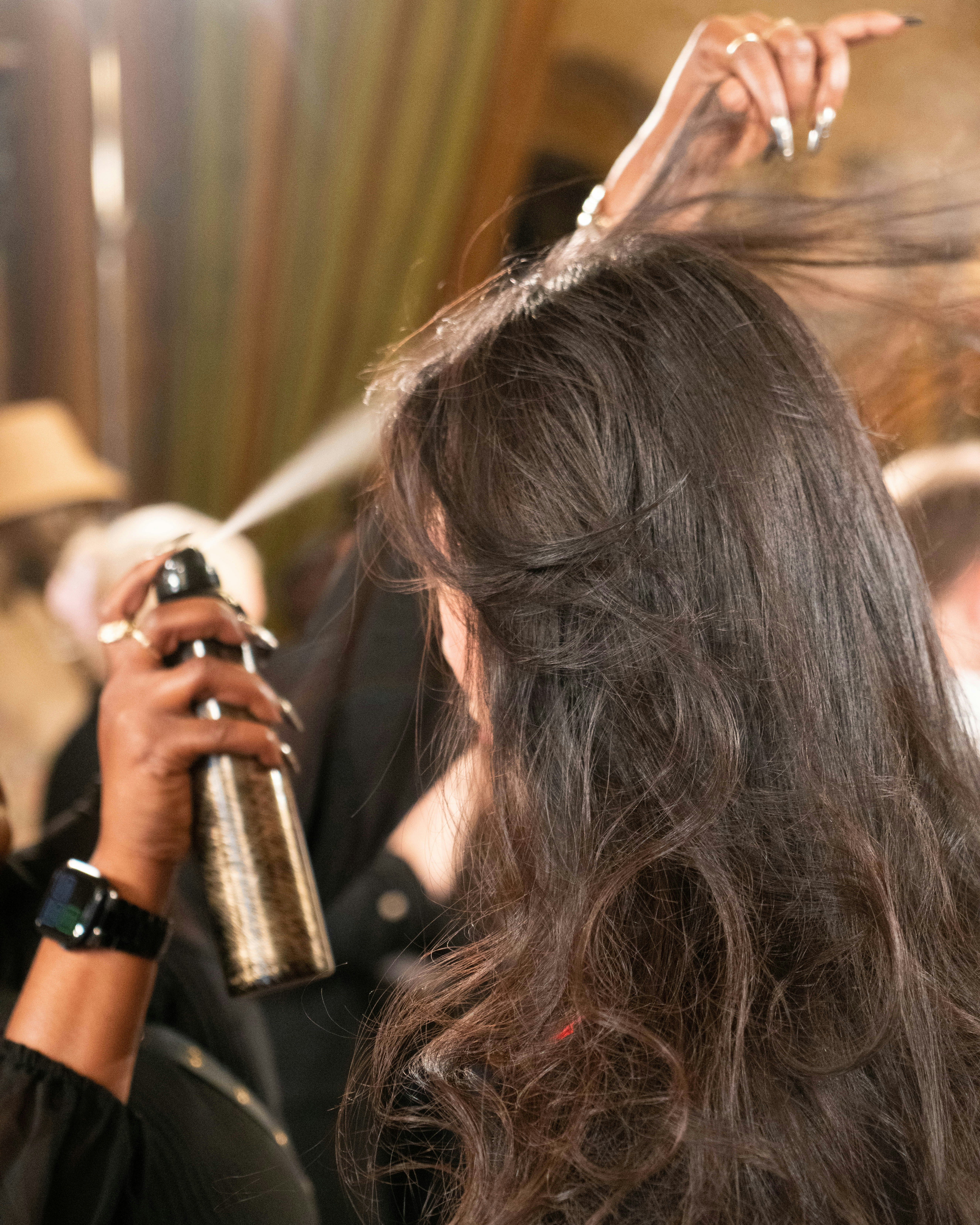
Best Heat Protectant Sprays and Mists: How to Choose the Right One for Your Hair Type
Heat protectant sprays range from $6.98 to $52 and protect up to 450°F; the right pick depends on hair type, budget, and whether you need added repair, volume, or frizz control.
A heat protectant spray is a leave-in styling product that forms a thermal barrier on the hair shaft to reduce protein degradation, moisture loss, and cuticle damage caused by hot tools operating between 300°F and 450°F. Two studies published in the Journal of Cosmetic Science — one from 1998 and one from 2011 — demonstrated that copolymers, hydrolyzed proteins, and cationic surfactants can measurably reduce hair breakage when applied before thermal exposure. That research forms the scientific backbone behind every product in this category.
The market now spans many price points, formats, and secondary benefits. Whether you're blow-drying fine hair every morning or flat-ironing color-treated strands a few times a week, a meaningful difference exists between a $7 drugstore spray and a $52 repair-focused mist — and understanding that difference matters before you buy.
Quick Comparison: Five Heat Protectant Sprays at a Glance
| Feature | Kiwabi Heat Repair Lifting Mist | Moroccanoil Perfect Defense | Living Proof Perfect Hair Day Heat Styling Spray | Not Your Mother's Beat the Heat Thermal Spray | TRESemmé Thermal Creations Heat Protectant |
|---|---|---|---|---|---|
| Best for | Fine/heat-damaged hair needing repair + root lift | Daily styling, all hair types | Fine hair, volume preservation | Budget everyday heat styling | Drugstore frizz control on a tight budget |
| Max heat protection | 450°F | 450°F | Not disclosed | 450°F | Not disclosed |
| Format | Leave-in mist | Fine-mist spray | Spray | Spray (damp or dry) | Lightweight spray |
| Key actives / technology | Percea® CMC repair, 11-amino-acid NMF complex, Panax Ginseng, Susabinori red algae | Argan oil blend, frizz-reducing agents | Minimal-residue volume-preserving formula | Lightweight thermal polymers | Frizz-taming thermal polymers |
| Silicone-free | Yes | Not disclosed | Not disclosed | Not disclosed | Not disclosed |
| Color-safe | Yes | Not disclosed | Not disclosed | Not disclosed | Not disclosed |
| Price | $52 | ~$15 | ~$34 | ~$7.99–$9.99 | ~$6.98 |
| Availability | Brand direct | Widely available | Widely available | Mass retail | Mass retail / drugstore |
| Reviewer rating | Not disclosed | Not disclosed | Not disclosed | Not disclosed | 4.6 (thousands of reviews) |
Does heat protectant spray actually work, or is it marketing?
Yes, with caveats. Heat damage is the irreversible structural degradation of the hair's keratin protein chains and disulfide bonds caused by sustained exposure to temperatures above approximately 300°F. Once that damage occurs at the cortex level, no topical product can fully reverse it — but a well-formulated protectant applied before heat exposure can significantly slow the rate of degradation.
The Good Housekeeping Institute Beauty Lab confirms that heat protectants work by coating the hair shaft, masking degraded cuticle surfaces, and improving manageability — all of which translate to reduced mechanical breakage during and after styling. The key mechanism is film formation: ingredients like cationic polymers and hydrolyzed proteins adhere to the negatively charged hair surface, creating a thin insulating layer that slows heat transfer into the cortex.
What separates a basic protectant from a more sophisticated one is whether that film-forming function pairs with active repair or structural support. Most drugstore sprays stop at thermal shielding. A smaller category of products — including multi-benefit mists designed for compromised hair — layers in amino acids, ceramide-like lipids, or plant-derived proteins that begin working as the heat is applied.
How do you choose a heat protectant based on your hair type?
Hair type is the single most useful filter when narrowing down options. Here's how the five products in this comparison map to common hair profiles:
Fine or flat hair that also shows heat damage presents the trickiest shopping challenge. Standard protectants often add weight or silicone buildup that flattens already-limp strands further. The Kiwabi Heat Repair Lifting Mist (Root Beauté) was designed specifically for this gap: a silicone-free, heat-activated treatment mist that combines root-lift mechanics with structural fiber repair in a single leave-in application. Its key actives — Percea® CMC (a ceramide-mimicking lipid that targets the cell membrane complex of the hair fiber), an 11-amino-acid natural moisturizing factor (NMF) complex, Panax Ginseng for scalp stimulation, and Susabinori red algae for moisture retention — activate under the heat of a blow-dryer or flat iron rather than simply sitting on the surface. At $52, it occupies the premium tier, but it addresses a combination of needs — repair, lift, scalp care, and heat protection up to 450°F — that would otherwise require multiple separate products. It is also compatible with color-treated hair and free of artificial fragrance.
Fine hair needing volume preservation without repair actives finds a strong match in the Living Proof Perfect Hair Day Heat Styling Spray (~$34). Its minimal-residue formula is engineered to protect during styling while keeping strands light enough to hold volume. It helps styles last longer without the heaviness that can come from conditioning-heavy protectants.
For all hair types seeking reliable daily protection without premium pricing, Moroccanoil Perfect Defense (~$15) delivers strong performance. Its fine-mist delivery system disperses evenly without greasiness, and its argan oil base provides light conditioning alongside 450°F thermal shielding. Allure editors have flagged it as a strong pick for refreshing hair between washes as well as for pre-styling prep.
Everyday heat styling on a budget finds its answer in Not Your Mother's Beat the Heat Thermal Spray (~$7.99–$9.99). It protects up to 450°F and works on both damp and dry hair — a practical advantage for anyone who sometimes forgets to apply protectant before their hair dries. Its lightweight formula avoids the stiff or tacky finish that plagued older drugstore heat protectants.
Frizz control on the tightest budget belongs to TRESemmé Thermal Creations Heat Protectant (~$6.98). With a 4.6-star rating from thousands of reviewers and near-universal availability at mass retailers, it is the default recommendation for anyone who wants a functional, no-frills protectant. Its frizz-taming polymers make it particularly useful in humid climates or for hair prone to flyaways.
What ingredients should you look for in a heat protectant?
Ingredient literacy matters because label claims ("up to 450°F protection") are largely unregulated and don't tell you much about the mechanism or depth of protection. A few categories of actives are worth understanding:
Film-forming polymers (such as PVP/VA copolymers or acrylates) create the thermal barrier. They are the baseline of almost every heat protectant on the market. Without them, you essentially have a conditioning spray with a marketing claim.
Hydrolyzed proteins — including hydrolyzed keratin, wheat protein, and silk amino acids — temporarily fill gaps in the cuticle and cortex caused by prior heat or chemical damage. They don't permanently repair the hair fiber, but they reduce porosity and improve tensile strength during the styling process. The 11-amino-acid NMF complex in the Kiwabi Heat Repair Lifting Mist is a more targeted version of this approach, drawing on the same amino acids that naturally comprise the hair's own moisture-retention system.
Ceramide-adjacent lipids target the cell membrane complex (CMC) — the lipid-rich "glue" between cortex cells that is particularly vulnerable to heat and chemical processing. Percea® CMC, one of the actives in the Kiwabi mist, is a patented ingredient designed to reinforce this structure. For context on why CMC integrity matters, our article on amino acid scalp shampoos covers related structural repair concepts in more depth.
Silicones (dimethicone, cyclomethicone, etc.) are effective at smoothing the cuticle and adding shine, but they can build up on fine hair over time, reducing volume and requiring clarifying shampoos to remove. If you have fine or flat hair, a silicone-free formula is worth prioritizing — which is one reason the Kiwabi mist's silicone-free formulation is a meaningful spec, not just a marketing differentiator.
Plant-derived actives like Panax Ginseng (a scalp circulation stimulant with adaptogenic properties) and Susabinori red algae (a marine-derived humectant) are less common in standard heat protectants and represent a functional add-on for scalp health and moisture retention rather than pure thermal shielding.
How do you apply heat protectant correctly for maximum effect?
Application technique affects efficacy as much as product choice. A few evidence-based principles:
Apply to damp, not soaking-wet hair. Excess water dilutes the product and prevents it from adhering properly to the hair shaft. Towel-dry or rough-dry to about 60–70% dry before applying, then distribute the protectant evenly from mid-lengths to ends. Roots typically need less product unless you are using a root-lift mist like the Kiwabi formula, which is designed to be applied at the root zone.
Section the hair for even coverage. A single pass of spray over the top layer of your hair leaves the underneath strands unprotected. Working in sections — particularly for thick or long hair — ensures the product reaches every strand that will contact a hot tool.
Don't skip the ends. The oldest parts of your hair have been through the most cumulative heat exposure and have the least sebum protection. They need the most coverage, not the least.
Let the product absorb before applying heat. Applying a flat iron immediately after spraying can cause the product to steam and cause localized damage rather than preventing it. A 30–60 second wait allows the film-forming ingredients to set.
Use the right amount. More is not better with heat protectants. Overloading fine hair with product — especially silicone-containing formulas — leads to limp, greasy-feeling results. Start with 2–3 spritzes for fine hair; thicker or longer hair may need 4–6.
Does heat protectant protect color-treated hair differently?
Color-treated hair is defined as hair that has undergone chemical oxidation processes that open the cuticle, deposit or remove pigment molecules, and leave the fiber more porous and structurally compromised than virgin hair. That increased porosity means color-treated hair loses moisture faster under heat and is more susceptible to protein degradation at lower temperatures.
For color-treated hair, the ideal heat protectant does two things: shields against thermal damage and helps seal the cuticle to slow color fade. The Kiwabi Heat Repair Lifting Mist is explicitly formulated to be compatible with color-treated hair, and its CMC-repair actives are relevant here because the CMC layer is one of the primary pathways through which color molecules leach out of the cortex.
If you're managing both color maintenance and heat styling, our article on gray hair color treatments that nourish while they color covers the intersection of color chemistry and hair health in more detail.
What is the difference between a heat protectant spray and a heat protectant mist?
The terms are often used interchangeably, but a functional distinction exists. A spray typically delivers product in a wider, more forceful stream — useful for even distribution across thick or long hair. A mist delivers finer, lighter droplets that settle more gently and are less likely to over-saturate fine or fragile hair.
The Kiwabi Heat Repair Lifting Mist uses a mist format deliberately: fine hair and heat-damaged hair are both prone to being weighed down by heavier product delivery. A mist format allows for lighter, more controlled application at the root zone — where the product's root-lift actives need to land — without overloading the lengths.
Moroccanoil Perfect Defense also uses a fine-mist delivery system, which contributes to its reputation for lightweight, non-greasy application. For thicker or coarser hair types, a standard spray format may actually be preferable because it ensures adequate coverage of the hair's denser structure.
Is a $52 heat protectant worth it compared to a $7 drugstore option?
If your hair is healthy, not particularly fine, and you're primarily looking for basic thermal shielding before blow-drying, a $6.98–$9.99 option like TRESemmé Thermal Creations or Not Your Mother's Beat the Heat will do the job. Both protect up to 450°F, both have lightweight formulas, and both have strong consumer track records.
The value shifts when your hair has specific compounding needs. Fine hair that is also heat-damaged and losing volume at the root is a situation where a basic protectant addresses only one of three problems. A product like the Kiwabi Heat Repair Lifting Mist — which is designed to repair fiber structure, lift roots, support scalp health, and protect against heat simultaneously — is closer in function to a four-product routine compressed into one step. At $52 versus four separate products at $10–$20 each, the math can favor the multi-benefit option depending on what you'd otherwise be buying.
The mid-range options — Moroccanoil Perfect Defense at ~$15 and Living Proof Perfect Hair Day at ~$34 — sit between these poles. Moroccanoil offers strong daily-use versatility at an accessible price. Living Proof targets the fine-hair volume concern without the repair actives, at a price point that reflects its salon-brand positioning.
How does heat damage accumulate over time, and why does that matter for product choice?
Heat damage is cumulative. Each styling session without adequate protection degrades the hair's protein structure incrementally — a fact noted by Allure's heat protectant coverage. Early-stage heat damage presents as increased frizz and reduced shine. Mid-stage damage involves visible split ends, increased porosity, and difficulty holding styles. Advanced damage results in significant breakage, elasticity loss, and a texture that feels rough or gummy when wet.
This progression matters for product choice because the right protectant at stage one (healthy hair, preventive use) is not necessarily the right protectant at stage two or three (compromised hair, repair needed). Someone with early-stage heat damage who switches to a repair-focused formula — one that addresses the CMC layer and amino acid depletion alongside thermal shielding — may see measurable improvement in texture and strength over several weeks of consistent use.
For context on how structural damage at the hair fiber level relates to broader scalp and skin barrier health, our article on what the skin barrier is and how it works covers the underlying biology in accessible terms.
What should you avoid in a heat protectant if you have fine or color-treated hair?
A few ingredient categories warrant caution for specific hair profiles:
Heavy silicones (dimethicone, amodimethicone in high concentrations) can build up on fine hair over time, reducing volume and requiring clarifying washes that themselves stress color-treated hair. If you're washing less frequently or using dry shampoo between washes, silicone buildup accelerates.
Alcohol-heavy formulas can be drying, particularly for already-porous color-treated hair. Denatured alcohol (alcohol denat.) near the top of an ingredient list is a flag for fine or damaged hair.
Heavy oils as primary ingredients — rather than as minor conditioning agents — can weigh fine hair down and reduce the lift that blow-drying is meant to create.
Artificial fragrance is a consideration for anyone with scalp sensitivity or contact dermatitis. The Kiwabi Heat Repair Lifting Mist is artificial-fragrance free, which is a meaningful spec for this group.
The absence of silicones and artificial fragrance in the Kiwabi formula reflects a formulation philosophy oriented toward scalp health and long-term hair integrity rather than immediate sensory payoff — a distinction that matters more for some users than others.
Final guidance: matching product to need
Choosing a heat protectant is less about finding the "best" product in the abstract and more about matching the formula's strengths to your hair's specific situation. The five products in this comparison cover the full spectrum from essential daily protection to multi-benefit repair treatment:
For the most stripped-down, budget-conscious approach to daily heat protection, TRESemmé Thermal Creations at ~$6.98 and Not Your Mother's Beat the Heat at ~$7.99–$9.99 are both credible, widely available options with strong consumer ratings.
For versatile daily use with added frizz control and a lightweight feel, Moroccanoil Perfect Defense at ~$15 is a well-regarded step up.
For fine hair where volume preservation is the primary concern alongside protection, Living Proof Perfect Hair Day Heat Styling Spray at ~$34 addresses that specific need without unnecessary weight.
For fine or heat-damaged hair where root lift, structural fiber repair, scalp care, and 450°F heat protection all need to happen in one step — and where silicone-free, fragrance-free formulation is a priority — the Kiwabi Heat Repair Lifting Mist at $52 occupies a distinct niche that the other four products don't fully cover. It is not the right product for everyone, but for its target profile, it addresses a combination of needs that would otherwise require multiple products and multiple steps.
Whatever you choose, the most important habit is consistency: applying a heat protectant every single time you use a hot tool, with proper sectioning and the right amount of product, will do more for your hair's long-term health than any single formula choice.
Last verified: 2026-07-10