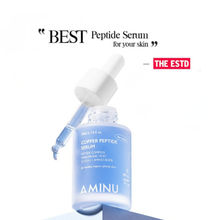
Peptide serums deliver short amino acid chains that signal fibroblasts to rebuild collagen and elastin, reducing wrinkle depth and improving elasticity within 4–12 weeks of daily use.
What Are Peptide Serums and How Do They Actually Work for Wrinkles and Elasticity?
A peptide serum is a leave-on, high-concentration skincare formula built around short chains of amino acids — typically 2 to 50 residues — that penetrate the skin barrier and communicate directly with dermal fibroblasts to stimulate collagen, elastin, and hyaluronic acid production. Unlike a moisturizer that hydrates the stratum corneum, a peptide serum targets the underlying biology of skin aging, making it one of the most evidence-backed tools in an anti-aging routine.
Before diving into the mechanisms, here is a side-by-side look at the four most widely used peptide types in commercial serums, their molecular weights, primary functions, and the strength of evidence behind them:
| Peptide | Molecular Weight | Primary Function | Key Claim | Evidence Level |
|---|---|---|---|---|
| GHK-Cu (Copper Tripeptide-1) | 403.9 Da | Collagen synthesis, wound repair, antioxidant | Activates 32+ genes involved in tissue remodeling; ~70% collagen increase | In vitro, ex vivo, limited human trials |
| Matrixyl 3000 (Palmitoyl-GHK + Palmitoyl-GQPR) | 578.7 Da | Matrikine mimicry, fibroblast repair cascade | 117% collagen synthesis increase; 45% wrinkle depth reduction | In vitro, randomized vehicle-controlled studies |
| Argireline (Acetyl Hexapeptide-3/8) | 888.9 Da | Neuromuscular modulation, expression line softening | ~30% wrinkle reduction; visible onset in 2–4 weeks | In vitro, double-blind placebo-controlled studies |
| Syn-Ake (Dipeptide Diaminobutyroyl Benzylamide Diacetate) | ~700 Da | Biomimetic venom peptide, muscle relaxation | Up to 70% wrinkle reduction when combined with Argireline | In vitro, limited clinical data |
Sources: Pep Serum Science, Pen Peptides USA
What Exactly Are Peptides, and Why Do They Matter for Skin?
Peptides are short chains of amino acids linked by peptide bonds. In skincare, specific sequences are engineered to penetrate the stratum corneum and interact with living skin cells. Vogue India describes them simply as "the building blocks of proteins" — and the most relevant proteins in skin are collagen, elastin, and keratin, which govern texture, firmness, and tone.
What makes peptides particularly interesting is their size. Pep Serum's science page explains that peptides under 500 Daltons can pass through the skin barrier via intercellular lipid channels — which is why GHK-Cu at 403.9 Da penetrates readily, while larger molecules like Argireline at 888.9 Da often require palmitoyl anchors or encapsulation to reach the dermis. This molecular weight threshold is not arbitrary; it is the practical gatekeeper between an ingredient that sits on the surface and one that actually reaches the fibroblasts where collagen is manufactured.
As HydroPeptide's chemist Ian Vitek explains, "Peptides don't provide immediate results; instead, they gradually condition the skin into a new epigenetic state that maximizes production of key structural proteins." That framing — epigenetic conditioning rather than surface-level hydration — is what separates a well-formulated peptide serum from a standard moisturizer.
How Do Peptides Actually Signal Skin Cells to Make More Collagen?
The mechanism is more precise than most marketing language suggests. When a bioactive peptide penetrates the epidermis and reaches the dermis, it binds to receptors on fibroblasts — the cells responsible for producing collagen, elastin, and hyaluronic acid. This binding triggers downstream signaling cascades, most notably the MAPK/ERK pathway and TGF-β signaling, which upregulate the genes COL1A1 and COL3A1 responsible for procollagen synthesis, according to research published in PubMed Central.
The collagen cascade itself is a multi-phase process:
- Signaling (minutes): Peptides bind to fibroblast receptors and upregulate procollagen genes.
- Synthesis (hours): Ribosomes translate procollagen alpha chains; proline and lysine residues are hydroxylated by vitamin C-dependent enzymes.
- Assembly (days to weeks): Three procollagen chains form a triple helix, then mature collagen is cross-linked by lysyl oxidase — a copper-dependent process, which is partly why copper peptides like GHK-Cu are so effective.
Pep Serum's science documentation notes that Matrixyl 3000 specifically mimics the fragments produced when collagen naturally breaks down — called matrikines — which "tricks fibroblasts into launching a full repair cascade, producing collagen IV, fibronectin, and hyaluronic acid." This matrikine-mimicry mechanism is distinct from GHK-Cu's gene activation approach, which is why combining the two tends to be synergistic rather than redundant.
A peer-reviewed study in PMC examining the decapeptide SA1-III (KP1) confirms the broader principle: "A substantial reduction in the amount and quality of collagen leads to age-related deterioration of the elasticity and firmness of the skin," and targeted peptide intervention can modulate collagen turnover at the molecular level.
What Are the Different Types of Peptides in Serums, and Which Does What?
Not all peptides work the same way. HydroPeptide's skincare science blog categorizes them into four functional classes.
Signal peptides trigger collagen and elastin production by activating fibroblast receptors. Matrixyl 3000 and GHK-Cu are the most studied examples. A randomized, placebo-controlled study involving 60 volunteers found that topical application of a cream containing 3% palmitoyl pentapeptide-4 produced a statistically significant reduction in facial wrinkle depth after 12 weeks, as Pen Peptides USA's analysis details.
Neurotransmitter peptides — also called neuropeptides — work differently. They modulate the neuromuscular junction to soften expression lines. Argireline is a fragment of SNAP-25, a protein critical to the SNARE complex that controls neurotransmitter release. By competing with native SNAP-25, it reduces acetylcholine release at the neuromuscular junction, softening expression lines without paralysis — a mechanism Pep Serum describes as delivering approximately 30% wrinkle reduction with visible onset in 2–4 weeks. SkinCeuticals P-Tiox, named by Allure as the best peptide serum for expression lines at $150, uses this class of peptide.
Carrier peptides deliver trace elements — most notably copper — to the sites where collagen cross-linking occurs. GHK-Cu is the prime example: at just 403.9 Da, it penetrates readily and activates over 32 genes involved in tissue remodeling, making it unusually versatile across anti-aging, repair, and anti-inflammatory applications.
Enzyme-inhibitor peptides slow the activity of matrix metalloproteinases (MMPs), the proteolytic enzymes that break down collagen in the extracellular matrix. As the PMC study on skin aging explains, MMP activity is one of the primary molecular mechanisms driving the physical signs of aging, so inhibiting these enzymes preserves the collagen that signal peptides are simultaneously building.
How Do Peptide Serums Differ from Peptide Creams and Moisturizers?
The delivery format matters more than most people realize. HydroPeptide UK explains that "serums give peptides the ideal conditions to work. They're lightweight, highly concentrated and penetrate deep within the skin where collagen and elastin are made." A cream or moisturizer typically contains occlusives and emollients that can interfere with peptide penetration, dilute the active concentration, or create a pH environment that degrades certain peptide sequences.
The practical implication: apply your peptide serum to clean, dry skin before your moisturizer. This creates a clear delivery pathway to the dermis. HydroPeptide chemist Ian Vitek recommends allowing 1–2 minutes for absorption before applying heavier creams.
Concentration also matters. Vogue India's breakdown notes that peptides "can be vulnerable to degradation from light and air — for example if they are stored in jars where the product is directly exposed each time it is opened." This is why the best peptide serums come in opaque bottles with pumps or droppers rather than open jars — packaging is a legitimate quality signal, not just aesthetics.
Which Peptide Serums Are Actually Worth Buying?
Allure's 2026 roundup tested dozens of formulas and identified four standout options across different price points and use cases.
Medik8 Liquid Peptides Advanced MP Face Serum ($94–$95) is Allure's best overall pick. It contains 13 peptides — including Matrixyl 3000 and copper peptides — plus a proprietary Dual MiniProteins technology that pairs peptides with micro-molecule proteins for deeper penetration. NYC dermatologist Dendy Engelman, MD, notes that its Growth Factor MiniProtein "relaxes expression lines in just 10 minutes and visibly reduces deep wrinkles within eight weeks," delivering what she calls "filler-mimicking" results. Allure's senior commerce director Shanna Shipin, who tested it personally, described an "immediate skin-plumping effect" alongside longer-term wrinkle smoothing, with a lightweight gel texture that doesn't pill under makeup.
SkinCeuticals P-Tiox ($150) targets expression lines specifically, using a neuromuscular peptide approach comparable to topical Botox alternatives. It earned Allure's Best of Beauty seal and is best suited for people whose primary concern is dynamic wrinkles — the kind formed by repeated facial movements.
Estée Lauder Advanced Night Repair ($85) is Allure's best nighttime pick, using the skin's natural repair cycle during sleep to maximize peptide efficacy.
L'Oréal Paris Revitalift Triple Power 3% Peptides Serum ($22) is the best drugstore option — a rare case where accessible pricing doesn't mean a compromised formula. At 3% peptide concentration, it delivers meaningful collagen-signaling activity without the luxury price tag.
How Long Does It Take for Peptide Serums to Show Results?
Realistic expectations matter here. Pep Serum's clinical data puts the results window at 4–12 weeks, which aligns with the biology: collagen synthesis, assembly, and cross-linking takes days to weeks per cycle, and visible structural changes in the dermis require multiple cycles. Argireline's neuromuscular effect is faster — visible onset in 2–4 weeks — because it's modulating muscle activity rather than rebuilding tissue.
Allure's testing of the Medik8 serum found that the Growth Factor MiniProtein relaxes expression lines in 10 minutes (a surface-level plumping effect from hyaluronic acid and peptide hydration) while deeper wrinkle reduction takes eight weeks of consistent use. These are two different mechanisms operating on different timescales, and conflating them leads to disappointment.
HydroPeptide's Dr. Lauren Jamieson frames it plainly: "Peptides do not provide immediate results; instead, they gradually condition the skin into a new epigenetic state that maximises the production of key structural proteins." The word "epigenetic" is significant — peptides are changing gene expression patterns, not temporarily filling in wrinkles.
Can Peptides Be Combined with Other Active Ingredients?
Peptide combinations require some care. Pep Serum's synergy matrix provides clear guidance.
Synergistic combinations include GHK-Cu paired with Matrixyl 3000, where different mechanisms — gene activation plus matrikine signaling — compound collagen output without overlap. Argireline and Syn-Ake both target neuromuscular signaling but at different receptors, achieving up to 70% wrinkle reduction together.
Some combinations require more caution. GHK-Cu with vitamin C (L-ascorbic acid) is one: low pH can degrade GHK-Cu, so apply them 4 hours apart, or use vitamin C derivatives like ascorbyl glucoside that operate at a higher pH. GHK-Cu with retinol is another — copper can oxidize retinoids, so alternate evenings rather than layering simultaneously. Argireline with AHA is compatible, but apply the AHA first, wait 30 minutes for pH normalization, then apply the peptide serum.
This matters practically because many people layer multiple actives. A well-designed peptide serum like the Medik8 Liquid Peptides is formulated to be applied before oil-based serums (vitamin C, retinal) and moisturizers — the brand explicitly sequences it this way to avoid degradation interactions.
For those interested in the broader world of amino acid-based skincare, our guide to best amino acid scalp shampoos for daily use explores how similar signaling chemistry applies to hair and scalp health, and our best plumping and collagen-boosting serums guide covers complementary formulas that work alongside peptides.
Who Should Use Peptide Serums — and Who Might Not Need Them?
Peptides are among the most universally tolerated active ingredients in skincare. HydroPeptide UK's Dr. Hiba Injibar notes they "work on almost everyone and every skin tone and under most circumstances — think sensitive skin types, post-procedure and even during pregnancy." That last point is significant: retinol, the other major collagen-stimulating ingredient, is contraindicated during pregnancy. Peptides are not.
The people most likely to see meaningful results are those in their late 20s and beyond, when natural collagen production begins its documented decline. Allure's senior commerce director Shanna Shipin specifically noted that the Medik8 serum is "especially [valuable] if you're pregnant and can't use retinol, or are simply too sensitive for the likes of vitamin A."
Those with very young skin — early 20s, no visible signs of aging — may not see dramatic results because their fibroblasts are already operating at high capacity. Peptides work best as a support system for declining biology, not as an amplifier of already-solid collagen production.
One practical caveat from Vogue India's analysis: "Some [peptides] may cause irritation for certain skin types — so do your research before investing, as products including them can be expensive." This is less common than with retinol or acids, but neuropeptides like Argireline can occasionally cause mild sensitivity in reactive skin types.
What Should You Look for on a Peptide Serum Ingredient Label?
Vogue India's guide offers a practical label-reading tip: "Look for words that end in 'peptide' — many also begin with 'palmitoyl'." The palmitoyl prefix indicates a fatty acid has been attached to the peptide to improve lipid solubility and skin penetration — a delivery enhancement that significantly improves efficacy for larger peptides that would otherwise struggle to cross the stratum corneum.
Key ingredient names to recognize:
- Palmitoyl pentapeptide-4 = Matrixyl (signal peptide)
- Palmitoyl-GHK + Palmitoyl-GQPR = Matrixyl 3000 (matrikine pair)
- Copper tripeptide-1 = GHK-Cu (carrier + gene activation peptide)
- Acetyl hexapeptide-3 or -8 = Argireline (neuropeptide)
- Dipeptide diaminobutyroyl benzylamide diacetate = Syn-Ake (biomimetic venom peptide)
The number of peptides in a formula is less important than whether the specific peptides present are well-studied and delivered at effective concentrations. The Medik8 Liquid Peptides serum's 13-peptide formula is impressive, but only because those 13 types include well-validated sequences like Matrixyl 3000 and copper peptides — not simply because the number is high.
Generation also matters in the peptide market. Pep Serum's historical timeline traces five generations from GHK's 1973 discovery through today's Gen 5 conjugated and encapsulated peptides, which offer 3–5x penetration efficiency over earlier formulations. When a brand references "liposome-encapsulated" or "palmitoyl-anchored" peptides, they're describing Gen 5 delivery technology — a meaningful upgrade over simply dissolving a peptide in water and hoping it penetrates.
The Bottom Line on Peptide Serums
Peptide serums represent one of the most scientifically grounded approaches to addressing wrinkles and loss of elasticity. The mechanism is real — peptides under 500 Daltons penetrate the skin barrier, reach dermal fibroblasts, and trigger measurable increases in collagen and elastin synthesis. The clinical data, while not uniformly from large-scale human trials, is consistent across multiple peptide classes and study types.
The honest caveats: results take 4–12 weeks, the evidence base is stronger for some peptides (Matrixyl, GHK-Cu) than others, and no topical serum replicates the structural changes achievable with injectables. But for consistent, tolerable, pregnancy-safe anti-aging support that works across virtually all skin types, a well-formulated peptide serum — whether the $22 L'Oréal Revitalift or the $94 Medik8 — is among the most defensible investments in a skincare routine.
Sources
- 7 Best Peptide Serums 2026 for Plumper, Bouncier Skin | Allure
- The Science Behind Peptide Skincare | Pep Serum
- What Are Peptide Serums? – HydroPeptide UK
- How Do Peptides Help with Skin Aging? The Science Explained – HydroPeptide
- The Clinical Evidence-Based Paradigm of Topical Anti-Aging Skincare Formulations Enriched with Bio-Active Peptide SA1-III (KP1) – PMC
- Peptides In Skincare: Benefits For Wrinkles And Elasticity | Pen Peptides USA
- Skincare Alphabet: P Is For Peptides | Vogue India
- Medik8 Liquid Peptides Advanced MP Face Serum – Official Product Page