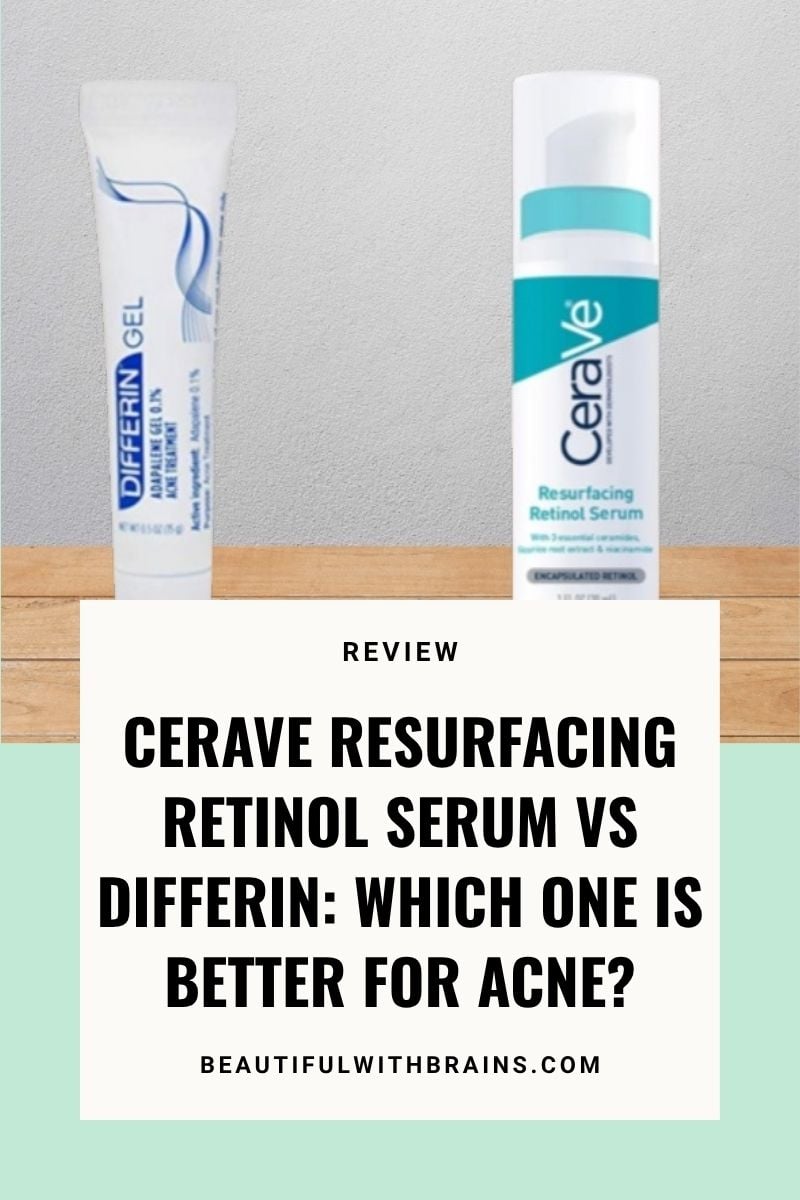
Adapalene (Differin) beats retinol for acne treatment; retinol wins for gentle texture improvement and anti-aging with fewer side effects.
Retinol vs. Adapalene (Differin): Which Retinoid Actually Works Better for Acne?
Adapalene (sold OTC as Differin Gel) is definitively the stronger acne-fighting retinoid — research shows 0.1% adapalene outperforms tretinoin at treating acne, and tretinoin is itself far more potent than retinol. Retinol, particularly in encapsulated form as used in products like CeraVe Resurfacing Retinol Serum, is the gentler option that excels at smoothing texture, fading post-acne marks, and supporting anti-aging goals. Both belong to the retinoid family, but they are not interchangeable — and choosing the wrong one for your skin concern means slower results and unnecessary frustration.
Here is a direct comparison of the two most popular OTC retinoid products:
| Feature | CeraVe Resurfacing Retinol Serum | Differin Gel (Adapalene 0.1%) |
|---|---|---|
| Active ingredient | Encapsulated retinol | Adapalene 0.1% |
| Retinoid strength | Moderate (gentler) | Strong (prescription-grade, now OTC) |
| Primary use case | Texture, tone, mild acne, anti-aging | Moderate-to-severe acne treatment |
| Acne efficacy | Moderate | High (beats tretinoin in studies) |
| Anti-aging efficacy | Good | Moderate |
| Key supporting ingredients | Ceramides, niacinamide, hyaluronic acid | Minimal (preservatives, pH adjusters, gelling agents) |
| Texture | Lightweight milky serum | Smooth matte gel |
| Irritation potential | Low-moderate | Moderate-high |
| Purge phase | Mild, possible | Likely, weeks 2–4 |
| Time to visible acne results | 8–12 weeks | 4–6 weeks (full results at 12 weeks) |
| Pregnancy safe? | No | No |
What exactly is a retinoid, and why does the type matter?
A retinoid is any compound derived from or chemically related to vitamin A that acts on retinoid receptors in skin cells. The family includes retinol, retinaldehyde, adapalene, tretinoin, and isotretinoin, arranged roughly from gentlest to most potent.
All retinoids work in two main ways: they stimulate collagen production to reduce fine lines and wrinkles, and they speed up the skin's natural exfoliating process. Faster exfoliation prevents dead skin cells from clogging pores — the root cause of most non-cystic acne — and accelerates the shedding of pigmented, damaged surface cells, which is why retinoids also help fade post-acne hyperpigmentation.
The critical difference between retinol and adapalene is not just potency — it is mechanism. Retinol must be converted by the skin into retinoic acid (the biologically active form) before it can do anything. This conversion is inefficient, which is why retinol works more slowly and causes less irritation. Adapalene, by contrast, binds directly to specific receptors in skin cells to regulate cell turnover and reduce inflammation without that conversion step. This is why adapalene acts faster and hits harder — and why it was, for decades, only available by prescription.
Acne is a chronic inflammatory skin condition involving the hair follicle and sebaceous gland. Because adapalene directly targets the inflammatory pathway, it is uniquely well-suited to treating it.
How does retinol actually work for acne?
Retinol works for acne through the same general mechanism as all retinoids: it boosts collagen to firm skin and speeds up skin cell turnover to help fade dark spots and prevent pore congestion. By accelerating the shedding of dead skin cells, it reduces the likelihood that those cells will clump together inside a follicle and form a comedone (blackhead or whitehead), which is the precursor to most inflammatory acne.
Encapsulated retinol — the form used in CeraVe Resurfacing Retinol Serum — is wrapped in a time-release delivery system that releases the active ingredient gradually. This slows absorption into the skin, reducing the irritation that typically accompanies retinoid use. The trade-off is that results come more slowly.
For mild, occasional breakouts, encapsulated retinol is genuinely useful. For someone dealing with persistent papules, pustules, or comedonal acne that doesn't respond to basic cleansing, retinol alone is unlikely to be sufficient. Its anti-inflammatory action is indirect and weaker than adapalene's, and that gap matters when acne is the primary concern.
Where retinol genuinely shines is in addressing both acne prevention and anti-aging at once. If your skin is dealing with occasional breakouts alongside early signs of aging — fine lines, uneven texture, dullness — a well-formulated retinol product handles both without the harsh adjustment period of adapalene.
How does adapalene (Differin) work, and why is it so effective for acne?
Adapalene is a third-generation synthetic retinoid with a more targeted mechanism than retinol. Rather than converting to retinoic acid and broadly activating retinoid receptors, it selectively binds to specific nuclear receptors (RAR-β and RAR-γ) that are most relevant to regulating follicular cell turnover and suppressing the inflammatory cascade that drives acne.
The clinical evidence is striking. Studies found that 0.1% Differin is more effective than tretinoin at treating acne — and tretinoin is a prescription retinoid already far more potent than any OTC retinol product. This makes adapalene the most effective retinoid available without a prescription for acne specifically.
Adapalene also has a comparatively favourable tolerability profile relative to tretinoin, even though it is stronger than retinol. It is less prone to causing the intense peeling and photosensitivity associated with tretinoin, which is one reason the FDA approved it for OTC sale in the United States in 2016.
For moderate-to-severe acne — the kind that involves regular breakouts, cystic spots, or acne that has not responded to salicylic acid or benzoyl peroxide — adapalene is the retinoid to reach for. It is not a quick fix, but it is the most evidence-backed OTC option available.
What supporting ingredients are in each product, and do they matter?
Supporting ingredients matter more than most people realise. Retinoids — even gentler ones — can compromise the skin barrier over time if used without adequate barrier support.
CeraVe Resurfacing Retinol Serum is built around three supporting actives that directly counteract retinoid-induced irritation.
Ceramides are oily wax molecules that form a critical part of the skin's protective barrier, holding moisture in and keeping irritants out. They strengthen this protective barrier so it is better able to withstand the accelerated cell turnover that retinol triggers. CeraVe includes ceramides in virtually every product it makes — the brand name is derived from them.
Niacinamide is a multi-functional B vitamin that moisturises skin and helps fade dark spots, and also has mild anti-inflammatory and sebum-regulating properties that complement retinol's acne-fighting action.
Hyaluronic acid draws water into the skin, providing hydration that offsets the drying effect of retinoid-accelerated cell turnover.
Together, these three ingredients make CeraVe Resurfacing Retinol Serum significantly more tolerable for dry, sensitive, or combination skin than a bare retinol formula would be.
Differin Gel, by contrast, is a stripped-back formula. It contains preservatives to extend shelf life, gelling agents to create its characteristic texture, and pH adjusters to keep it skin-safe — but nothing moisturising, barrier-repairing, or anti-inflammatory beyond the adapalene itself. This is not necessarily a flaw; it keeps the formula simple and stable, and dermatologists often prefer pairing actives with separate moisturisers rather than combining them in one product. But if you use Differin without a good moisturiser, your skin will feel the difference.
How do the textures compare, and which is easier to use daily?
Texture is not a trivial consideration. A product you find unpleasant to apply is a product you will skip, and consistency is everything with retinoids.
CeraVe Resurfacing Retinol Serum has a lightweight, milky texture that absorbs quickly, does not feel sticky, and layers cleanly under moisturiser without pilling. It fits naturally into a standard evening skincare routine without requiring any adjustment to what comes before or after it.
Differin Gel has a smooth, matte-finish gel texture that spreads easily and dries down without residue. The downside is that it can feel drying, particularly in the first few weeks of use. Some users are tempted to mix it with moisturiser to improve tolerability, but this dilutes the adapalene and reduces its effectiveness. The better approach is to apply Differin to clean, dry skin and follow with moisturiser as a separate step — or, for very sensitive skin, to apply moisturiser first and then apply Differin on top, which slows absorption slightly and reduces irritation without significantly compromising efficacy.
For dry or sensitive skin types, CeraVe's formula is the easier daily experience. For oily or acne-prone skin that can handle a little dryness during the adjustment period, Differin's matte finish is actually an advantage — it adds no occlusive weight or shine.
How should you introduce each product into your routine?
Both products require a slow introduction. Rushing the process is the most common reason people abandon retinoids before they see results.
CeraVe Resurfacing Retinol Serum protocol: Start with two nights per week, applying a pea-sized amount to clean skin. After two to four weeks, if your skin is tolerating it well, move to every other night. A full nightly routine is the eventual goal, but there is no timeline pressure. Always follow with moisturiser. Always wear SPF the next morning — retinol increases photosensitivity, and UV exposure will undo the progress the retinol is making. Avoid using strong exfoliating acids (glycolic, salicylic, lactic) on the same night.
Differin Adapalene Gel protocol: Start even more slowly — once every two to three nights for the first two weeks, then every other night. Apply a thin layer to clean, dry skin and wait 10 to 15 minutes before applying moisturiser. Do not use alongside other retinoids, and be cautious with benzoyl peroxide unless a dermatologist has specifically directed you to combine them. Sunscreen the next morning is non-negotiable.
Both products require patience. CeraVe typically shows noticeable improvement in texture and tone at 8 to 12 weeks. Differin can begin clearing acne in 4 to 6 weeks, but full results take 12 weeks. The purge phase — where existing microcomedones come to the surface faster, temporarily making breakouts look worse — is real with both products but tends to be more pronounced with Differin. It is a sign the product is working, not a reason to stop.
What results can you realistically expect from each product?
Managing expectations is essential with retinoids. The gap between what people hope for and what actually happens in the first few weeks can cause premature abandonment.
CeraVe Resurfacing Retinol Serum realistic outcomes: After 8 to 12 weeks of consistent use, expect smoother skin texture, a more even tone, and reduced visibility of post-acne marks (the flat, discoloured spots left behind after a breakout heals). Fine lines may appear slightly softer. Occasional breakouts should become less frequent. What this product will not do is clear stubborn, recurring acne on its own. It is better understood as a skin-maintenance and anti-aging tool that also provides mild acne prevention, rather than a dedicated acne treatment.
Differin Gel realistic outcomes: After 12 weeks of consistent use, expect a meaningful reduction in active breakouts, less redness and inflammation around existing spots, and a clearer overall complexion. The first four weeks may actually look worse before they look better, as the purge phase brings subsurface congestion to the surface. By weeks six to eight, most users see the turning point. Differin is not particularly focused on anti-aging outcomes — its collagen-stimulating effect is present but secondary to its acne-clearing mechanism.
One important note: neither product is a permanent cure for acne. Adapalene controls acne while you use it; stopping it typically means acne returns over time. For long-term management, most dermatologists recommend continuing a maintenance dose (two to three nights per week) even after skin has cleared.
What side effects should you expect, and how do you manage them?
Side effects are not a sign that something is wrong — with retinoids, a degree of initial irritation is expected and normal. The key is distinguishing between manageable adjustment and genuine skin damage.
CeraVe Resurfacing Retinol Serum side effects:
- Mild dryness or flakiness in the first few weeks, concentrated around drier areas like the nose and mouth
- Slight redness or sensitivity, particularly if you have naturally reactive skin
- Possible purging — existing congestion coming to the surface as a breakout, which resolves within two to four weeks
These side effects are generally mild because the encapsulated retinol releases slowly and the formula includes ceramides and niacinamide to buffer irritation. Most people with normal to combination skin tolerate it well from the start.
Differin Gel side effects:
- Dryness, peeling, and flakiness, most pronounced in weeks two through four
- Redness and irritation, particularly around the eyes, mouth, and jawline where skin is thinner
- Purging, which can be more significant than with retinol
- Increased sun sensitivity throughout use
Differin's side effects are more intense because adapalene is a stronger retinoid acting more directly on cell turnover. The "sandwich method" — applying moisturiser before Differin rather than after — can significantly reduce irritation during the adjustment period without meaningfully reducing efficacy.
If skin is burning, cracking, or developing raw patches, that is a signal to scale back frequency, not to push through. Retinoid dermatitis is a real condition and requires a break before reintroduction.
Critical warning: Neither retinol nor adapalene is safe during pregnancy or breastfeeding. Retinoids are teratogenic, and even topical use carries risk. Anyone who is pregnant, breastfeeding, or planning to conceive should avoid both products and consult a dermatologist for pregnancy-safe alternatives.
Which product should you choose based on your skin type and concern?
The decision comes down to your primary skin concern and your skin's tolerance for irritation.
Choose CeraVe Resurfacing Retinol Serum if:
- Your main concerns are texture, tone, and early signs of aging, with acne as a secondary issue
- You have dry, sensitive, or combination skin that reacts badly to strong actives
- You are new to retinoids and want to build tolerance gradually
- You want one product that addresses multiple concerns (hydration, barrier repair, mild exfoliation, acne prevention) simultaneously
- You have post-acne hyperpigmentation you want to fade alongside preventing new breakouts
Choose Differin Gel if:
- Acne is your primary and most frustrating skin concern
- You have tried salicylic acid, benzoyl peroxide, or retinol and found them insufficient
- You have oily or acne-prone skin that can handle a drying active
- You are willing to go through a purge phase and adjustment period in exchange for stronger, faster acne clearance
- You want the most evidence-backed OTC retinoid available for acne specifically
These two products are not mutually exclusive for all skin types. Some dermatologists recommend using adapalene on acne-prone areas and a gentler retinol product on the rest of the face, though this approach requires careful management to avoid over-exfoliation. If you are considering combining them, consult a dermatologist first.
How do these compare to other retinoid options on the market?
The retinoid space extends well beyond these two products. Tretinoin (prescription-only in most markets) is more potent than both and remains the gold standard for anti-aging. Retinaldehyde sits between retinol and tretinoin in the conversion chain and is increasingly popular in premium serums for its balance of efficacy and tolerability. Bakuchiol is a plant-derived alternative often marketed as a "natural retinol" — it has some evidence for texture improvement but is not a true retinoid and should not be compared directly.
For most people dealing with acne, the practical choice is between adapalene and tretinoin (if they can access a prescription). Adapalene's advantage over tretinoin is tolerability and OTC availability; tretinoin's advantage is broader anti-aging evidence and slightly faster results for some skin types.
For those interested in a broader skincare approach, the same principles of barrier support and gentle actives apply across categories. Just as the ceramide-and-niacinamide approach in CeraVe's retinol serum helps buffer retinoid irritation, similar logic applies when choosing scalp and hair care products — formula depth and supporting ingredients matter as much as the headline active.
Price and availability
Both products are widely available OTC in pharmacies and online retailers globally, including in India through major e-commerce platforms.
CeraVe Resurfacing Retinol Serum sits in the mid-range for a retinol serum — typically around ₹1,500–₹2,200 for a 30ml bottle depending on the retailer and import pricing. It is part of CeraVe's broader skincare line and is generally easier to find in premium pharmacy chains and online.
Differin Gel (adapalene 0.1%) is similarly priced in international markets, though availability in India varies. Generic adapalene 0.1% gel is available by prescription in India under various brand names at significantly lower price points — often under ₹300 for a 15g tube. Generic adapalene is chemically identical to Differin and equally effective.
The bottom line
If acne is your primary concern, adapalene (Differin) is the stronger, faster, and more evidence-backed choice. It directly targets the inflammatory and cell-turnover mechanisms that drive breakouts, and clinical data shows it outperforms even prescription-strength tretinoin for acne specifically. The trade-off is a real adjustment period with dryness, peeling, and potential purging.
If your skin is dealing with texture, tone, mild acne, and early aging simultaneously — and you want a gentler, more comfortable daily experience — CeraVe Resurfacing Retinol Serum delivers meaningful results without the harsh adjustment. Its ceramide-and-niacinamide base makes it particularly well-suited for dry or sensitive skin types who cannot tolerate stronger retinoids.
Neither product is a shortcut. Both require consistent use over at least 12 weeks before you can fairly evaluate whether they are working. The single biggest predictor of success with any retinoid is not which product you choose — it is whether you stick with it long enough to see results.
Sources
- CeraVe Resurfacing Retinol Serum VS Differin: Which One Is Better For Acne? — Beautiful With Brains
- Retinoids in the treatment of skin aging: an overview of clinical efficacy and safety — PMC
- Retinol and skin: clinical evidence for anti-aging and acne benefits — Journal of Cosmetic Dermatology (Wiley)
- Adapalene — ScienceDirect Topics
- Adapalene 0.1% vs tretinoin 0.025% in acne vulgaris — PubMed
- Ceramides and skin barrier function — PMC
- Niacinamide: skin moisturisation and hyperpigmentation — International Journal of Cosmetic Science (Wiley)
- Differin Gel (Adapalene 0.1%) — Official Differin Site
- CeraVe Resurfacing Retinol Serum — Official CeraVe Site