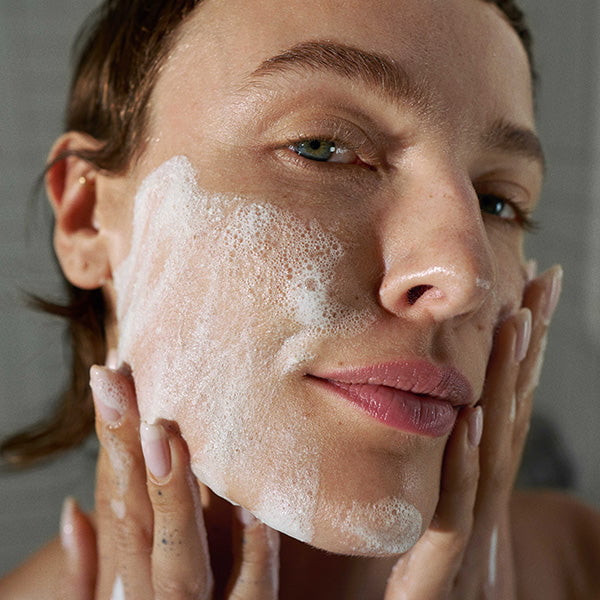
Chemical acids are generally safer and more versatile for most skin types; physical scrubs deliver instant smoothness but risk irritation if used too aggressively or with coarse particles.
Physical Exfoliants vs. Chemical Acids: Which Actually Works Better for Your Skin?
Physical exfoliation uses a mechanical agent — a granular scrub, a brush, a buffing pad, or a cloth — to physically dislodge and remove dead skin cells from the surface through friction. Chemical exfoliation applies topical acids or enzymes that dissolve the intercellular bonds holding dead skin cells together, allowing them to shed without any manual rubbing. Both methods remove dead skin. What separates them is how they do it, how deeply they work, and how much can go wrong when they're used incorrectly.
The debate has been running for years, but it sharpened considerably when Kylie Jenner's walnut shell face scrub launched in 2019 and dermatologists immediately flagged it as a potential cause of micro-tears and inflammation. Since then, chemical exfoliants have dominated skincare conversations — but physical exfoliation hasn't disappeared. Products like the Versed Day Maker Microcrystal Exfoliator are actively trying to rehabilitate the category with ultra-fine, biodegradable particles and moisturising bases. Whether they succeed — and whether any physical exfoliant can genuinely compete with what a well-formulated acid does over time — is worth examining directly.
Here's a comparison across the metrics that actually matter:
| Feature | Physical Exfoliants | Chemical Acids (AHAs/BHAs) |
|---|---|---|
| Mechanism | Friction removes surface dead cells | Dissolves bonds between dead cells |
| Speed of results | Instant smoothness after one use | Gradual improvement over days to weeks |
| Depth of action | Surface only | Surface to mid-dermis depending on acid and concentration |
| Acne benefit | Limited; can worsen active breakouts | High — BHAs penetrate pores and cut through oil |
| Hyperpigmentation | Minimal | Significant — lactic and glycolic acids both address dark spots |
| Collagen stimulation | None established | AHAs linked to improved collagen production |
| Risk of irritation | High if particles are coarse or pressure is excessive | Moderate — concentration-dependent |
| Suitable for sensitive skin | Only with very fine particles and light pressure | Yes, with gentle AHAs like lactic or mandelic acid |
| Suitable for active acne | No — friction inflames already-irritated skin | Yes — salicylic acid is a standard acne treatment |
| Frequency | 1–3 times per week maximum | Daily to a few times per week depending on product |
| Environmental impact | Risk with plastic microbeads (now banned in many countries); biodegradable options exist | No particulate waste concern |
| Price range (OTC) | $10–$30 for most scrubs | $10–$60+ depending on brand and concentration |
What exactly is physical exfoliation, and what does it actually do?
Physical exfoliation uses a physical agent to mechanically lift and remove dead skin cells from the stratum corneum — the outermost layer of the epidermis. The agents involved range from coarse (walnut shell powder, apricot kernel granules, sugar crystals) to fine (microcrystalline cellulose, rice powder, clay-based spherules) to tool-based (cleansing brushes, dermaplaning blades, washcloths).
The immediate result is real and satisfying: skin feels noticeably smoother and looks more radiant right after rinsing. Physical exfoliation delivers instant results, and you will immediately feel that your skin is smoother, making it a satisfying option for many. That instant gratification is a genuine advantage — chemical exfoliants require patience.
The problem is that friction is indiscriminate. It doesn't distinguish between dead cells ready to shed and healthy cells that should stay put. Physical exfoliants can be unnecessarily harsh and abrasive on the skin, leading to dryness and irritation, and coarse particles with irregular, sharp edges — like crushed walnut shells — can cause micro-tears in the epidermis. Those micro-tears create an entry point for bacteria and trigger inflammation, which is the opposite of what anyone exfoliating for acne wants to achieve.
Particle shape and size matter enormously. A 2024 study comparing different natural exfoliating particles found that microcrystalline cellulose exfoliated well and had a softer skin feel thanks to its rounded particle shape. Rounded particles create less surface trauma than angular ones — which is why clay-based spherules and microcrystalline cellulose are considered significantly safer than ground nut shells or coarse salt. Clay-based scrubs that contain clay-based spherules are ideal, because sugar and salt scrubs may have sharp-edged crystals which may cause micro-tears in the skin and accelerate skin aging.
Physical exfoliation also has a ceiling. It works on the surface. It cannot penetrate into pores to clear sebum plugs, it cannot accelerate cellular turnover at a deeper level, and it has no established mechanism for stimulating collagen. What you see immediately after rinsing is largely what you get.
What exactly is chemical exfoliation, and how do acids work on skin?
Chemical exfoliation uses topical acids or enzymes to break down the desmosomes — the protein structures that act as "glue" between skin cells — so that dead cells detach and shed naturally rather than accumulating on the surface. The primary agents are alpha-hydroxy acids (AHAs) and beta-hydroxy acids (BHAs), though enzymes from papaya and pineapple are also used in gentler formulations.
AHAs and BHAs dissolve and slough off the top layer of dead skin to reveal brighter and more rejuvenated skin. They can also treat issues like hyperpigmentation, acne, uneven skin tone and diminish the appearance of pores, fine lines and wrinkles. That list of benefits is substantially longer than anything a scrub can deliver.
The main AHAs in over-the-counter products are:
Glycolic acid — derived from sugarcane, with the smallest molecular size of the common AHAs. Its small molecule means it penetrates quickly and deeply, making it highly effective but more irritating for sensitive skin types. It addresses texture, dullness, and early signs of ageing.
Lactic acid — derived from milk, with a larger molecule than glycolic. It works more slowly and at the surface, which makes it gentler and suitable for sensitive or dry skin. It also has natural humectant properties, drawing moisture into the skin as it exfoliates. Lactic acid can help with sun damage and those pesky dark spots pimples can leave behind.
Mandelic acid — derived from bitter almonds, with the largest molecule of the three. It penetrates most slowly, making it the gentlest AHA and a good starting point for beginners or anyone with reactive skin. Mandelic has the largest molecule of the top AHA performers, making it the gentlest option.
Salicylic acid — the most commonly used BHA, oil-soluble rather than water-soluble. Because salicylic acid can dissolve in oil, it penetrates into sebaceous follicles and clears out the sebum and dead cell debris that form blackheads and whiteheads. BHA usually contains salicylic acid which penetrates deep into the pore, clearing it of any clogs. It's also tough enough to cut through oil. For anyone dealing with acne or congested pores, salicylic acid does something no physical scrub can replicate.
Chemical exfoliants can be customised to fit almost any skin type, which is one of their strongest practical advantages. The range from mild mandelic acid to stronger prescription-grade glycolic or retinoid-adjacent formulations means there is almost always an acid-based option appropriate for a given skin concern and tolerance level.
One important caveat: AHAs increase photosensitivity. Daily SPF use is non-negotiable when incorporating them into a routine. They can also make skin more photosensitive, so make sure you use sunscreen daily to stay protected.
Which type of exfoliation is better for acne-prone skin?
For acne-prone skin, chemical exfoliation is the clear choice — and using a physical scrub on active breakouts is actively counterproductive. If you're breaking out, chances are you're already pretty inflamed and should steer clear of any sort of physical manipulation of your skin. Scrubbing inflamed skin increases redness, spreads bacteria, and can rupture pustules, making breakouts worse rather than better.
Salicylic acid, by contrast, is one of the most well-established over-the-counter acne treatments available. Its oil solubility allows it to work inside the pore rather than just on the surface. It reduces comedones, decreases sebum oxidation, and has mild anti-inflammatory properties. AHAs like glycolic acid can also help by preventing the dead-cell buildup that contributes to clogged pores, and lactic acid's gentler profile makes it suitable for acne-prone skin that is also sensitive or dry.
Over-the-counter chemical exfoliants are often gentle enough so there are minimal side effects, such as irritation and dryness, while still getting the benefits, whether it be smoother and brighter skin, or reduction in acne and discoloration. That balance of efficacy and tolerability is difficult for any physical scrub to match when the skin is already compromised.
The only scenario where a very gentle physical exfoliant might be considered alongside an acne routine is for someone with non-inflammatory comedonal acne (blackheads and whiteheads without active pustules) who wants the immediate tactile satisfaction of a scrub. Even then, it should not replace chemical exfoliation — and it should never be used on the same day as an acid.
Which is better for sensitive skin?
Sensitive skin requires careful handling with both methods. The conventional wisdom that chemical exfoliants are always gentler than physical ones is an oversimplification — a high-concentration glycolic acid peel is far more aggressive than a microcrystalline cellulose scrub used with light pressure.
The more accurate framework: the right chemical exfoliant, chosen for sensitive skin, is likely safer than most physical scrubs because it eliminates friction entirely. But the wrong chemical exfoliant — too high a concentration, used too frequently, or layered with other actives — can strip the barrier and cause significant irritation.
For sensitive skin, the gentlest chemical options are lactic acid at low concentrations (around 5–8%) and mandelic acid. Both have larger molecules that penetrate more slowly, reducing the risk of over-exfoliation. Sensitive or dry skin types might prefer lactic acid's slower, more surface-level approach.
On the physical side, products using microcrystalline cellulose or rice-based powders — like Dermalogica's Daily Microfoliant — are significantly safer than scrubs with walnut shells, apricot kernels, or coarse salt. Dermalogica's Daily Microfoliant is gentle enough to exfoliate for everyday use as part of your skin care routine. Its physical contribution is a rice-based powder.
For skin with rosacea, active eczema, or dermatitis, both methods carry risk. Physical exfoliants should be avoided by those with sensitive skin, active acne, rosacea, or conditions like dermatitis — anything prone to inflammation or redness. In these cases, a dermatologist's guidance is worth seeking before introducing any exfoliant.
Does the Versed Day Maker Microcrystal Exfoliator prove physical scrubs can compete with acids?
The Versed Day Maker Microcrystal Exfoliator ($14.99 at Target and Versed) is a useful test case for what modern physical exfoliation can look like when formulated thoughtfully. It uses microcrystalline cellulose — a plant-derived, biodegradable particle with a rounded shape — suspended in a creamy base of sunflower oil, jojoba oil, and glycerin. The particle choice is smart: microcrystalline cellulose exfoliated well and had a softer skin feel thanks to its rounded particle shape, and the oils and glycerin give the formula enough slip to reduce friction during use.
The results are real and immediate. Skin feels noticeably smoother and softer right after rinsing, and the formula doesn't feel like an assault on the face. For someone who loves the tactile experience of a scrub, this is one of the better-formulated options on the market.
But it has limits. It contains lemongrass oil and citral — a fragrant compound that is a known allergen — which serves no functional purpose in an exfoliating product and adds unnecessary risk, particularly for fragrance-sensitive skin. It's still a scrub. It cannot address hyperpigmentation, it won't clear congested pores the way salicylic acid does, and it has no mechanism for stimulating collagen or accelerating cellular turnover at a deeper level. The brand's claims about "clarifying" skin and antioxidants from black currant and raspberry leaf extract doing meaningful work in a rinse-off product are marketing rather than science — those antioxidants wash straight down the drain.
Versed has made one of the more defensible physical exfoliants available at the drugstore price point. It earns a 3.5/5. But it hasn't changed the fundamental calculus. Physical exfoliators have fallen badly out of favour. Acids took over, scrubs got blamed for everything from irritation to damaged skin barriers, and a well-formulated scrub is still a scrub.
How often should you exfoliate, and can you combine both methods?
Frequency depends on the method and the product's strength, but the general principle is the same for both: more is not better.
You should only physically exfoliate two to three times a week. Overdoing it disrupts the skin barrier, causes redness and sensitivity, and paradoxically makes skin look worse. The Versed Microcrystal Exfoliator, for instance, is recommended for use 1–2 times per week on wet skin, with a light touch for 60 seconds.
For chemical exfoliation, frequency depends heavily on the product. A low-concentration lactic acid toner might be suitable for daily use. A higher-percentage glycolic acid treatment is better used 2–3 times per week. Stronger formulations — professional-grade peels — are typically done monthly or less frequently.
Combining both methods in a single routine is possible but requires care. For beginners, physical exfoliation shouldn't be done every day. Two to four times a week, depending on your skin type, is usually sufficient. If you use both, do them on separate days — never layer a physical scrub on top of freshly acid-exfoliated skin, and never follow a scrub session with a strong acid the same evening. The barrier has already been worked; adding another exfoliant the same day is a reliable path to irritation.
A practical schedule for someone using both: physical scrub on Sunday morning, chemical acid on Tuesday and Thursday evenings. That gives the skin adequate recovery time between sessions and lets you enjoy the immediate smoothness of a scrub without sacrificing the longer-term benefits of regular acid use.
What should you look for — and avoid — when choosing an exfoliant?
For physical exfoliants, look for rounded, fine particles. Microcrystalline cellulose, rice powder, and clay-based spherules are safer choices than walnut shell, apricot kernel, or coarse sugar. A creamy or oil-based vehicle reduces friction and minimises the risk of barrier disruption. Biodegradable particles matter environmentally — plastic microbeads are banned in many markets and should be avoided regardless.
Avoid products with sharp-edged particles, high fragrance loads (especially essential oils like lemongrass, which contains the allergen citral), and any marketing that encourages daily use or aggressive scrubbing. The harder you press, the more damage you risk.
For chemical exfoliants, match the acid to your concern. Salicylic acid for acne and congestion. Glycolic acid for texture, dullness, and early signs of ageing. Lactic acid for a gentler approach that also hydrates. Mandelic acid for the most sensitive skin types. Start with lower concentrations — 5–10% for AHAs, 0.5–2% for BHAs in leave-on products — and increase only if your skin tolerates it well after several weeks.
Always follow with SPF during the day. AHAs and BHAs can make skin more photosensitive, and unprotected sun exposure while using acids can worsen the hyperpigmentation you're trying to treat.
Chemical exfoliants just have so much more to offer — no manipulation, so green light for acne-prone skin. That framing is a useful shorthand, though it undersells the legitimate role that well-formulated physical scrubs can play for people who tolerate them and enjoy the immediate results.
The bottom line: which actually works better?
For most people, most of the time, chemical exfoliation delivers more benefits with less risk. It addresses a wider range of concerns — acne, hyperpigmentation, texture, fine lines — and does so without requiring friction that can damage the skin barrier. The ability to customise acid type and concentration to a specific skin type and concern makes chemical exfoliation genuinely versatile in a way that physical scrubs are not.
Physical exfoliation is not without value. The instant smoothness is real. Fine-particle scrubs used correctly, with light pressure and appropriate frequency, are unlikely to cause harm for most skin types. For someone who has never tolerated acids well, or who simply loves the tactile ritual of a scrub, a well-formulated physical exfoliant is a legitimate choice.
What physical exfoliation cannot do is replace what acids achieve over time. If your goal is clearer skin, faded dark spots, reduced pore appearance, or long-term improvements in skin texture and tone, a chemical exfoliant is the more effective tool. A scrub can complement that routine — used on a different day, with a light hand — but it is not a substitute.
One group for whom this is non-negotiable: anyone with active acne, rosacea, or inflamed skin should avoid physical scrubs entirely and work with a dermatologist to find the right chemical exfoliant for their condition. Friction on already-irritated skin is never the answer.
If you're building a skincare routine from scratch and can only choose one, choose an acid. Start gentle — lactic or mandelic — and give it six to eight weeks before evaluating results. If you already have a chemical exfoliant you love and you're curious about adding a scrub for that immediate-smoothness feeling, the Versed Day Maker Microcrystal Exfoliator is one of the more thoughtfully formulated options at its price point. Just don't use both on the same day, and don't press hard.
Sources
- Versed Microcrystal Exfoliator Review: Worth Ditching Your Acids For? – Beautiful With Brains
- Physical vs. Chemical Skin Exfoliation: What's the Difference? | Dermalogica
- Physical Exfoliation vs. Chemical Exfoliation: Which Is Better For Skin? | HuffPost Life
- The Difference Between Physical and Chemical Exfoliation | APDerm
- Exfoliation: Physical? Mechanical? Chemical? What's The Dif? – Vivant Skin Care
- Chemical vs. Physical Exfoliator: Which One Is Best for Your Skin? | IPSY
- Chemical vs. Physical Exfoliation: Which Is Better For Skin? | Kiehl's
- Versed Day Maker Microcrystal Exfoliator – Versed Official