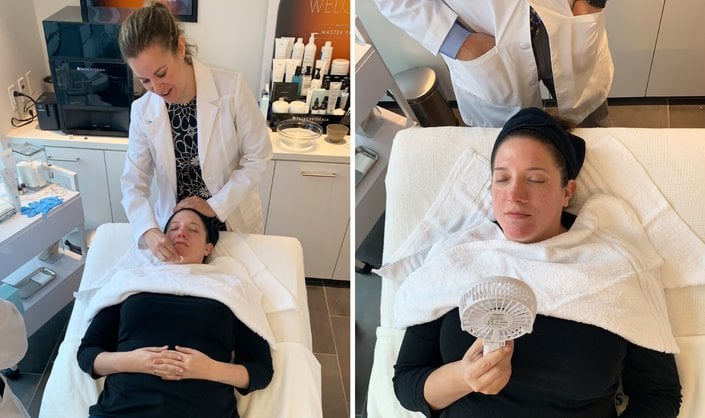
Chemical peels treat more skin concerns at greater depth; microdermabrasion is gentler and better suited to dullness and mild roughness only.
Microdermabrasion vs. Chemical Peel: Which Actually Works Better for Your Skin Concern?
Chemical peels outperform microdermabrasion for the majority of specific skin concerns — acne, pigmentation, fine lines, and sun damage — while microdermabrasion holds a narrow but real advantage for mild dullness and rough texture where minimal downtime matters most. Understanding exactly why requires looking at what each treatment actually does to the skin, layer by layer.
Both procedures are professional exfoliation treatments that remove dead surface cells to reveal fresher skin underneath, but their mechanisms diverge sharply from there. Microdermabrasion is a mechanical exfoliation technique in which a handheld device uses either fine crystals or a diamond-tipped wand — paired with suction — to buff away the outermost layer of dead skin cells. A chemical peel, by contrast, involves applying an acid solution to the skin to dissolve the bonds holding dead cells together, triggering controlled shedding that can reach anywhere from the skin's surface down to the deeper dermis, depending on acid type and concentration.
That single difference in mechanism shapes everything else: depth of action, downtime, side-effect profile, and which skin concerns each treatment can realistically address.
| Feature | Microdermabrasion | Chemical Peel (Light) | Chemical Peel (Medium/Deep) |
|---|---|---|---|
| Mechanism | Physical/mechanical abrasion | Chemical exfoliation (AHAs/BHAs) | Chemical exfoliation (TCA/phenol) |
| Depth of action | Stratum corneum (outermost layer) | Epidermis | Upper to mid dermis |
| Best for | Dullness, mild roughness, blackheads | Mild pigmentation, acne, texture | Dark spots, fine lines, scars, sun damage |
| Downtime | Usually none to 2 days | Minimal (some pinkness/flaking) | Several days to weeks |
| Collagen stimulation | Minimal | Mild | Significant |
| Suitable for sensitive skin | Sometimes | Depends on acid/strength | Rarely without medical supervision |
| Sessions typically needed | Several (series of 5–10) | Depends on peel type | Often fewer, sometimes one |
| Irritation risk | Lower | Moderate | Higher as strength increases |
| Darker skin tone safety | Generally safe | Requires careful acid selection | Higher risk of PIH — proceed with caution |
Sources: Beautiful With Brains, PubMed – Nguyen, FP Essent 2014, ChemicalPeel.org
What exactly is microdermabrasion, and how does it work?
Microdermabrasion is a non-invasive, professional mechanical exfoliation treatment in which a licensed aesthetician or clinician passes a small wand across the skin to remove the stratum corneum — the outermost layer of dead skin cells. Three main device types are in clinical use today.
Crystal microdermabrasion sprays fine aluminum oxide crystals onto the skin and immediately vacuums them back up along with the loosened debris. Diamond-tip microdermabrasion uses an abrasive wand head with the same suction mechanism but no loose crystals, making it slightly more precise for areas around the eyes and lips. Hydradermabrasion (sometimes called hydrafacial-style microdermabrasion) combines mechanical exfoliation with simultaneous infusion of hydrating serums.
A session typically takes 30 to 45 minutes for the face, requires no numbing cream, and feels like mild scratching with light suction. The suction component does double duty: it clears exfoliated debris and briefly stimulates surface circulation, which is why skin often looks pink and refreshed immediately afterward. Patients can generally return to regular activities the same day, making it one of the most accessible in-clinic treatments available.
The critical limitation is depth. Because microdermabrasion works exclusively on the stratum corneum, it cannot reach the living layers of the epidermis where pigmentation is produced, nor the dermis where collagen lives. Studies have found improvements in skin texture and overall appearance after repeated microdermabrasion treatments, but the results tend to be modest. For conditions that originate deeper than the skin's surface — cystic acne, stubborn melasma, rolling acne scars — microdermabrasion is working at the wrong depth.
Do not confuse microdermabrasion with dermabrasion. Dermabrasion is a much deeper surgical resurfacing procedure performed by physicians under anesthesia, capable of treating deep scars and wrinkles. Microdermabrasion is the gentler, non-surgical cousin.
What exactly is a chemical peel, and how does it work?
A chemical peel is a professional treatment in which a provider applies an acid solution that dissolves the intercellular bonds holding dead skin cells together, triggering controlled, progressive shedding of the outer skin layers. What makes chemical peels so versatile — and so much more powerful than microdermabrasion for most concerns — is the depth ladder.
A clinical review published in FP Essentials found that chemical peels rejuvenate the skin by stimulating production of new skin cells and inducing changes such as increased collagen production. That collagen-stimulating effect is something microdermabrasion simply cannot replicate at meaningful depth.
The three peel categories work as follows.
Superficial (light) peels use alpha-hydroxy acids (AHAs) such as glycolic and lactic acid, or beta-hydroxy acids (BHAs) such as salicylic acid. They act on the epidermis, involve minimal downtime — some pinkness and light flaking — and are appropriate for many skin types including beginners. These are the peels most commonly compared to microdermabrasion in clinical studies.
Medium-depth peels use trichloroacetic acid (TCA), often combined with Jessner's solution, to reach the upper dermis. They produce visible peeling for approximately five to seven days and are suited to more significant pigmentation, fine lines, and early acne scarring.
Deep peels use phenol and reach further into the dermis. These are physician-performed procedures, sometimes conducted with cardiac monitoring, and are reserved for severe photoaging and deep scarring — well outside the scope of a microdermabrasion comparison for most readers.
The acid choice also matters beyond depth. Salicylic acid is oil-soluble, which allows it to penetrate inside oily pores — a property glycolic acid does not share. Glycolic acid has the strongest evidence base for pigmentation and photoaging. Lactic acid is generally gentler and better tolerated by sensitive or dry skin types. Mandelic acid, with its larger molecular size, penetrates more slowly and is often recommended for darker skin tones.
Which treatment is better for acne?
Chemical peels win this comparison clearly. Acne originates inside the follicle, where excess sebum and dead skin cells combine to form comedones, which can become inflamed papules and pustules when colonized by Cutibacterium acnes. Microdermabrasion buffs the skin's surface, which can temporarily improve the appearance of congested pores, but it cannot reach the follicular environment where acne actually begins.
Chemical peels can get closer to the problem. Salicylic acid's oil-solubility allows it to penetrate into the pore lining and loosen the sebum-cell mixture clogging the follicle. Glycolic acid accelerates surface cell turnover, reducing the pile-up of dead cells that contribute to comedone formation. A systematic review of 12 randomised controlled trials found chemical peels improved mild-to-moderate acne, and a 2025 review found particularly strong results with salicylic and glycolic acid peels.
There is also a practical safety concern with microdermabrasion and active acne: physically abrading inflamed, compromised skin can worsen irritation, spread bacteria, and trigger post-inflammatory hyperpigmentation (PIH) in susceptible skin tones. A chemical peel applied by a skilled provider is a more controlled intervention. For active, inflammatory acne — red papules and pustules — microdermabrasion is not the right tool.
For post-acne marks (flat, discolored spots left after a pimple heals), chemical peels also have an edge, as chemical peels can improve some atrophic acne scars, though deeper rolling, boxcar, and ice-pick scars typically require treatments that go beyond exfoliation — such as microneedling, subcision, or laser resurfacing.
Which treatment is better for dark spots and hyperpigmentation?
Chemical peels again, and the margin is significant. Dark spots — whether from sun damage, melasma, or post-inflammatory hyperpigmentation — are produced by melanocytes in the basal layer of the epidermis. The pigment then travels upward into the skin cells above. Microdermabrasion can remove some of the pigmented dead cells sitting at the very surface, which may produce a subtle brightening effect for extremely superficial discoloration. For pigmentation that has settled into the living epidermis, though, surface buffing is insufficient.
Glycolic acid peels accelerate the shedding of pigmented epidermal cells across a broader and deeper zone, and with repeated use they can also inhibit tyrosinase — an enzyme involved in melanin production. A 2024 systematic review involving 1,075 people found chemical peels effective for melasma, with glycolic acid performing particularly well.
One important caveat: peel strength must be matched carefully to the patient's skin tone and sensitivity. A peel that is too aggressive can itself trigger post-inflammatory hyperpigmentation — particularly in medium to darker skin tones — creating the very problem it was meant to solve. A study of 473 superficial peels performed on darker skin tones found a low overall complication rate, but pigmentation changes were still among the most common issues reported. The treatment works, but it requires appropriate acid selection and concentration.
For anyone comparing microdermabrasion vs. chemical peel specifically for dark spots or melasma, the peel is the more evidence-backed choice — provided it is chosen and applied correctly.
Which treatment is better for fine lines and signs of aging?
Chemical peels hold the advantage here too, though neither treatment replaces more targeted anti-aging interventions like retinoids, injectables, or laser resurfacing for significant wrinkles. Fine lines and wrinkles develop as collagen and elastin in the dermis degrade with age and UV exposure — a process that occurs well below the surface that microdermabrasion can reach.
Microdermabrasion can make fine lines look slightly softer immediately after a session because removing the rough, dead outer layer creates a smoother light-reflecting surface. Research on microdermabrasion found only modest improvements in sun-damaged skin, and those improvements are largely cosmetic rather than structural. The machine is not rebuilding collagen.
Medium and deep chemical peels, by contrast, reach the dermis and stimulate fibroblasts to produce new collagen as part of the wound-healing response. Studies on glycolic acid and TCA peels have found improvements in fine lines, skin texture, and other signs of sun damage. Even superficial glycolic acid peels, used consistently over time, can produce measurable improvements in fine lines through repeated stimulation of epidermal renewal.
In a direct head-to-head comparison, a randomised controlled trial found that 7 out of 10 patients preferred glycolic acid peels over microdermabrasion for overall facial rejuvenation, though the investigators noted that differences were subtle and may be technique-dependent. The data is not overwhelming, but the directional evidence consistently favors peels for anti-aging outcomes.
Which treatment is better for dull or rough skin texture?
This is where microdermabrasion earns its place. If your skin is simply looking flat, rough, or lacking luminosity — without significant acne, pigmentation, or wrinkles — microdermabrasion may be all you need. It physically removes the uneven layer of dead cells that scatters light and makes skin look dull, leaving the surface smoother and more reflective almost immediately. Research has found improvements in dullness, roughness, and overall appearance after repeated microdermabrasion treatments.
Chemical peels can accomplish the same thing and more, but that does not mean every case of dullness requires an acid. For someone with no specific skin concern beyond a lackluster complexion, microdermabrasion offers a low-risk, low-downtime option that delivers visible results without the need to select the right acid, manage peeling, or navigate recovery. Cleveland Clinic aestheticians describe microdermabrasion as a removal of the outer layer of dead skin cells using a natural diamond tip, leaving skin smooth and radiant — a straightforward description that captures exactly what the treatment does well.
The practical decision rule: if dullness and mild roughness are your only complaints, microdermabrasion is a reasonable first choice. If acne, pigmentation, or fine lines are also part of the picture, a chemical peel addresses more concerns in a single treatment category.
What about recovery time, side effects, and sensitive skin?
Recovery time is one of microdermabrasion's clearest advantages. Most patients experience mild redness and tightness that resolves within hours to a day. One study found the skin barrier recovered within approximately two days after microdermabrasion with a diamond-tipped wand. Makeup is typically fine the same day or the following morning, with no peeling phase to manage.
Chemical peel downtime is a sliding scale tied directly to peel depth. A light peel may produce a day or two of mild pinkness and subtle flaking. A medium peel typically means five to seven days of visible peeling, possible swelling, and sun sensitivity. A deep peel can require weeks of structured recovery. The stronger the peel, the greater the risk of side effects, including prolonged redness, irritation, scarring, and pigmentation changes.
For sensitive skin, neither treatment is automatically safe. Microdermabrasion is still abrasion — if the skin barrier is already compromised or reactive, mechanical friction can worsen sensitivity, trigger flushing, or cause micro-tears. Chemical peels can work for sensitive skin when the acid type and concentration are chosen carefully (lactic acid and low-percentage mandelic acid are generally better tolerated than high-strength glycolic or TCA), but this requires a knowledgeable provider.
Darker skin tones require particular care with both treatments, but especially with chemical peels. Post-inflammatory hyperpigmentation is a real risk when any treatment causes inflammation in melanin-rich skin. A study of 473 superficial peels in darker skin tones found that while the overall complication rate was low, pigmentation changes were among the most common adverse events. Superficial peels with well-tolerated acids, applied conservatively, are generally manageable — but medium and deep peels in darker skin tones should only be undertaken with an experienced dermatologist.
Can you combine microdermabrasion and a chemical peel?
Yes, and there is clinical rationale for doing so — though it is not simply a case of more exfoliation equaling better results. Microdermabrasion removes surface dead cells first, which can allow a subsequently applied chemical peel to penetrate more evenly across the skin. Combining the two has produced better results than microdermabrasion alone in at least one study. The logic is that the mechanical step creates a more uniform surface for the chemical step to work on.
The trade-off is cumulative irritation. Stacking physical and chemical exfoliation in a single session increases the risk of barrier disruption, redness, and sensitivity — particularly for anyone with reactive skin. This combination is best left to experienced providers who can assess your skin's tolerance in real time, not a DIY experiment.
How do costs and session numbers compare?
Pricing varies significantly by location, provider type, and treatment depth, so treat these figures as directional rather than definitive. Microdermabrasion sessions typically run between $100 and $200 per session in the United States, and most providers recommend a series of five to ten treatments spaced two to four weeks apart for meaningful results. A full course can therefore cost $500 to $2,000 before maintenance sessions.
Light chemical peels are similarly priced per session, often $100 to $300, but the number of sessions required varies more widely depending on the concern being treated. Medium peels, which require more provider skill and post-treatment management, typically cost $300 to $600 per session. Deep phenol peels are physician-performed procedures that can cost several thousand dollars and fall outside the scope of routine comparison shopping.
Neither treatment is a one-and-done solution for most skin concerns. Both require a series of treatments for best results, and maintenance sessions are typically recommended to sustain improvements over time.
So which should you choose?
Chemical peels do more for more skin concerns, and the clinical evidence consistently supports that conclusion. For acne, dark spots, fine lines, sun damage, and uneven texture, peels have greater range because they can work at different depths and different acids can target different problems.
Microdermabrasion is the better fit when your skin is simply dull or rough and you want a quick, low-risk polish with minimal downtime. It is also worth considering for anyone who cannot tolerate acids, is new to professional skin treatments, or needs a maintenance treatment between more intensive sessions.
The simplest framework: microdermabrasion buffs and brightens; chemical peels treat and correct. If you are uncertain which applies to your situation, a consultation with a board-certified dermatologist or licensed aesthetician — not just a booking form — is the most reliable way to match the treatment to your actual skin concern. Both procedures have contraindications (recent retinoid use, active skin infections, certain medications, pregnancy for some acids) that a professional consultation will catch before you commit.
For further reading on related skin treatments, the best plumping and collagen-boosting serums guide at Skin and Hair Insight covers topical options that complement both procedures during recovery and maintenance phases.
Sources
- Microdermabrasion vs Chemical Peel: Which Is Better For Your Skin? – Beautiful With Brains
- Dermatology procedures: microdermabrasion and chemical peels – PubMed (Nguyen, FP Essent 2014)
- Glycolic acid peels compared to microdermabrasion: a right-left controlled trial – PubMed (Alam et al., Dermatol Surg 2002)
- Chemical Peel vs Microdermabrasion – ChemicalPeel.org
- Skin Care Services: Chemical Peel & Microdermabrasion – Cleveland Clinic
- Chemical Peels vs. Microdermabrasion: What's the Difference? – Skincare.com by L'Oréal
- Microdermabrasion vs. Chemical Peels: Which Is Right For You? – Berman Skin Institute
- Chemical peels for melasma: 2024 systematic review – PubMed
- Chemical peels for acne: systematic review of randomised trials – PubMed
- Salicylic and glycolic acid peels for acne: 2025 review – PubMed
- Skin barrier recovery after diamond-tip microdermabrasion – PubMed
- Side effects and complications of chemical peels – PubMed
- Superficial peels in darker skin tones: complication study – PubMed
- Chemical peels for atrophic acne scars – PubMed
- Combining microdermabrasion and chemical peel: outcomes study – PubMed
- Glycolic acid and TCA peels for fine lines and photoaging – PubMed
- Microdermabrasion for sun-damaged skin: modest improvements study – PubMed
- Microdermabrasion: improvements in texture and appearance – PubMed