Perimenopause drives rapid collagen loss, barrier breakdown, and dryness via declining estrogen. Ceramides, humectants, peptides, and gentle retinoids are the best-evidenced topical responses.
How Does Perimenopause Change Your Skin — and Which Ingredients Actually Help With Dryness and Barrier Loss?
Perimenopause is the transitional period preceding menopause during which ovarian hormone production becomes erratic and eventually declines — and its effects on skin are faster, more structural, and more biochemically specific than most women are told. Research published in peer-reviewed dermatology literature confirms that women lose approximately 30% of their dermal collagen in the first five years after menopause, then roughly 2% per year thereafter. Understanding why this happens — and which topical ingredients can meaningfully slow or compensate for it — is the most useful starting point for anyone navigating this transition.
The table below compares the key skin changes driven by each declining hormone, the mechanism behind them, and the topical ingredient categories with the best evidence for addressing each.
| Hormone Declining | Primary Skin Effect | Mechanism | Best Topical Response |
|---|---|---|---|
| Estrogen | Collagen loss, dryness, barrier breakdown | Reduced fibroblast collagen synthesis; lower ceramide and hyaluronic acid production; elevated transepidermal water loss | Ceramides, hyaluronic acid, glycerin, retinoids, peptides |
| Progesterone | Increased sensitivity, slower healing, early laxity | Anti-inflammatory role lost; collagen/elastin support reduced; barrier reactivity increases | Gentle, fragrance-free formulas; barrier-first moisturizers; avoid actives during flare periods |
| Testosterone (relative shift) | Jawline/chin acne, sebum dysregulation | Relative androgenic dominance as estrogen falls; sebaceous glands become hypersensitive to normal androgen levels | Niacinamide, salicylic acid (spot use), non-comedogenic formulas |
What exactly is perimenopause, and when does it start affecting skin?
Perimenopause is the transitional time before menopause during which the body gradually stops ovulating — a process that can last two to ten years. It typically begins between the ages of 40 and 52. Once 12 consecutive months have passed since a person's last period, they are officially in menopause. The skin changes, however, often begin well before that milestone — sometimes as early as the early 40s — because the hormonal fluctuations of perimenopause are erratic rather than linear.
That erratic quality matters. Estrogen doesn't decline smoothly during perimenopause — it spikes and crashes over months and years before permanently stabilizing at lower levels. This hormonal volatility triggers inflammatory responses in skin that a stable — even stable-low — estrogen state does not. It is often during perimenopause, not after menopause, that skin changes feel most disruptive and unpredictable. A woman who entered perimenopause at 40 may have significantly less dermal collagen at 50 than someone of the same chronological age who entered it at 52, because skin collagen loss is governed by hormonal age, not calendar age.
The resulting changes are not cosmetic inconveniences. They reflect genuine structural and biochemical shifts: the skin becomes thinner, less able to retain water, slower to heal, and more reactive to products it previously tolerated without issue.
Why does estrogen loss hit skin so hard?
Estrogen receptors are present in virtually every skin cell type: keratinocytes, fibroblasts, melanocytes, and sebaceous gland cells. Estrogen wasn't just regulating the menstrual cycle — it was actively managing skin architecture. When it declines, multiple skin functions change simultaneously.
Collagen synthesis. Estrogen upregulates the genes encoding type I and type III procollagen in dermal fibroblasts, while simultaneously suppressing matrix metalloproteinases (MMPs) — the enzymes that break collagen down. When estrogen is adequate, collagen is built faster than it breaks down. When it isn't, the balance tips in the wrong direction rapidly. The foundational study by Brincat et al. (1987) established that women lose approximately 30% of dermal collagen in the first five years after menopause, then approximately 2.1% per year for the following 15 years.
Hyaluronic acid production. Estrogen stimulates hyaluronan synthase enzymes in the dermis, driving production of the glycosaminoglycans that bind water and maintain dermal volume. When estrogen drops, hyaluronic acid concentration falls — and with it the skin's water-holding capacity and visible plumpness. This is why perimenopausal dryness often resists standard moisturizers: the deficit is internal, not just surface-level.
Skin barrier integrity. Estrogen supports ceramide production in keratinocytes — the lipid molecules that form the stratum corneum's waterproof seal. Lower estrogen means lower ceramide production, a compromised barrier, and elevated transepidermal water loss (TEWL). As board-certified dermatologist Dr. Kseniya Kobets explains, "menopausal dryness is not simply about producing less oil; it is also about retaining less water and having a weaker skin barrier."
Melanin regulation. Estrogen plays a regulatory role in melanin production. Fluctuating levels disrupt this regulation, triggering uneven pigmentation — particularly on the cheeks, upper lip, and forehead — even in women who have not previously experienced significant pigmentation concerns.
Antioxidant function. Estrogen provides a degree of antioxidant protection in skin tissue. As levels fall, oxidative stress increases, accelerating collagen degradation and compounding UV-triggered pigmentation.
What role do progesterone and testosterone play — and why do they get less attention?
Most conversations about perimenopausal skin focus on estrogen. But the hormonal changes of perimenopause involve three sex hormones — estrogen, progesterone, and testosterone — each with its own timeline and its own effects on skin.
Progesterone typically declines earlier and more steeply than estrogen, and its fluctuations become erratic rather than following a predictable pattern. This creates periods of relative estrogen dominance even as both hormones trend downward overall. Progesterone contributes to collagen production and skin thickness, so falling levels compound the collagen loss driven by declining estrogen — meaning skin laxity and thinning can begin earlier in perimenopause than expected. Progesterone also has anti-inflammatory properties; as levels decline, healing following skin treatments may be slower, with redness and post-treatment inflammation lasting longer. This is one reason perimenopausal skin can become suddenly reactive to retinoids or exfoliants it previously tolerated.
Testosterone declines gradually during perimenopause, but the picture is complicated. As estrogen and progesterone fall, the relative effect of testosterone on the skin can become more pronounced even as absolute levels drop. This relative androgenic shift drives some of the oil production and congestion changes that appear during the transition — particularly the adult breakouts on the lower face and jawline. Most affected women do not have elevated blood androgen levels. The relevant variable is androgen receptor sensitivity, not absolute androgen levels — which is why hormone panels in perimenopausal women with acne often come back normal.
Which topical ingredients have real evidence for perimenopausal dryness and barrier loss?
The ingredient categories below have the strongest mechanistic rationale and clinical backing for the specific deficits perimenopause creates. This is not an exhaustive list of every ingredient marketed to mature skin — it is a focused account of what addresses the root problems.
Ceramides
Ceramides are lipid molecules that form the primary waterproof seal of the stratum corneum. Because estrogen directly supports ceramide production in keratinocytes, lower estrogen means a structurally compromised barrier. Topical ceramides replenish this lipid layer from the outside, reducing transepidermal water loss and helping the skin hold onto whatever hydration is applied. They are the most mechanistically direct response to the barrier deficit perimenopause creates.
Aesthetician Caroline Hirons advises looking for products with ceramides and peptides — a gentle way to keep the skin barrier in check without being aggressive. Dr. Divya Shokeen, a board-certified dermatologist, recommends applying ceramides after humectants: "Focus on humectants like glycerin and hyaluronic acid applied on damp skin to draw in water, followed by ceramides to help rebuild the lipid barrier."
Hyaluronic Acid and Glycerin
These are humectants — molecules that draw water from the environment and from deeper skin layers into the stratum corneum. Because estrogen's decline reduces the skin's internal hyaluronic acid production, topical hyaluronic acid provides a partial surface-level substitute. Glycerin is similarly effective and considerably less expensive. Both work best when applied to damp skin and immediately sealed with a barrier-supporting moisturizer; applied to dry skin in low-humidity environments, high-molecular-weight hyaluronic acid can actually pull water out of the dermis.
Niacinamide
Niacinamide (vitamin B3) is a water-soluble vitamin that supports multiple skin functions simultaneously: it reinforces the skin barrier by stimulating ceramide synthesis, reduces transepidermal water loss, calms inflammation, and can help regulate sebum production — making it relevant for the paradoxical combination of dryness and breakouts that perimenopause sometimes produces. It is also well-tolerated by reactive skin, which matters given that perimenopausal skin often becomes more sensitive. Dr. Kobets specifically recommends the combination of niacinamide, ceramides, and glycerin for dry, sensitive, or easily irritated skin because it "focuses on hydration and barrier support without trying to make the moisturizer do everything."
Peptides
Peptides are short chains of amino acids that can signal fibroblasts to produce more collagen and elastin. Because perimenopause directly reduces fibroblast activity via estrogen withdrawal, peptides offer a topical route to partially compensate for reduced collagen synthesis. They are generally well-tolerated by reactive skin and can be layered with ceramides and humectants without irritation. Caroline Hirons specifically recommends ceramides and peptides as the core of a perimenopausal routine, noting they are "a gentle way to keep your skin barrier in check without being super-aggressive."
Retinoids
Retinoids (retinol and prescription tretinoin) remain the most evidence-backed topical ingredients for stimulating collagen production and accelerating cell turnover. Perimenopausal skin requires a more cautious approach than younger skin, though. Because the skin barrier is compromised by declining ceramide production, retinoids can cause more irritation, redness, and sensitivity than they would have a decade earlier. The practical approach: start with a low-concentration retinol (0.025–0.05%), apply only two to three nights per week, and always buffer with a ceramide moisturizer. Marine-based retinol alternatives — such as the MRA-3 in La Mer's Rejuvenating Night Cream — offer a gentler option for those whose skin cannot tolerate conventional retinoids.
SPF
Sunscreen is not optional at any life stage, but it becomes especially important during perimenopause when declining estrogen reduces the skin's antioxidant defenses and melanin regulation becomes unstable. UV exposure accelerates exactly the collagen degradation that perimenopause has already accelerated hormonally. The general rule: if you can read a book outside in natural light, you need SPF.
What do dermatologists recommend for a perimenopausal skin-care routine?
The consensus across dermatologists points to a routine built on gentleness and barrier-first thinking — not aggressive actives.
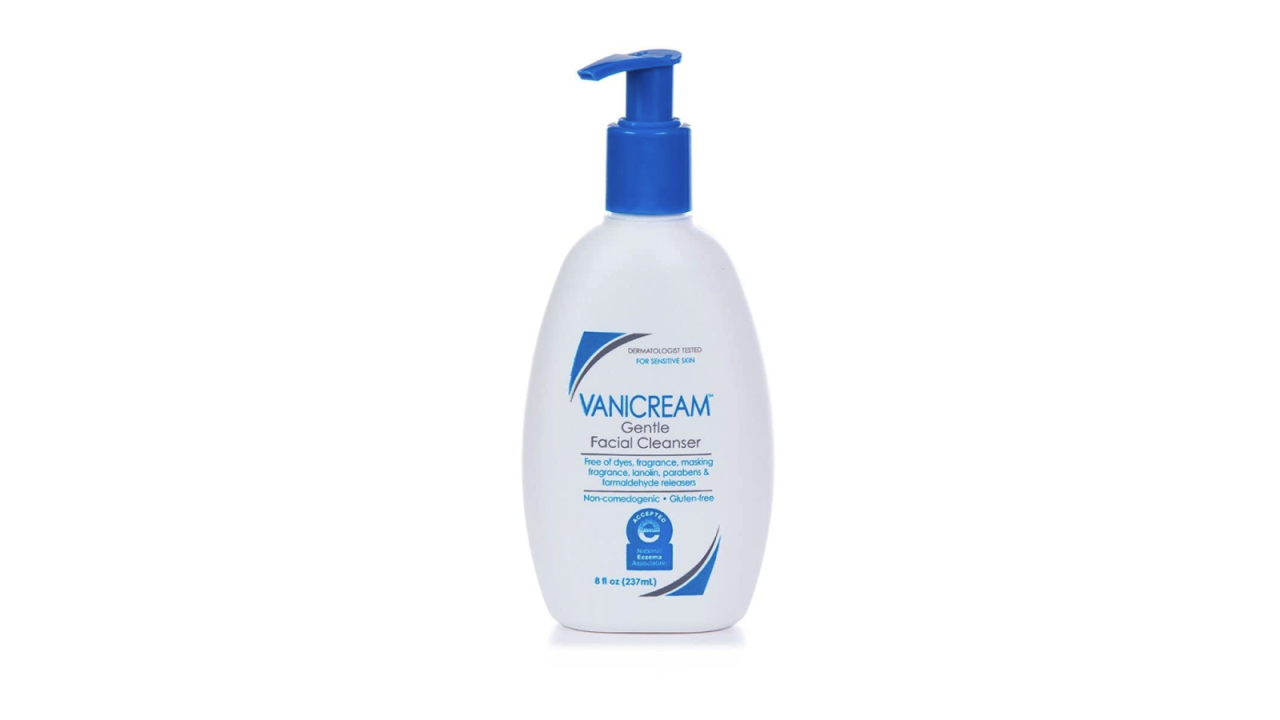
Cleansing. Avoid harsh cleansers that strip the skin. Micellar water, cleansing milks, and gentle sulfate-free formulas are the preferred options. Aesthetician Amy Meier recommends micellar cleansing water specifically because it is "gentle on the skin, removes makeup and doubles as a toner." Dr. Dara Spearman recommends applying moisturizer immediately after cleansing — ideally right out of the shower — for the best absorption.
Moisturizing. Studies show that women's skin loses about 30% of its collagen during the first five years of menopause, and elasticity decreases by 1.5% per year after menopause. A moisturizer that addresses both water retention and barrier repair is more effective than one that simply adds surface hydration. Fragrance-free formulas are strongly preferred, as perimenopausal skin tends to become more reactive. A richer formula is not always better — switching from a heavier moisturizer to a lighter, water-based one that penetrates the skin more quickly can feel more comfortable and effective, depending on the individual.
Actives. The perimenopausal period is not the time to pile on multiple actives simultaneously. Don't jump on the latest trendy ingredient or start buying a whole load of products aimed at aging skin. Introduce one active at a time, monitor skin response carefully, and prioritize barrier repair before adding anything irritating. If retinoids cause persistent irritation, step down to a gentler retinol or a retinol alternative rather than abandoning the category entirely.
Masks and treatments. For dry, dull-looking skin, look for hydrating masks rather than clay or detox masks. A good facial oil can be particularly effective before a significant event, rapidly compensating for barrier deficits that leave skin looking sallow.
Which moisturizers do dermatologists actually recommend for perimenopausal and menopausal skin?
Several products have earned consistent dermatologist endorsement across multiple sources. These are not the only options, but they illustrate what the ingredient evidence looks like in practice.
La Roche-Posay Toleriane Double Repair Face Moisturizer ($25) is the most consistently recommended across price points. Its formula combines glycerin (humectant), ceramides (barrier repair), and niacinamide (barrier reinforcement and inflammation modulation) in a fragrance-free base. Dr. Kobets recommends it specifically because it "focuses on hydration and barrier support without trying to make the moisturizer do everything" — leaving room in the routine for targeted serums and treatments. Its lightweight texture also makes it suitable for layering under SPF during the day.
La Mer The Rejuvenating Night Cream ($230) sits at the luxury end and earned a Best of Beauty recognition. Its Miracle Broth — a proprietary complex of fermented sea kelp and minerals — is designed to protect against environmental aggressors. The formula also contains MRA-3, a marine-based retinol alternative, and lime tea concentrate for antioxidant protection. The caveat: the formula contains fragrance, which can be problematic for sensitive perimenopausal skin.
SkinCeuticals P-Tiox Cream ($150) is recommended specifically for wrinkle concerns, targeting the visible fine lines that accelerate during the perimenopausal transition.
No7 Menopause Skin Care Nourishing Overnight Cream is one of the few products explicitly formulated and marketed for menopausal skin, making it a useful option for those who want a formula designed with this specific transition in mind rather than a general-purpose moisturizer.
For those navigating the collagen-boosting serum category alongside moisturizers, our guide to best plumping and collagen-boosting serums covers how to choose the right formula for your skin type.
Does hormone replacement therapy (HRT) help skin — and should it factor into your routine?
HRT is the medical use of exogenous hormones — typically estrogen alone or estrogen combined with progesterone — to compensate for the hormonal decline of menopause. Its effects on skin are real and measurable. A 2025 narrative review published in the Journal of Cosmetic Dermatology found that most studies reported positive associations between HRT and improvements in menopausal skin aging, including collagen synthesis, elasticity, and hydration.
The same review notes, however, that findings were sometimes inconsistent, and that clinical guidelines do not currently support HRT use solely for estrogen-deficient skin due to a lack of solid clinical trials on skin-specific therapy. HRT decisions involve systemic health considerations — cardiovascular risk, breast cancer history, clotting factors — that go well beyond skin. Any discussion of HRT should happen with a physician or menopause specialist.
What this means practically: HRT may improve skin quality as a secondary benefit for women who choose it for other menopausal symptoms. It is not a substitute for a well-constructed topical routine, and a topical routine remains essential regardless of HRT status. The two approaches address different aspects of the same underlying deficit.
What mistakes do perimenopausal women most commonly make with their skin-care routines?
Several patterns come up repeatedly across dermatologist interviews.
Over-treating breakouts aggressively. When women get spots during perimenopause, they sometimes start treating their skin like it's the enemy — throwing harsh actives at the whole face. Because the underlying cause is hormonal rather than bacterial or comedogenic, this approach tends to damage the barrier without resolving the breakouts. Treating affected areas specifically — rather than the entire face — is more effective and less damaging.
Abandoning products that worked, then over-purchasing. Some find their skin changing with hormonal changes, and products that they have used for years may not be as compatible anymore. This is real, but buying a large number of new products simultaneously makes it impossible to identify what is helping and what is causing irritation. Introducing one change at a time is the more useful approach.
Choosing rich textures when lighter ones would work better. The assumption that dry skin always needs a heavy cream is not always correct. Switching from a heavier moisturizer to a lighter, water-based one that penetrates the skin more quickly can feel a lot lighter and more comfortable — and may be more effective at actually delivering hydration to the deeper layers of the skin.
Skipping SPF. Given that declining estrogen reduces antioxidant protection and destabilizes melanin regulation, UV exposure during perimenopause accelerates damage at a time when the skin is already less equipped to repair it.
Using fragrance-containing products on newly reactive skin. Perimenopausal skin frequently becomes more reactive to fragrance — both synthetic and natural — as the barrier weakens. Switching to fragrance-free formulas across the routine is often the single fastest way to reduce baseline redness and irritation.
The bottom line
Perimenopause changes skin through a specific, well-understood hormonal mechanism — not through vague "aging." The decline of estrogen, progesterone, and the relative shift in androgen balance each produce distinct and predictable effects: collagen loss, barrier compromise, hyaluronic acid depletion, melanin dysregulation, and sebum changes that can produce both dryness and breakouts simultaneously.
The topical ingredients with the strongest evidence for addressing these changes are ceramides (barrier repair), glycerin and hyaluronic acid (humectancy), niacinamide (barrier reinforcement and inflammation modulation), peptides (collagen signaling), and retinoids used carefully and at appropriate concentrations. The routine architecture matters as much as the ingredients: humectants first on damp skin, ceramide-containing moisturizer to seal, SPF in the morning, and a gentle cleanser that does not strip the barrier.
The skin changes of perimenopause are real, measurable, and mechanistically explainable. They are also, in large part, addressable — not by reversing the hormonal transition, but by giving the skin the specific structural support it can no longer fully generate on its own.
Sources
- How to Deal With Dry Skin During Perimenopause | Allure
- Managing Menopausal Skin Changes: A Narrative Review — PMC
- Experts share 27 menopause skin care tips | CNN Underscored
- How does perimenopause affect the skin? Experts weigh in | TODAY
- Perimenopause Skin Changes: What's Really Happening and What Actually Helps | North Biomedical
- Perimenopause and Skin: What is Changing and What Can Actually Help | Rejuvenation Clinics of Australia
- Davina McCall's Top Tips For Perimenopausal and Menopausal Skin | My Menopause Centre
- La Roche-Posay Toleriane Double Repair Face Moisturizer