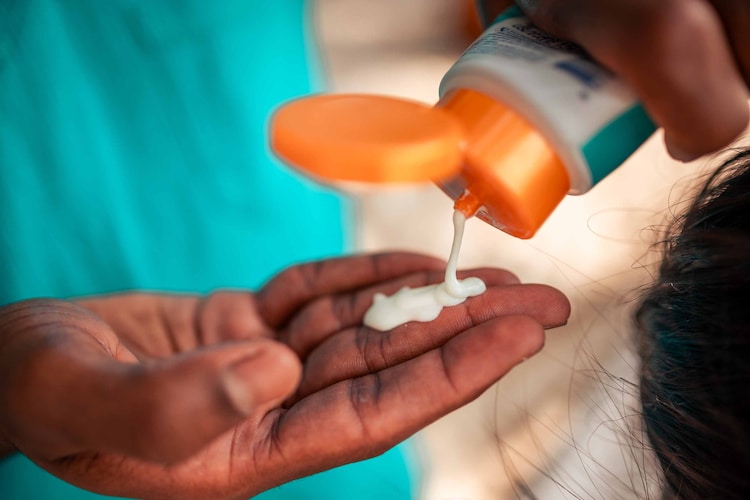
Sunscreen does not cause skin cancer. The best available RCT evidence shows daily sunscreen use cuts squamous cell carcinoma risk by 40% and invasive melanoma risk by 73% over 15 years.
Does Sunscreen Cause Skin Cancer? What the Science Actually Says About UV Filters and Tumour Risk
Sunscreen is a topical photoprotective product that blocks or absorbs ultraviolet (UV) radiation to reduce DNA damage in skin cells. The scientific consensus, backed by randomised controlled trial data spanning 15 years of follow-up, is that it reduces skin cancer — not causes it. Despite a surge of social media claims to the contrary, no credible experimental evidence supports the idea that UV filters in commercial sunscreens trigger tumour development. What the data show, clearly and repeatedly, is that UV radiation from the sun is the primary driver of skin cancer, and sunscreen is one of the most effective tools available to limit that exposure.
Before diving into the arguments and the evidence, here is a side-by-side summary of the three most common anti-sunscreen claims, what evidence is typically cited, and what the science actually shows:
| Claim | Evidence Cited | What the Science Shows |
|---|---|---|
| "Sunscreen users get more skin cancer" | Observational studies (e.g., UK Biobank) showing correlation between sunscreen use and cancer rates | Confounding by indication: fair-skinned, sun-sensitive people use more sunscreen AND have higher baseline cancer risk. The Nambour RCT shows the opposite when confounders are controlled. |
| "Skin cancer rates have risen alongside sunscreen use" | Connecticut cancer registry data showing melanoma increase since the 1940s | The graph plots male vs. female melanoma rates, not sunscreen use vs. cancer. Increased rates are explained by longer life expectancy, more intense sun exposure patterns, tanning bed use, and improved detection. Melanoma rates are actually falling in younger Australians who use more sunscreen. |
| "Sunscreens don't protect against UVA, so they give false safety" | Early sunscreen formulations that were UVB-only | The vast majority of modern sunscreens have been broad spectrum for decades. In Australia, broad-spectrum coverage is a legal requirement for lotion-type sunscreens. UVB is also more strongly associated with skin cancer than UVA. |
What does the best experimental evidence actually show?
The gold standard for answering causal questions in medicine is the randomised controlled trial (RCT). The most important RCT on sunscreen and skin cancer is the Nambour Trial, conducted in Queensland, Australia — and by the admission of the researchers who ran it, almost certainly the only study of its kind that will ever exist. The cost, complexity, and follow-up time required make replication essentially impossible.
The trial enrolled 1,621 adults from Nambour, Queensland, split into two roughly equivalent groups. For 4.5 years, one group used sunscreen daily; the other used it at their own discretion. Researchers then tracked skin cancer outcomes during the trial and for approximately ten years afterwards. The results were striking:
- 40% reduction in squamous cell carcinomas (SCCs) during the 4.5-year trial period among daily sunscreen users
- SCC incidence roughly one-third lower eight years after the trial ended
- 22% reduction in actinic keratoses (precancerous lesions) within the first two years
- 73% reduction in invasive melanomas over 15 years of follow-up
- Average invasive melanoma thickness of 0.53 mm in daily sunscreen users versus 1.2 mm in the discretionary group — a clinically meaningful difference in tumour depth
- No detectable increase in skin aging after 4.5 years; daily users were 24% less likely to show increased aging signs
These results are reported in peer-reviewed literature and are consistent with the conclusions of the Canadian Medical Association Journal's 2020 systematic review, which found that "several well-conducted randomised controlled trials with long follow-up showed that sunscreen use reduces the risk of squamous cell and melanoma skin cancers."
The Nambour findings are even more impressive given the context. The trial compared daily use against discretionary use, not against zero sunscreen use. It also used an SPF 16 formulation from the 1990s with older, less photostable filters — avobenzone and octinoxate — rather than the more advanced broad-spectrum products available today. The average participant was around 50 years old, meaning just 4.5 years of changed sunscreen habits in middle age produced measurable reductions in cancer risk over the following decade.
Why do some studies seem to show sunscreen users get more cancer?
Observational studies — where researchers track what people naturally do rather than assigning them to groups — sometimes find that sunscreen users have higher rates of skin cancer. This finding has been amplified on social media as evidence that sunscreen causes cancer. It does not show that.
The explanation is confounding by indication, a well-understood statistical problem in epidemiology. People with fair skin, red hair, a tendency to burn rather than tan, and a history of childhood sunburns are both more likely to develop skin cancer (because of their baseline UV sensitivity) and more likely to use sunscreen (because they know they need protection). The sunscreen use and the cancer risk share a common cause — sun-sensitive skin — rather than one causing the other.
A useful analogy: people who own stepladders are more likely to be short, bulletproof vests are associated with gunshot wounds, and quitting smoking is statistically linked to lung cancer diagnoses. In each case, the correlation exists because people respond to a problem by using something that addresses it. The association is real; the causal direction is backwards.
The UK Biobank study, frequently cited in anti-sunscreen posts, illustrates this perfectly. The survey question it used was: "Do you wear sun protection (e.g. sunscreen lotion, hat) when you spend time outdoors in the summer?" — a question about sun protection broadly, not sunscreen specifically. Researchers abbreviated it to "sunscreen use," which introduced ambiguity from the start. The study's own authors publicly stated that their findings had been misinterpreted. The study also enrolled older participants who were more likely to have prior skin cancer diagnoses — and skin cancer survivors are both more likely to use sunscreen and more likely to develop subsequent skin cancers, which further inflates the apparent association.
Why have skin cancer rates risen if sunscreen is protective?
Melanoma rates have increased since the 1940s, and this trend is sometimes presented as proof that sunscreen — which also became more widespread over the same period — is responsible. This argument contains several errors.
First, the graph most commonly used to make this point plots male versus female melanoma rates, not sunscreen use versus cancer incidence. The two lines being compared are not what the claim requires them to be.
Second, correlation over time is not causation. Melanoma rates correlate equally well with many other things that changed since the 1940s — including increased electricity use and shifts in dietary patterns — none of which are plausible causes of skin cancer.
Third, there are well-documented, biologically plausible explanations for rising melanoma rates that have nothing to do with sunscreen:
- Increased life expectancy. The average age of melanoma diagnosis is 65. More people are now living long enough to accumulate the decades of UV damage that precede most skin cancers. Cancer is defined as the uncontrolled multiplication of cells, and longer lifespans mean more opportunities for those cellular errors to accumulate and be detected.
- Changed sun exposure patterns. Short, intense bursts of sun exposure — the kind associated with holidays and beach trips — are linked to many types of skin cancer. International travel became dramatically cheaper from the 1970s onwards, meaning more people now experience two summers per year.
- Fashion and tanning culture. Tanning beds were introduced in the 1970s and are strongly associated with melanoma risk. More skin is exposed in contemporary fashion than in the 1940s.
- Improved detection and diagnostic reclassification. Education campaigns, dermatoscopy, and changing diagnostic criteria have increased the number of lesions that are identified and counted. Deadly skin cancers have become a smaller fraction of those detected over time, consistent with earlier pickup rather than a genuine increase in aggressive disease.
Critically, the trend is not uniform across populations. Skin cancer rates have been falling in younger Australians, including among those of higher-risk ancestry — and younger Australians also use more sunscreen than older generations, likely as a result of the long-running SunSmart and Slip Slop Slap public health campaigns. If sunscreen caused skin cancer, rates should be rising in the groups using the most of it. They are not.
Do sunscreens actually protect against UVA, or just UVB?
A persistent claim is that most sunscreens only block UVB — the wavelength responsible for sunburn — while leaving UVA unblocked. Since UVA penetrates deeper into the skin and contributes to both aging and cancer, the argument goes, sunscreen users get a false sense of security and end up with more total UV exposure.
This argument was more valid in the 1970s and early 1980s, when research on UVA's dangers was still emerging and many products were indeed UVB-focused. It is largely obsolete today.
UV radiation is defined as electromagnetic radiation with wavelengths shorter than visible light, subdivided into UVA and UVB based on wavelength. UVB causes direct DNA damage — specifically the formation of cyclobutane pyrimidine dimers — that is strongly linked to squamous cell carcinoma and melanoma. UVA generates oxidative stress and inflammation that contributes to photoaging and also to skin cancer, though UVB is the more potent carcinogen of the two.
Modern broad-spectrum sunscreens are formulated to address both. In Australia, broad-spectrum coverage is a legal requirement for lotion-type sunscreens. In the United States, the FDA regulates sunscreen as an over-the-counter drug rather than a cosmetic, which has slowed approval of newer UV filters — the US has 17 FDA-approved UV filters compared to 30 available in the European Union — but broad-spectrum labelling is still standard for most lotion products. Stanford Medicine dermatologists note that chemical filters like avobenzone and octocrylene tend to provide broader UVA and UVB coverage than mineral filters, and that the best international formulations containing Tinosorb, Mexoryl, or Uvinul offer even more full protection across the UV spectrum.
The claim that sunscreen misuse leads to more sun exposure has some historical basis — papers from the 1990s documented "sunscreen abuse" among sunbathers who used SPF products to extend tanning sessions rather than to limit UV exposure. The solution to misuse is better education, not abandoning sunscreen. The Nambour trial's results — achieved with an SPF 16 product from the 1990s — demonstrate that even imperfect sunscreen use, applied correctly and consistently, produces substantial reductions in cancer risk.
Are chemical UV filters in sunscreen dangerous to human health?
This is the area where scientific uncertainty is most legitimate, and it deserves a straightforward answer: we do not yet know whether systemic absorption of chemical UV filters causes harm in humans, but current evidence does not support the conclusion that they cause cancer.
The CMAJ 2020 review states clearly: "Emerging evidence suggests that some chemical sunscreen ingredients are systemically absorbed, but the clinical importance of this remains unclear; further research is required to establish whether this results in harm." A 2019 FDA study found that several chemical filters — including oxybenzone, avobenzone, octocrylene, and ecamsule — were detected in blood plasma after topical application. That finding prompted calls for more research, not product recalls, because detection in blood is not the same as evidence of toxicity.
Concerns about endocrine disruption have focused primarily on oxybenzone, which has shown weak oestrogenic activity in laboratory (in vitro) studies. However, as Stanford Medicine dermatologists note, the concentrations used in lab studies are typically far higher than those achieved through normal sunscreen use, and no human clinical studies have demonstrated hormone disruption at real-world exposure levels.
For people who prefer to avoid chemical filters entirely, mineral sunscreens containing zinc oxide and titanium dioxide are well-established alternatives. The Skin Cancer Foundation notes that mineral components may be less likely to cause skin irritation, though some titanium dioxide formulations provide primarily UVB rather than full-spectrum coverage. Zinc oxide, by contrast, offers broad-spectrum protection across both UVA and UVB wavelengths.
The environmental impact of chemical UV filters — particularly oxybenzone's potential effects on coral reefs — is a separate and legitimate concern that has led to bans in some jurisdictions, but this is an ecological question, not a human cancer risk question.
What does UV radiation actually do to skin cells?
UV radiation is electromagnetic radiation in the wavelength range of approximately 100–400 nanometres, subdivided into UVC (100–280 nm, mostly absorbed by the atmosphere), UVB (280–315 nm), and UVA (315–400 nm). The National Cancer Institute identifies UV radiation from the sun, sunlamps, and tanning booths as a cause of early skin aging and DNA damage that can lead to skin cancer.
UVB radiation causes direct photochemical damage to DNA, producing characteristic mutations — particularly C→T transitions at dipyrimidine sites — that are the molecular signature of UV-induced skin cancer. These mutations accumulate over years and decades, which is why the average age of melanoma diagnosis is 65 and why childhood sun exposure contributes to cancers that appear much later. UVA radiation generates reactive oxygen species that cause oxidative DNA damage and also suppress local immune responses in the skin, allowing early tumour cells to escape immune surveillance.
UV radiation exposure is estimated to be associated with 80–90% of all skin cancers. In Canada alone, more than 80,000 cases of skin cancer are diagnosed every year. In Australia, where UV levels are among the highest in the world and the Nambour trial was conducted, skin cancer is the most commonly diagnosed cancer. The biological mechanism linking UV exposure to skin cancer is among the best-characterised carcinogenic pathways in all of oncology.
Who is most at risk, and does sunscreen help them?
People with fair skin, light or red hair, blue or green eyes, and a tendency to burn rather than tan face the highest baseline risk of UV-induced skin cancer. This is not because they use more sunscreen — it is because their skin contains less melanin, the pigment that provides some natural UV protection. Melanin is produced by melanocytes; it absorbs UV radiation and dissipates it as heat, reducing the amount that reaches the DNA of basal keratinocytes.
The National Cancer Institute is explicit that people of all skin tones can develop skin cancer, including those with dark skin. UV damage accumulates regardless of baseline melanin levels, and people with darker skin are sometimes diagnosed at later stages because of lower clinical suspicion — making sun protection relevant across all skin types.
The Canadian Dermatology Association and the American Academy of Dermatology both recommend broad-spectrum sunscreen with SPF 30 or higher as part of a full photoprotection strategy. The Skin Cancer Foundation recommends daily sunscreen use alongside other protective measures — wide-brimmed hats, UV-protective clothing, and shade-seeking during peak UV hours (10 a.m. to 4 p.m.) — rather than sunscreen alone.
UV exposure accumulates from brief, everyday activities: walking to a car, waiting for public transport, receiving mail. UVA rays penetrate window glass, meaning indoor exposure during car journeys or near windows also contributes to cumulative damage. Daily sunscreen use — not just application on beach days — is the behaviour most supported by the evidence.
What should you actually use, and how?
The evidence supports SPF 30 or higher, broad-spectrum formulation, applied to all exposed skin approximately 30 minutes before going outdoors and reapplied every two hours or after swimming or sweating. Most people apply far less sunscreen than the amount used in SPF testing, which means real-world protection is often lower than the label suggests — a reason to choose higher SPF products rather than to apply less of them.
For people with sensitive skin or a history of reactions to chemical filters, mineral sunscreens (zinc oxide, titanium dioxide) are a well-tolerated alternative. True allergies to sunscreen are rare; what is more commonly described as a sunscreen allergy is often a photosensitivity reaction or a response to a fragrance or preservative in the formulation rather than the UV filter itself. Patch testing can help identify the specific trigger.
The first commercial sunscreen was developed in 1928. In the nearly century since, no credible experimental evidence has emerged linking sunscreen use to increased cancer risk. The Nambour Trial remains the definitive answer to the question this article poses: daily sunscreen use reduced invasive melanoma by 73% over 15 years. That is not a product that causes skin cancer. That is one of the most effective cancer-prevention tools available without a prescription.
For more on skin health and UV protection, see our guides on best plumping and collagen-boosting serums and best amino acid scalp shampoos for daily use.
Sources
- Why sunscreen doesn't cause skin cancer | Lab Muffin Beauty Science
- The efficacy and safety of sunscreen use for the prevention of skin cancer - PMC
- The efficacy and safety of sunscreen use for the prevention of skin cancer - CMAJ
- Sunscreen fact and fiction: What the science says - Stanford Medicine
- Cancer Risk Factors: Sunlight - National Cancer Institute
- Ask the Expert: Setting the Record Straight on Four UV Protection Myths - Skin Cancer Foundation
- Sunscreen use and the risk for melanoma: a quantitative review - NCBI