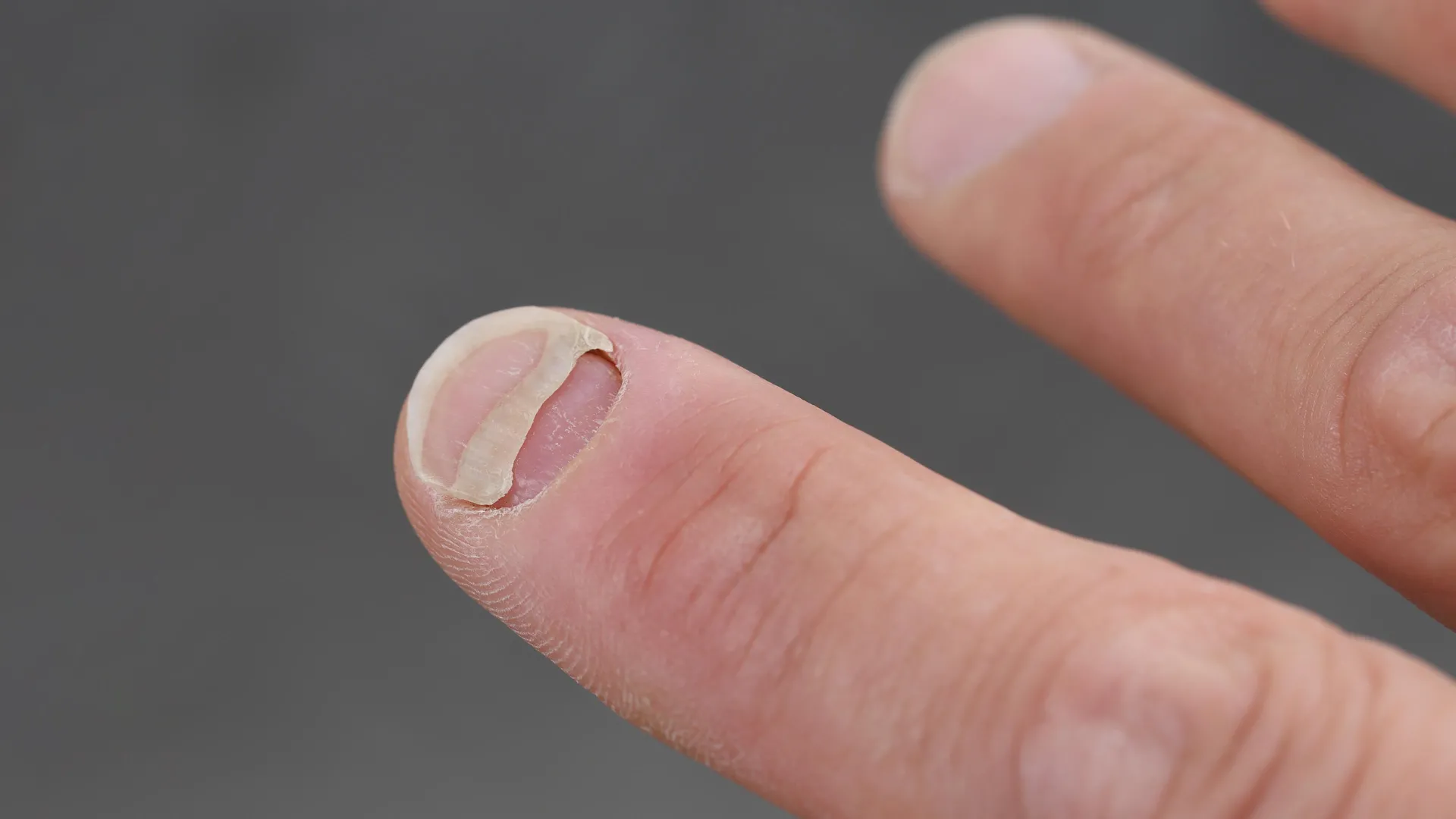
GLP-1 users report nail detachment 4x more often and hair loss nearly twice as often as nonusers, with scalp inflammation emerging as a key but overlooked finding, per new 2026 research.
Do GLP-1 Drugs Like Ozempic and Wegovy Cause Nail Detachment, Hair Loss, and Scalp Inflammation? What the New Research Shows
GLP-1 receptor agonists — a class of medications that mimic the glucagon-like peptide-1 hormone to regulate blood sugar and suppress appetite — have now been linked to nail detachment rates more than four times higher than those seen in people who have never taken the drugs. That finding comes from the first controlled multinational study on the topic, presented at the European Academy of Dermatology and Venereology (EADV) Congress 2026 in October.
The findings cover three distinct but related problems: nail separation from the nail bed (onycholysis), hair shedding, and scalp inflammation. Together, they point to a pattern of dermatological side effects that clinicians have largely overlooked — and that researchers now say deserve systematic attention.
Before diving into each symptom, here is a side-by-side summary of the key numbers from the EADV 2026 study and the companion hair research:
| Symptom | GLP-1 Users | Non-GLP-1 Controls | Relative Difference |
|---|---|---|---|
| Any nail disorder | 66% | 53% | ~1.25× more common |
| Nail detachment (onycholysis) | 39% | 9% | >4× more common |
| Nail discoloration | 46% | 17% | ~2.7× more common |
| Unusual hair loss (any) | 50% | 34% | ~1.5× more common |
| Hair loss starting after treatment | 26% | 12% | >2× more common |
| Reduced hair volume/density | 42% | 19% | ~2.2× more common |
| Scalp redness | ~3× nonuser rate | Baseline | ~3× more common |
Sources: ScienceDaily / Beyond, October 2026; Healthline, October 2026
The study examined 575 GLP-1 users and 1,329 controls with type 2 diabetes and/or obesity who had never used the drugs, recruited from France, the United States, Brazil, and Mexico. Average treatment duration among users was 18.5 months.
What exactly are GLP-1 drugs, and who is taking them?
A GLP-1 receptor agonist is any drug that binds to and activates the glucagon-like peptide-1 receptor, stimulating insulin release, slowing gastric emptying, and reducing appetite. The category includes semaglutide (sold as Ozempic for diabetes and Wegovy for weight management), tirzepatide (Mounjaro for diabetes, Zepbound for obesity), liraglutide (Victoza, Saxenda), and dulaglutide (Trulicity), among others.
These medications have become among the most prescribed drugs in the world. A 2025 analysis published in JAMA Network Open documented rapidly rising prescribing trends for GLP-1 receptor agonists for both type 2 diabetes and obesity. Their popularity means that even a relatively rare side effect affects a large absolute number of people — and a side effect appearing in a third to two-thirds of users is far from rare.
The FDA has already indicated it is evaluating hair loss as a potential safety signal for semaglutide and tirzepatide, according to a University of Pennsylvania–led study published in the BMJ in July 2026. The UK's Medicines and Healthcare products Regulatory Agency (MHRA) received 399 reports of hair loss linked to tirzepatide in 2026 alone, alongside 541 reports in 2025, and 148 reports for semaglutide in 2026 alongside 164 in 2025.
What does the nail detachment research actually show?
Nail detachment — clinically called onycholysis — is the separation of the nail plate from the nail bed beneath it, typically beginning at the tip or sides of the nail and progressing inward. The lifted area usually appears white or opaque.
The EADV 2026 study found that 39% of GLP-1 users reported nail detachment, compared with just 9% of people who had never taken the medications — a more than fourfold difference. Nail discoloration, which can manifest as white, yellow, or greenish-black changes, affected 46% of GLP-1 users versus 17% of nonusers.
66% of GLP-1 users reported at least one nail disorder, compared with 53% of the control group.
One critical nuance: approximately half of the medication users said they had experienced nail problems even before beginning treatment. When the researchers isolated only changes that started after treatment began, the link between GLP-1 use and nail detachment nearly disappeared, study author Dr. Charles Taïeb told Healthline. After accounting for existing skin conditions and nutritional deficiencies, nail detachment and discoloration remained approximately two to three times more common among GLP-1 users — still a meaningful signal, but smaller than the raw numbers suggest.
"This is why we insist that a substantial part of the nail excess reflects the patients' overall health rather than the drug itself, while a modest drug-specific effect remains plausible," Taïeb explained.
The biological rationale for a nail connection is not far-fetched. Nails and hair both grow from rapidly dividing cells — keratinocytes — that are sensitive to nutritional status, hormonal shifts, and systemic stress. Any disruption to these processes can affect both tissues simultaneously, which is why the researchers examined them together.
This was also the first controlled study to investigate the possible relationship between GLP-1 medications and nail health. Prior information came almost entirely from individual adverse event reports rather than systematic comparisons.
How strong is the evidence linking GLP-1 drugs to hair loss?
The hair loss evidence is more developed than the nail data, with multiple independent studies now converging on a consistent signal.
The EADV 2026 companion study found that 50% of GLP-1 users reported unusual hair loss, compared with 34% of nonusers. Hair loss that began specifically after treatment started was reported by 26% of GLP-1 users versus 12% of nonusers — more than twice as common in the medication group. Reduced hair volume or density affected 42% of users versus 19% of controls.
A separate, larger study from the University of Pennsylvania Health System, published in the BMJ in July 2026, examined approximately 50,000 people and found that GLP-1 drugs were associated with a 37% higher risk of alopecia compared with SGLT-2 inhibitors, and a 68% higher risk compared with DPP-4 inhibitors, after adjusting for age, weight, and other confounding factors. Further analysis indicated the association was specifically with non-scarring alopecia — meaning hair follicles remain intact and regrowth is possible.
A third line of evidence comes from a large U.S. medical records study, highlighted by the George Washington University Department of Dermatology, which found the increased risk of nonscarring hair loss appeared as early as six months after starting GLP-1 medication and was more pronounced at 12 months. Study co-author Dr. Adam Friedman, chair of dermatology at GWU, noted: "Hair shedding and thinning can happen in some people on these medications, and it's something patients and doctors should be aware of."
The Cleveland Clinic estimates that 25% to 33% of people taking Ozempic and similar GLP-1 medications experience some degree of hair loss, a figure that endocrinologist Dr. Kathy Zhou describes as "a somewhat significant number."
Is weight loss the real culprit, or are the drugs themselves responsible?
This is the central scientific question, and the honest answer is: probably both, in ways that are not yet fully separable.
The traditional explanation for hair loss during GLP-1 treatment is telogen effluvium — a form of temporary, diffuse hair shedding triggered by physiological stress, in which a larger-than-normal proportion of hair follicles shift prematurely from the active growth phase into the resting (telogen) phase before shedding. Rapid weight loss is a well-established trigger for telogen effluvium; the same pattern occurs after bariatric surgery.
"Your body can perceive weight loss as a stress," explains Dr. Zhou of the Cleveland Clinic. "As this happens, it begins to hold on to resources for your vital organs. It wants to protect your heart before it worries about giving you a nice head of hair."
Nutritional deficiencies compound the problem. GLP-1 drugs suppress appetite substantially, and people eating smaller portions may not consume adequate protein, iron, zinc, or biotin — all nutrients critical to the hair growth cycle. The BMJ study authors noted that restricting calories may "contribute to physiological stress and micronutrient deficiencies (for example, iron, zinc, biotin), which can disrupt the hair growth cycle."
The EADV 2026 researchers found, however, that weight loss did not fully account for the differences. Even when they restricted their analysis to participants who had lost weight, GLP-1 users continued to report significantly more nail and hair problems than those who had not used the medications. This suggests a drug-specific mechanism may be operating alongside — or independently of — weight loss.
Several candidate mechanisms have been proposed. GLP-1 receptor agonists have been associated with changes in thyroid function. Delayed gastric emptying — a known effect of these drugs — may alter the absorption of orally administered thyroid hormones or sex hormone therapies, which could influence hair growth through endocrine pathways. The BMJ authors specifically flagged these "metabolic, hormonal, and immunological effects attributed to GLP-1 receptor agonists that may influence hair follicle growth and cycling."
The nail findings add another layer. Because nail detachment remained elevated even after adjusting for weight loss and nutritional deficiencies, a direct drug effect on rapidly dividing keratinocytes — the cells that form both nails and hair — cannot be ruled out.
What is scalp inflammation, and why does it matter for GLP-1 users?
Scalp inflammation is an immune-mediated or irritant response in the skin of the scalp, characterized by redness, itching, flaking, or tenderness — symptoms that can accompany or precede hair loss.
The EADV 2026 findings on scalp inflammation are the most clinically novel part of the research. Scalp redness was approximately three times more frequent among GLP-1 users than nonusers. Crucially, hair loss rarely appeared in isolation: most users who reported shedding also experienced accompanying scalp symptoms, including itching, redness, or flaking skin.
Study author Dr. Bruno Halioua drew a clear conclusion from this pattern: "This suggests that what is happening on the scalp may go beyond the classical shedding seen after rapid weight loss and involve an inflammatory component. Scalp inflammation was the rule rather than the exception, which clinicians do not currently look for and which may be treatable."
This is a significant clinical point. If the hair loss associated with GLP-1 use were purely telogen effluvium driven by weight loss stress, scalp inflammation would not be expected as a near-universal companion. Its consistent presence raises the possibility that an inflammatory process — potentially immune-mediated — is contributing to follicle disruption independently of nutritional or mechanical stress.
The practical implication is that dermatologists treating GLP-1 users with hair loss should actively examine the scalp for signs of inflammation, rather than assuming the presentation is straightforward telogen effluvium. Inflammatory scalp conditions are often treatable with targeted topical therapies, meaning patients may have options beyond simply waiting for the shedding to resolve.
Is the hair loss from GLP-1 drugs permanent?
Based on current evidence, the hair loss associated with GLP-1 use appears to be temporary and reversible in most cases — but the timeline varies.
The GWU dermatology department notes that the increased risk of nonscarring hair loss was more pronounced at 12 months, and the BMJ study confirmed the association was specifically with non-scarring alopecia, where hair follicles remain intact and regrowth is possible. This is an important distinction from scarring alopecias, where follicle destruction makes regrowth impossible.
The Cleveland Clinic advises that any hair lost after beginning a weight-loss medication typically grows back, though it may take a few months. The classic telogen effluvium timeline involves shedding that peaks roughly two to four months after the triggering stressor, followed by gradual recovery over three to six months as the hair growth cycle normalizes.
The inflammatory component identified in the EADV 2026 study introduces some uncertainty here. If scalp inflammation is driving part of the hair loss independently of telogen effluvium, recovery may depend on whether that inflammation is identified and treated. Untreated chronic scalp inflammation can, in some cases, progress to conditions that are harder to reverse.
What can people taking GLP-1 drugs do to protect their hair and nails?
Several evidence-informed strategies can reduce the risk or severity of hair and nail changes during GLP-1 treatment, though none eliminates the risk entirely.
Pace the weight loss. Telogen effluvium is closely tied to the speed of weight loss, not just the total amount. A slower, steadier trajectory reduces the physiological shock to the system. Dr. Zhou advises avoiding the "cliff effect" of rapid early weight loss, which can sometimes be managed by adjusting the medication dose titration schedule in consultation with a prescriber.
Prioritize protein and micronutrients. Because GLP-1 drugs suppress appetite substantially, people eating smaller volumes need to be especially intentional about nutrient density. Protein, iron, zinc, and biotin are the nutrients most directly linked to hair cycle disruption when deficient. A registered dietitian familiar with GLP-1 pharmacology can help design an eating pattern that meets these needs within reduced calorie intake. Targeted supplementation may be appropriate, though it should be guided by blood work rather than taken indiscriminately.
Stay hydrated. Dehydration is a common early side effect of GLP-1 medications as eating and drinking patterns shift. It independently contributes to nail brittleness and hair fragility.
See a dermatologist proactively. The EADV 2026 researchers emphasized that scalp inflammation — a treatable condition — is frequently present but rarely examined in GLP-1 users experiencing hair loss. A dermatologist can assess whether inflammation is present and whether topical anti-inflammatory treatments, minoxidil, or other interventions are appropriate. For nails, a dermatologist can distinguish onycholysis from fungal infection (which can look similar) and advise on protective measures.
Do not stop medication without medical advice. The researchers were explicit on this point. "These changes are frequent, usually benign, and are not a reason to stop an effective treatment on one's own initiative," said Dr. Halioua. GLP-1 drugs carry substantial metabolic benefits for people with diabetes and obesity, and the dermatological side effects, while real, are generally manageable. Anyone noticing hair shedding, an itchy or red scalp, or nail changes should raise it with their prescriber rather than discontinuing therapy unilaterally.
For those experiencing scalp symptoms alongside hair loss, amino acid scalp shampoos formulated to support the scalp barrier may offer some symptomatic relief, though they are not a substitute for medical evaluation. Similarly, hair growth serums targeting thinning may complement clinical treatment during the recovery phase.
What are the limitations of the current research?
The evidence base, while growing, has meaningful gaps.
Both the nail study and the companion hair study presented at EADV 2026 were cross-sectional in design — they captured a snapshot of participants' experiences at a single point in time rather than following them prospectively from before treatment began. This design can identify associations but cannot establish causation or determine the sequence of events.
Both studies also relied on self-reported symptoms rather than standardized clinical examinations. Self-report introduces the possibility that GLP-1 users, who are more medically engaged and aware of the drugs' side effect profiles, may be more likely to notice and report symptoms than controls.
The abstract did not specify which GLP-1 drugs participants took, making it impossible to determine whether the risk differs between semaglutide, tirzepatide, liraglutide, and dulaglutide — a clinically relevant question given that these drugs have different receptor binding profiles and pharmacokinetics.
The finding that approximately half of GLP-1 users reported nail problems even before starting treatment underscores the importance of baseline comparisons. People with type 2 diabetes and obesity — the populations most likely to use these drugs — already have elevated rates of skin, hair, and nail disorders due to metabolic and vascular factors. Disentangling the drug's contribution from the underlying disease burden requires prospective studies with pre-treatment baseline assessments.
The research team has acknowledged these limitations and announced plans to conduct prospective studies that follow patients from the start of treatment, including standardized skin, hair, and nail examinations alongside biological monitoring. Those studies will be essential for establishing when changes first appear, identifying the mechanisms behind them, and determining whether they resolve over time.
It is also worth noting that the research received institutional support from DUCRAY Laboratories (Pierre Fabre Group), a company specializing in dermatological and hair care products. This does not invalidate the findings, but it is a relevant disclosure for readers evaluating the research.
What should clinicians take away from these findings?
For prescribers and dermatologists, the EADV 2026 findings represent a call to integrate dermatological screening into GLP-1 monitoring protocols — something that has not been standard practice.
The scalp inflammation finding is particularly actionable. Clinicians who are not examining the scalp of GLP-1 users who report hair loss may be missing a treatable inflammatory component and attributing everything to benign telogen effluvium. A brief scalp examination at follow-up visits could identify patients who would benefit from anti-inflammatory treatment.
For nail changes, the differential diagnosis should include onycholysis from other causes — fungal infection, psoriasis, thyroid disease, trauma — before attributing nail detachment to GLP-1 use. The drug-specific contribution appears real but modest, and many patients will have pre-existing vulnerabilities.
The BMJ study's finding that GLP-1 drugs were associated with a 68% higher risk of hair loss compared with DPP-4 inhibitors is relevant for prescribers choosing between diabetes drug classes for patients already experiencing hair thinning. GLP-1s offer significant metabolic advantages that DPP-4 inhibitors do not match, but the comparison provides useful context for shared decision-making.
The FDA's ongoing evaluation of hair loss as a safety signal for semaglutide and tirzepatide may eventually result in updated prescribing information. Until then, the current evidence is sufficient to justify proactive patient counseling: people starting GLP-1 therapy should be told that hair and nail changes are possible, are usually temporary and benign, and should be reported to their doctor rather than managed by stopping the medication.
The bottom line
GLP-1 receptor agonists — the class of drugs that includes Ozempic, Wegovy, Mounjaro, Zepbound, Victoza, and Trulicity — are now linked by multiple independent studies to elevated rates of nail detachment, hair loss, and scalp inflammation. The nail detachment finding is new and striking: more than four times the rate seen in matched controls. The hair loss signal is now well-replicated across large datasets from multiple countries. The scalp inflammation finding is the most clinically novel, suggesting that an inflammatory mechanism may be operating alongside the weight-loss-related telogen effluvium that has been the default explanation.
None of the current studies prove causation. Weight loss, nutritional deficiencies, and the underlying metabolic conditions that prompt GLP-1 use all contribute to the observed differences. But the evidence that something beyond weight loss is involved is now strong enough that both patients and clinicians should take these symptoms seriously — examining, monitoring, and where possible treating them, rather than dismissing them as inevitable or trivial.
The research team's planned prospective studies will be the next critical step. Anyone on a GLP-1 drug who notices changes in their nails, hair, or scalp has good reason to bring it up at their next appointment.
Sources
- Popular weight loss drugs linked to a surprising fingernail problem | ScienceDaily
- Detached Nails More Than 4 Times Higher Among GLP-1 Users, Study Finds | Healthline
- Weight loss drugs linked to loss of hair in major new study | The Independent
- Weight loss drugs linked to loss of hair in major new study (Mounjaro/Wegovy) | The Independent
- Does Ozempic Cause Hair Loss? | Cleveland Clinic
- GLP-1s May Cause Hair Thinning in the First Year — But It's Likely Temporary | GW School of Medicine and Health Sciences Dermatology
- Prescribing Trends of GLP-1 Receptor Agonists for Type 2 Diabetes or Obesity | JAMA Network Open