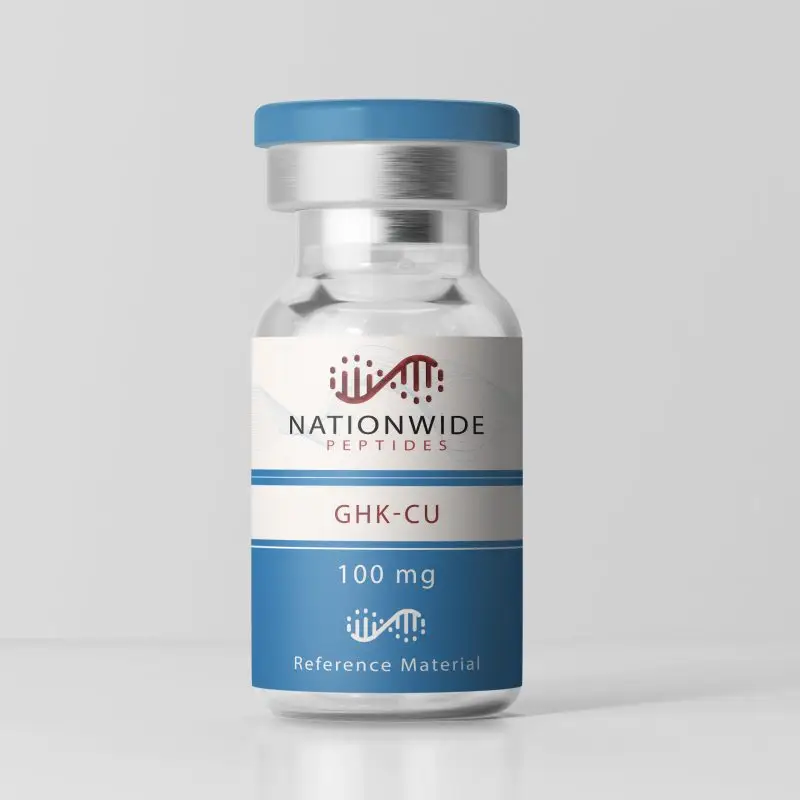
Compounded GHK-Cu creams cost up to $350 vs. $32 for OTC alternatives with equal or higher concentrations — dermatologists say compounding doesn't automatically mean better results.
Compounded GHK-Cu Copper Peptide Creams vs. Over-the-Counter Options: Are They Actually Worth It?
A compounded GHK-Cu copper peptide cream can cost up to $350 for a single jar, while over-the-counter alternatives with equal or higher concentrations of the same active ingredient sell for as little as $32 at Sephora and Ulta Beauty. Board-certified dermatologists and pharmacists are consistent on this point: the price gap rarely reflects a difference in efficacy. It reflects the cost of medical consultation, pharmacy labor, small-batch preparation, and packaging.
Before getting into the science and the shopping calculus, here's a side-by-side look at the key products referenced by dermatologists and researchers in this space:
| Product | Type | GHK-Cu Concentration | Price | Rx Required? |
|---|---|---|---|---|
| Feelin Good Wellness Compounded GHK-Cu Cream | Compounded pharmacy | 0.5% | ~$350/jar | Yes |
| The Ordinary Multi-Peptide + Copper Peptides 1% Serum | OTC serum | 1% | $32 | No |
| Biossance Squalane + Copper Peptide Rapid Plumping Serum | OTC serum | Undisclosed | $69 | No |
| Musely Prescription GHK-Cu Serum | Compounded prescription | 3% | $41/month | Yes |
| Agency GHK-Cu Serum | Compounded prescription | 0.5% | $165 | Yes |
The data above makes one thing clear: concentration does not scale with price, and prescription does not automatically mean stronger. A $32 OTC serum contains twice the GHK-Cu concentration of a $350 compounded cream. Whether that concentration difference translates into meaningfully better results is a question the science cannot yet fully answer.
What exactly is GHK-Cu, and why is everyone talking about it?
GHK-Cu is a naturally occurring copper-binding tripeptide — a short chain of three amino acids (glycine, histidine, and lysine) complexed with a copper(II) ion — found in human plasma, saliva, and urine. Researcher Loren Pickart first isolated it from human plasma in 1973 after noticing that old plasma caused liver cells to behave more like young cells; the molecule responsible turned out to be GHK.
The copper component is not incidental. Copper is a cofactor for lysyl oxidase, the enzyme that crosslinks collagen and elastin fibers to give skin its tensile strength and elasticity. It is also essential for cytochrome c oxidase, the terminal enzyme of the mitochondrial electron transport chain. When GHK binds copper and delivers it to cells, it supplies the raw material for structural and energetic machinery that degrades with age.
What makes GHK-Cu particularly interesting from a longevity research standpoint is its age-related decline. Plasma concentrations fall from roughly 200 nanograms per milliliter at age 20 to under 80 nanograms per milliliter after age 60 — a drop of more than 60% over four decades. Researchers believe this decline contributes to slower wound healing, thinner skin, and reduced tissue regeneration. The logic driving the skincare industry's interest is straightforward: if the body's own supply of GHK-Cu falls as skin ages, replenishing it topically might restore some of that regenerative signaling.
GHK-Cu is not a simple growth factor that switches on a single receptor. A 2012 analysis using the Broad Institute's Connectivity Map found that GHK-Cu modulated the expression of 31.2% of all human genes with high confidence, with particularly strong effects on pathways governing collagen synthesis, anti-inflammatory signaling, antioxidant defense, and DNA repair. That breadth of activity is part of why it has attracted serious scientific attention — and why it has also attracted a fair amount of marketing hype.
Does GHK-Cu actually work when applied to skin?
The short answer: the evidence is genuinely promising, but the human data is still thin. Most of the strongest findings come from in vitro (cell culture) studies and small, non-randomized clinical trials — many of which were funded by cosmetic brands with a commercial interest in the results.
The most frequently cited human study involved 20 women around age 50 in which researchers applied different creams to the thighs and measured collagen production using skin biopsies. After one month, collagen production increased in 70% of the women treated with GHK-Cu, compared with 50% of those treated with vitamin C and 40% treated with retinoic acid. Board-certified dermatologist Nancy Samolitis, MD, who reviewed the published research for Allure, called it "a pretty significant increase in collagen production — more than with tretinoin, and more than with vitamin C."
That finding is notable because retinoids are considered the gold standard for treating signs of aging. GHK-Cu appears to achieve comparable or superior collagen stimulation without the irritation that makes retinoids difficult for sensitive skin types. Head-to-head data shows GHK-Cu cream produces comparable improvements in skin density and fine lines as retinol over 12 weeks.
At the cellular level, GHK-Cu promotes fibroblast proliferation and migration — the two behaviors most critical for wound healing and dermal remodeling. Fibroblasts are the cells in the dermis responsible for synthesizing collagen, elastin, and the glycosaminoglycans that give skin its hydration and volume. GHK-Cu also modulates matrix metalloproteinases (MMPs), the enzymes that break down old, damaged collagen, inhibiting excess MMP activity while still allowing normal tissue remodeling.
GHK-Cu under-eye creams have been found to be superior to vitamin K creams for improved skin appearance and increased skin density and thickness. Studies evaluating GHK-Cu applied to the face have noted reduced fine lines and wrinkle depth, and one study of GHK-Cu applied to the skin of the thigh noted improvement in lines, wrinkles, skin density, and even mottled pigmentation.
The caveat that every expert returns to: "All of the human studies in general with GHK-Cu are small and not randomized controlled trials, so we really need to see more data on this ingredient to accurately describe its benefits," Dr. Samolitis told Allure. "But it seems to have some promise."
That measured enthusiasm is the appropriate response to the current state of the evidence. GHK-Cu is not snake oil — the mechanistic case is strong and the early human data is encouraging. But it is also not a proven, FDA-approved treatment with the kind of large-scale randomized controlled trial data that supports, say, tretinoin.
Is a compounded GHK-Cu cream actually stronger or purer than an OTC product?
This is the central question, and pharmacists and dermatologists answer it consistently: not necessarily.
Compounding is a process by which a pharmacy prepares a medication specifically for an individual patient based on a prescription. For GHK-Cu, the pharmacy typically purchases the peptide as a bulk pharmaceutical ingredient and incorporates it into a cream or gel base. This can be genuinely useful if a patient needs a concentration that isn't commercially available, cannot tolerate a common ingredient in standard formulations, or requires a specific base for medical reasons.
For most people buying compounded GHK-Cu cream for general anti-aging purposes, none of those conditions apply. Ethan Melillo, PharmD, CDOE, a pharmacist and assistant professor of dermatologic pharmacotherapy at the University of Rhode Island, is direct: "A compounded prescription does not automatically make a copper-peptide product stronger or more effective." The higher price reflects the medical consultation, pharmacy labor, small-batch preparation, packaging, shipping, and testing — not a more efficacious ingredient.
The concentration comparison makes this concrete. The compounded cream tested by Allure's Sara Tan contained 0.5% GHK-Cu and cost $350. The Ordinary's Multi-Peptide + Copper Peptides 1% Serum contains double the concentration and costs $32. The Musely prescription serum contains 3% GHK-Cu and costs $41 per month. On concentration alone, the $350 compounded cream is not the most potent option on the market — it is one of the least potent relative to its price.
Concentration is not the only variable that matters, though. Formulation variables — concentration, pH, and vehicle chemistry — determine whether a product delivers the peptide to viable skin cells or simply coats the surface. A poorly formulated high-concentration product may deliver less active ingredient to the dermis than a well-formulated lower-concentration one. Compounding pharmacies can, in theory, add value by optimizing the base, pH, and stabilizers for maximum penetration. Whether they consistently do so in practice is harder to verify.
Much of the human data on topical GHK-Cu is from studies that do not specify the concentration used, though products have generally been used in cosmetic preparations at concentrations between 0.2% and 2%. This range encompasses both compounded and OTC products, which further undermines the case that compounding delivers a categorically superior result.
Does a higher GHK-Cu concentration mean better results?
Not necessarily — and this is one of the most important things to understand before spending more money chasing a higher percentage.
Cosmetic chemist Julian Sass, PhD, explains that we don't have enough clinical data comparing different concentrations of topical GHK-Cu to know exactly where the sweet spot for getting all its purported skin-care benefits lies. "There isn't a ton of clinical data to be able to construct that full dose-response curve well," he says.
Melillo agrees: we cannot definitively say that 0.5% is inferior to 1%, or that 3% is superior to 0.5%, based on current evidence. The dose-response relationship for topical GHK-Cu in human skin has not been established with the kind of rigor that would allow confident claims about optimal concentration.
There is also a practical ceiling to consider. Some research suggests that consistent, moderate exposure to copper peptides may produce better long-term results than sporadic high-dose applications. The most common mistake with copper peptides is overuse: copper is beneficial in small amounts, but excessive copper signaling may increase inflammation or interfere with other actives.
Cream formulations typically contain lower concentrations of copper peptides than serums, but this is not necessarily a disadvantage. The extended contact time and improved barrier support that creams provide can compensate for lower active percentages. For people with dry or mature skin in particular, the emollient base in a cream addresses both active ingredient delivery and the fundamental hydration needs that serums cannot match on their own.
Don't let concentration be the primary driver of your purchasing decision. A product that doesn't disclose its GHK-Cu concentration at all — like the Biossance serum — is a red flag, but chasing the highest percentage number without considering formulation quality is equally misguided.
What is the FDA's current position on GHK-Cu, and does it matter for topical products?
The regulatory picture for GHK-Cu is genuinely complicated, and it matters more for injectable forms than for topical ones.
Injectable GHK-Cu has been flagged by the FDA for possible safety risks, including immune reactions related to impurities and peptide aggregation, and the FDA has noted limited human safety data for injectable forms. The agency has flagged multiple safety concerns with compounded injectable GHK-Cu; it cannot currently be compounded for purchase by a pharmacy for injection.
Topical GHK-Cu operates under a different framework. In September 2023, GHK-Cu was added to the 503A bulks list in Category 1, meaning it may be compounded as a bulk drug substance by 503A pharmacies except for injectable routes of administration. The FDA hasn't approved the ingredient for use, but has not identified any significant safety risks with non-injectable GHK-Cu and won't take legal action against a pharmacy that sells it under the interim policy.
For OTC copper-peptide products, the regulatory situation is even more permissive. Copper-infused skincare creams are considered a cosmetic, not a drug. As long as a company doesn't make medical claims — they can say the cream "smooths skin" but not that it "reduces cellulite" — the products are not subjected to pre-market safety approval by the FDA. As Dr. Samolitis notes, "Any cosmetic product can make claims for their proprietary blends or ingredients with trademarked names without necessarily disclosing the potency of the ingredient or proof of claims."
This regulatory reality cuts both ways. OTC copper peptide products are not held to a high evidentiary standard for their marketing claims, so buyer skepticism is warranted. But the safety profile of topical GHK-Cu, whether compounded or OTC, is not a significant concern. Unlike some other copper-containing compounds like copper chloride or copper acetate, GHK-Cu has not been found to be cytotoxic or to cause irritation topically, making it an ideal option for delivering copper into the skin.
How does GHK-Cu compare to retinol and other anti-aging actives?
GHK-Cu is best understood as a complementary ingredient rather than a direct substitute for retinoids — though for people who cannot tolerate retinoids, it may serve as a meaningful alternative.
Retinoids work primarily by accelerating cell turnover and preventing collagen breakdown. GHK-Cu works differently: it supports skin repair and collagen production by signaling fibroblasts to synthesize more structural proteins and by modulating the enzymes that degrade them. GHK-Cu is not a hair loss cure, and it does not replace retinoids for wrinkle reduction — the benefits are real but gradual and subtle.
The most useful framing, offered by Dr. Samolitis, is that GHK-Cu is "a good retinol alternative" for people whose skin cannot tolerate retinoids. The collagen production data — 70% of women in the thigh study showing increased collagen after one month of GHK-Cu, versus 40% for retinoic acid — is striking, though the study was small and not a randomized controlled trial.
For people whose skin can tolerate retinoids, GHK-Cu and retinol are not mutually exclusive. The two work through different mechanisms and can coexist in a routine. GHK-Cu's anti-inflammatory properties may even help offset some of the irritation associated with retinoid use, though this has not been formally studied.
GHK-Cu and topical rapamycin target completely different aging mechanisms, making them genuinely complementary rather than redundant for skin and hair. GHK-Cu fits into a multi-ingredient approach to skin aging rather than replacing any single established active.
For those interested in building a full anti-aging serum routine, our guide to best plumping and collagen-boosting serums covers how to layer actives effectively without ingredient conflicts.
Can GHK-Cu help with hair loss?
The mechanistic case for GHK-Cu in hair loss is plausible, but the clinical evidence is limited enough that it should not drive purchasing decisions on its own.
GHK-Cu may promote fibroblast proliferation resulting in collagen synthesis, which may in turn promote increased scalp health and blood flow to hair follicles. It also suppresses the overexpression of transforming growth factor-beta (TGF-β)1 noted in patients with hereditary hair loss, which may lead to hair shaft thickening and elongation. The VEGF upregulation associated with GHK-Cu may also support anagen (growth phase) extension in hair follicles.
For hair loss, the mechanistic case is strong through VEGF upregulation and anagen extension, but human randomized trial evidence remains limited. Few studies evaluate GHK-Cu specifically for alopecia, and specific data on effective concentration for this indication is unavailable. Anecdotally, some compounders use concentrations of 0.2–3% for hair applications, similar to those used for aging skin.
GHK-Cu may calm scalp inflammation, but there is little proven clinical evidence that it promotes hair regrowth, and gold-standard options work far better. If hair loss is a primary concern, GHK-Cu is best considered a supportive addition to an evidence-based protocol — not a standalone treatment. Our guide to best Japanese hair growth serums for thinning hair covers options with stronger clinical backing for this specific concern.
What should you actually buy?
Given everything above, the practical guidance is straightforward: for most people, an OTC copper peptide serum is the sensible starting point.
Dr. Samolitis, after reviewing the research and being impressed enough to purchase two copper peptide products herself, chose OTC options: The Ordinary's Multi-Peptide + Copper Peptides 1% Serum at $32 and the Biossance Squalane + Copper Peptide Rapid Plumping Serum at $69. She found The Ordinary's texture the most appealing. Neither required a prescription.
A compounded GHK-Cu product makes sense in specific, narrow circumstances: if you need a concentration or base that isn't commercially available, if you have a documented sensitivity to ingredients in standard formulations, or if a dermatologist has reviewed your skin and determined that a customized formulation addresses a specific clinical need. The physician oversight that comes with a compounded prescription can also be valuable — but only if the prescribing physician is a dermatologist or has relevant expertise in skin health, not just general wellness.
The higher price of compounded products reflects the medical consultation, pharmacy labor, small-batch preparation, packaging, shipping, and testing — not necessarily a more efficacious ingredient. Spending $350 on a compounded cream when a $32 OTC serum contains twice the active concentration is not a decision the current evidence supports.
A few practical guidelines for any GHK-Cu product, compounded or OTC:
- Choose products that disclose their GHK-Cu concentration. A product that lists "copper peptide complex" without a percentage is giving you no useful information about dosing.
- Look for formulations with a stable pH. GHK-Cu is sensitive to pH and can degrade in poorly buffered formulations.
- Avoid combining high-concentration copper peptides with vitamin C or strong acids in the same step — copper can catalyze oxidation of ascorbic acid, reducing the efficacy of both.
- Start with once-daily application and assess tolerance before increasing frequency.
- Give the ingredient at least eight weeks of consistent use before evaluating results. Collagen remodeling is a slow process.
The gray-green color and metallic scent of a compounded GHK-Cu cream may feel medicinal and therefore reassuring. The evidence, however, does not support paying a tenfold premium for that aesthetic. The ingredient's benefits — real, gradual, and worth pursuing — are accessible at a fraction of the cost.
The bottom line
GHK-Cu is one of the more scientifically credible anti-aging ingredients in the current skincare space, with a genuine body of research supporting its role in collagen stimulation, skin repair, and anti-inflammatory signaling. The human clinical data is promising but not yet definitive, and the dose-response relationship for topical application has not been established.
Compounded GHK-Cu creams are not inherently superior to OTC alternatives. The concentration data, the pharmacist and dermatologist consensus, and the price comparison all point in the same direction: a well-formulated OTC serum at 1% GHK-Cu is a more cost-effective starting point than a compounded cream at 0.5% for ten times the price. Compounding adds value in specific clinical contexts — not as a general upgrade for anyone who wants the "good stuff."
The most important variable is not whether your GHK-Cu came from a compounding pharmacy or a Sephora shelf. It is whether the formulation is stable, the concentration is disclosed, and you use it consistently enough for the ingredient to do its work.
Sources
- Are Compounded Peptide Creams Any Better Than Over the Counter Options? | Allure
- GHK-Cu Topical: How Copper Peptide Serums and Creams Actually Work — GetHealthspan
- GHK-Cu Topical: What Copper Peptide Serums Actually Do to Your Skin — GetHealthspan
- GHK-Cu Copper Peptide: Benefits and Research — Superpower
- GHK-Cu Peptide Injections: Why Topical Is Safer — Pure Hydration Spa
- Copper Peptide (GHK-Cu): Clinical Uses, Stability & Compounding Tips — Fagron Academy
- Creams with Copper Peptides: The Complete Guide — SeekPeptides
- The Ordinary Multi-Peptide + Copper Peptides 1% Serum
- FDA Advisory Committee on Compounded Peptides — Reuters
- FDA: Certain Bulk Drug Substances for Compounding May Present Significant Safety Risks