Dermatologists say yes: azelaic acid and tretinoin complement each other by targeting acne, pigmentation, and aging through different mechanisms, and can be layered safely with the right sequencing.
Can You Use Azelaic Acid With Tretinoin? What Dermatologists Actually Say About This Combination
Yes — azelaic acid and tretinoin can be used together, and multiple board-certified dermatologists describe this pairing as a clinical staple that predates its TikTok moment by decades. The combination works because the two ingredients address skin concerns — acne, hyperpigmentation, texture, and early aging — through entirely different biological pathways, meaning they complement rather than compete with each other. Done correctly, the duo can even reduce the irritation that tretinoin alone often causes.
Before diving into the how and why, here is a side-by-side look at what each ingredient brings to the table:
| Feature | Tretinoin | Azelaic Acid |
|---|---|---|
| Prescription required? | Yes (all strengths) | No (≤10% OTC); Yes (15–20%) |
| Common strengths | 0.025%, 0.05%, 0.1% | 10% (OTC), 15%, 20% (Rx) |
| Primary mechanism | Binds retinoic acid receptors; boosts cell turnover, stimulates collagen | Inhibits tyrosinase; disrupts inflammatory pathways; antimicrobial |
| Treats acne? | Yes — clears pores, reduces sebum | Yes — kills C. acnes, reduces keratin buildup |
| Fades pigmentation? | Yes , accelerates shedding of pigmented cells | Yes , directly blocks melanin production enzyme |
| Stimulates collagen? | Yes | No |
| Kills acne bacteria? | No | Yes |
| Safe in pregnancy? | No , risk of birth defects | Yes , one of few actives considered safe |
| Irritation potential | Moderate to high, especially at first | Low , generally well-tolerated |
| Rosacea benefit? | Limited | Yes , inhibits kallikrein-5 and reduces LL-37 peptide |
This table makes the complementary logic obvious: each ingredient fills the gaps the other leaves behind.
What exactly is tretinoin, and why do dermatologists call it the gold standard?
Tretinoin is a synthetic vitamin A derivative — specifically, all-trans retinoic acid — available by prescription only and the only retinoid formally approved by the FDA for treating signs of photoaging, in addition to acne. That distinction matters: retinol, the over-the-counter alternative, must be converted by the skin into retinoic acid before it becomes active, making it slower and less potent by comparison.
"Tretinoin is considered the gold standard topical treatment for acne and one of the most well-studied ingredients for improving signs of photoaging, including fine lines, uneven pigmentation, and skin texture," says Connie Yang, MD, FAAD, a board-certified dermatologist in New York City, speaking to Allure. The ingredient works by binding to retinoic acid receptors in the skin, which triggers a cascade: cell turnover accelerates, collagen production increases, and sebaceous gland activity decreases.
That last point explains why tretinoin is prescribed across a wide age range. For teenagers and young adults, the reduction in oil production makes it a go-to acne treatment. For people in their 30s and beyond, the collagen-stimulating and pigment-clearing effects become the main draw. As Julie Russak, MD, founder of Russak Dermatology Clinic in New York City, explains to Allure, "It helps our cells replenish the surface of the skin with newer, healthier cells."
Tretinoin typically comes in three strengths: 0.025%, 0.05%, and 0.1%. The lowest concentration is the standard starting point for anyone new to retinoids or with sensitive skin. The 0.05% strength suits those who have already used retinol or have mild photoaging. The 0.1% concentration is reserved for resilient skin with deeper concerns, and only after a proper adjustment period.
One of the most persistent misconceptions about tretinoin is that irritation signals damage. Dr. Yang pushes back on that directly: "The irritation isn't because tretinoin is damaging the skin, it's because it's asking your skin to work faster than it's used to," she explains. As the skin adapts over several weeks, that irritation typically subsides while the benefits continue to build. The skin's barrier does catch up — which is why starting slow and supporting the barrier with moisturizer matters so much.
What exactly is azelaic acid, and what makes it different from other acids?
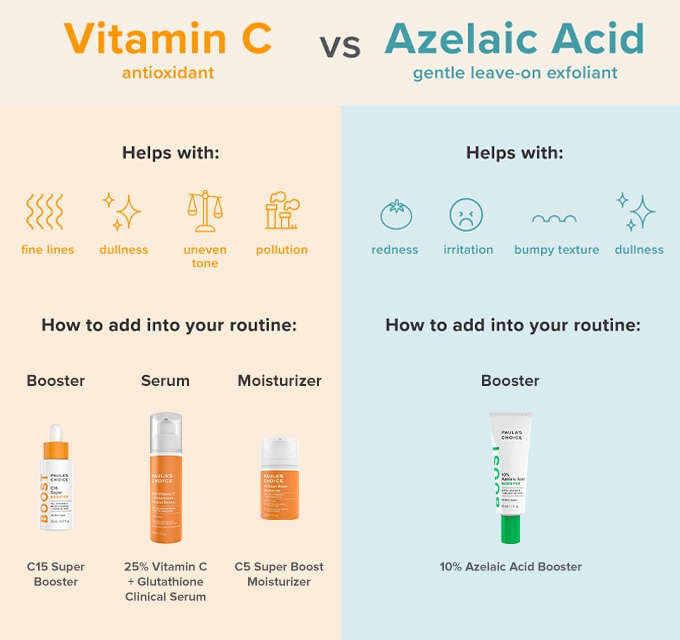
Azelaic acid is a naturally occurring dicarboxylic acid found in grains like barley, wheat, and rye. It works through mechanisms that are markedly different from most other skin-care acids. Unlike AHAs or BHAs, which exfoliate by loosening the bonds between dead skin cells, azelaic acid operates primarily as an anti-inflammatory, antimicrobial, and pigment-inhibiting agent — without stripping the skin barrier in the process.
Available in both prescription and over-the-counter strengths, azelaic acid concentrations of 10% or lower can be purchased without a prescription, while 15% and 20% formulas require one. The higher prescription strengths are where clinicians see the most dramatic results for stubborn pigmentation and inflammatory acne, though the 10% OTC option still delivers meaningful improvements with consistent use.
Azelaic acid's mechanism is genuinely multi-layered:
On acne: Azelaic acid targets Cutibacterium acnes (formerly Propionibacterium acnes), the bacterium most associated with inflammatory breakouts. Beyond killing bacteria, it also interferes with how cells inside the pore stick together — the actual mechanism behind clog formation — making it effective against both inflamed pustules and non-inflamed comedones like blackheads and whiteheads. It also reduces keratin buildup in the skin's outermost layer, helping dead cells shed more easily.
On inflammation: Azelaic acid interrupts the inflammatory cascade at multiple points. It neutralizes reactive oxygen species that trigger inflammation, reduces pro-inflammatory cytokine signaling between cells, and reduces the activity of NF-kB, the primary cellular transcription factor driving inflammation and redness in the skin. This multi-point interruption is why it outperforms single-target anti-inflammatory approaches.
On pigmentation: By inhibiting tyrosinase — the enzyme responsible for converting tyrosine into melanin — azelaic acid directly reduces abnormal pigment production at its source. This is a different mechanism from tretinoin's approach of accelerating the shedding of pigmented cells, which is exactly why the two work so well together.
On rosacea: For rosacea-prone skin, azelaic acid inhibits kallikrein-5 and the cathelicidin gene, which lowers LL-37, a peptide involved in both inflammation and the vascular reactivity behind visible redness. This targeted pathway disruption can meaningfully reduce flushing and persistent redness — a benefit tretinoin cannot replicate.
The ingredient's safety profile is another distinguishing feature. Unlike most actives, azelaic acid is widely considered suitable for use during pregnancy, making it one of very few options for pregnant people dealing with acne or melasma. Tretinoin, by contrast, carries a risk of birth defects and is contraindicated during pregnancy.
Why do dermatologists feel confident combining these two ingredients?
The short answer: the combination has decades of clinical use behind it. "While it's a new trend on social media, dermatologists have been prescribing these medications together for decades," says Dr. Yang. The social media moment has simply made the pairing visible to a broader audience.
Beverly Hills-based dermatologist Jessica Wu, MD, likens the combination to a balanced workout routine: "It's like doing cardio plus strength training," she tells Allure, noting that many of her patients cannot tolerate tretinoin alone. The pairing works for many patients precisely because the two ingredients address the same concerns — acne, anti-aging, pigmentation — through different mechanisms.
The complementary logic breaks down like this:
- For acne: Tretinoin speeds up cell turnover and clears pores but does not kill acne-causing bacteria. Azelaic acid fills that gap with its antimicrobial action against C. acnes.
- For hyperpigmentation and melasma: Tretinoin normalizes cell turnover so pigment-containing cells are shed more efficiently and can help other topical treatments penetrate more effectively. Azelaic acid directly blocks new pigment production at the enzymatic level. As Mona Gohara, MD, a board-certified dermatologist in Hamden, Connecticut, puts it: "Azelaic acid helps turn down the faucet of excess pigment production, while tretinoin helps move the pigment that is already there up and out more efficiently."
- For anti-aging: Tretinoin stimulates collagen production — azelaic acid does not. But azelaic acid's anti-inflammatory properties help manage the redness and irritation that tretinoin can trigger, making it easier to stay consistent with tretinoin long enough to see the anti-aging benefits.
- For rosacea: Azelaic acid's LL-37 pathway inhibition addresses vascular redness directly, while tretinoin's cell-turnover benefits improve texture and tone — a combination that many rosacea patients find more effective than either ingredient alone.
This is the core reason dermatologists are confident prescribing them together: they are not redundant, and they are not fighting each other. They are working on the same problems from different angles simultaneously.
Are there any risks or downsides to using azelaic acid and tretinoin together?
The combination is generally considered safe, but it is not without considerations. The main risk is cumulative irritation — both ingredients are active, and layering them incorrectly or too aggressively can compromise the skin barrier, leading to dryness, flaking, redness, and sensitivity.
Dr. Wu is clear that sequencing matters: "It has to be sequenced properly so you don't cause more irritation." Azelaic acid is significantly gentler than most other actives, which is precisely why it pairs well with tretinoin rather than compounding its irritation potential.
A few specific cautions worth noting:
If you are new to either ingredient, do not introduce both at the same time. Start with one — typically tretinoin — allow your skin to adjust over several weeks, then introduce azelaic acid. Trying to adapt to both simultaneously makes it harder to identify which ingredient is causing any adverse reaction.
Tretinoin increases photosensitivity. This is well-established: tretinoin should be applied at night, and daily broad-spectrum SPF 30 or higher is non-negotiable during the day. Azelaic acid does not carry the same photosensitivity risk, but sun protection remains important for anyone treating pigmentation.
Pregnancy changes the equation entirely. Tretinoin is contraindicated during pregnancy due to the risk of birth defects. In that context, azelaic acid becomes the primary active — it is one of the few ingredients considered safe for use during pregnancy, making it a valuable standalone option for pregnant people managing acne or melasma.
Skin type matters for concentration choices. Sensitive or rosacea-prone skin may do better starting with a lower azelaic acid concentration (10% OTC) and the lowest tretinoin strength (0.025%) before working up. People with more resilient skin and established retinoid tolerance may be able to use prescription-strength azelaic acid (15–20%) alongside 0.05% or 0.1% tretinoin more comfortably.
How should you sequence azelaic acid and tretinoin in your routine?
Sequencing is where most people go wrong, and it is the detail that determines whether this combination works smoothly or causes unnecessary irritation. The general framework recommended by dermatologists follows a few clear principles.
Apply tretinoin at night. This is standard practice for all retinoids — they degrade in sunlight and increase photosensitivity, so nighttime application is both more effective and safer. Curology's clinical team recommends starting with a gradual schedule when first introducing tretinoin:
- Weeks 1–2: Apply Monday, Wednesday, and Friday night
- Weeks 3–4: Apply every other night
- Weeks 5–6: Apply every night
This ramp-up approach gives the skin barrier time to adapt without being overwhelmed.
Azelaic acid can be used morning or evening. Because it does not carry the same photosensitivity risk as tretinoin, azelaic acid is flexible in terms of timing. Many dermatologists recommend using it in the morning — treating daytime pigmentation and inflammation — while tretinoin works overnight. This split-routine approach reduces the risk of stacking two actives on the skin at the same time.
If using both in the same evening session, apply tretinoin first on clean, dry skin, wait for it to absorb fully (at least 20–30 minutes), then apply azelaic acid. Some practitioners recommend the reverse — applying azelaic acid first as a buffer — but the consensus leans toward tretinoin first since it needs direct skin contact to bind its receptors effectively. Follow with a moisturizer to support the barrier regardless of the order.
The "sandwich method" is a valid option for sensitive skin. This involves applying a thin layer of moisturizer before tretinoin (to dilute its intensity), then tretinoin, then another layer of moisturizer. Azelaic acid can be applied on top of the final moisturizer layer or reserved for the morning routine entirely.
When introducing tretinoin, Curology advises temporarily stopping other strong actives like salicylic acid and benzoyl peroxide until the skin adjusts. Azelaic acid is generally gentle enough to keep in the rotation, but if irritation flares, simplifying the routine is always the right call.
What concentrations and product types work best for this combination?
The right concentrations depend on your skin's current tolerance, your primary concerns, and whether you have access to prescription-strength formulas.
For tretinoin, the standard starting point is 0.025% — even this lowest strength delivers meaningful results when used consistently. Jumping straight to 0.1% without building tolerance is one of the most common mistakes clinicians see, and it often leads to severe irritation that causes people to abandon the ingredient entirely before seeing results. The 0.05% strength is a solid middle ground for those who have already used retinol regularly or have mild photoaging concerns.
For azelaic acid, the 10% OTC concentration is appropriate for beginners or anyone easing into actives — improvements in texture and tone are still visible, though they may take longer to appear. The 15–20% prescription strengths are where clinicians see the most dramatic results for deeper pigmentation and stubborn inflammatory acne, but these concentrations require proper skin preparation and intentional layering.
Product formulation matters too. Azelaic acid comes in gels, creams, and foams. Gel formulations tend to feel lighter and absorb more quickly, making them easier to layer under or over tretinoin. Cream formulations provide more occlusive barrier support, which can be advantageous for dry or sensitive skin types already struggling with tretinoin-related dryness.
For people who want to simplify their routine, some compounding pharmacies and prescription skincare services (like Curology) can formulate tretinoin and azelaic acid into a single product. This approach eliminates the sequencing question entirely, though it also removes the flexibility of adjusting each ingredient's concentration independently.
What results can you realistically expect, and when will you see them?
Managing expectations is critical with this combination, because the timeline for visible results is longer than most people anticipate — and the early weeks can look like things are getting worse before they get better.
The tretinoin purge is a real phenomenon: as cell turnover accelerates, existing microcomedones (clogged pores that haven't surfaced yet) are pushed to the surface faster, temporarily increasing the appearance of breakouts. This is not a sign the treatment is failing — it is a sign it is working. Curology's clinical guidance describes this as a temporary uptick in breakouts that typically resolves within the first 4–8 weeks of consistent use.
For acne, most people see meaningful improvement within 8–12 weeks of consistent use of both ingredients. The combination's dual mechanism — tretinoin clearing pores and azelaic acid killing bacteria — tends to produce faster and more complete acne clearance than either ingredient alone.
For hyperpigmentation and melasma, the timeline is longer. Pigmentation concerns typically require 3–6 months of consistent use before significant fading becomes visible. The combination approach — tretinoin accelerating pigmented cell shedding while azelaic acid blocks new melanin production — is more effective than either ingredient alone, but patience is genuinely required. Sun protection during this period is not optional; UV exposure will continuously re-stimulate melanin production and undermine the treatment.
For anti-aging concerns — fine lines, texture, and overall skin quality — the timeline is the longest. Collagen remodeling from tretinoin takes months to manifest visibly, with most studies showing meaningful improvement at the 6–12 month mark. The anti-inflammatory support from azelaic acid helps maintain consistency with tretinoin during this period by reducing the irritation that causes many people to give up.
For rosacea-related redness, azelaic acid's effects on the kallikrein-5 pathway can produce noticeable reductions in flushing within 4–8 weeks, though full benefit typically develops over 3–4 months of consistent use.
The overarching principle: this is a long-game combination. The dermatologists who recommend it most enthusiastically are also the ones who set realistic timelines with their patients upfront. Consistency over months — not dramatic results in weeks — is the realistic expectation.
Who is this combination best suited for?
The tretinoin and azelaic acid pairing is particularly well-suited for people dealing with multiple overlapping skin concerns simultaneously. If you have acne that also leaves post-inflammatory hyperpigmentation (PIH), this combination addresses both the active breakouts and the marks they leave behind through complementary mechanisms.
People with melasma or sun-induced pigmentation who are also concerned about early signs of aging are another strong candidate group. The combination's ability to both inhibit new pigment production (azelaic acid) and accelerate the clearance of existing pigment (tretinoin) while also stimulating collagen makes it unusually efficient for this profile.
For people with rosacea who also experience acne or texture concerns, azelaic acid's rosacea-specific benefits make it a particularly strategic pairing with tretinoin's cell-turnover effects.
The combination is less appropriate — or requires more careful management — for people with very sensitive or compromised skin barriers, those who are pregnant (tretinoin is contraindicated), or those entirely new to active ingredients who have not yet established any baseline tolerance. In those cases, starting with azelaic acid alone and introducing tretinoin gradually once the skin has adapted is a more conservative and often more successful approach.
As with any prescription ingredient, the starting point should always be a conversation with a board-certified dermatologist who can assess your specific skin type, concerns, and medical history before recommending concentrations and a sequencing protocol. The combination's long clinical track record means dermatologists are well-equipped to guide that conversation — and the evidence base is solid, even if TikTok is only now catching up.
Sources
- Can You Use Azelaic Acid With Tretinoin? Dermatologists Weigh In. | Allure
- How to adjust to tretinoin and azelaic acid in your skincare routine | Curology
- Azelaic Acid and Tretinoin: How to Use Them Right | Maria Kane
- Azelaic acid antimicrobial properties — PMC (PubMed Central)
- NF-kB and inflammation — PMC (PubMed Central)
- Tretinoin and risk of birth defects — NCBI Bookshelf