The best night creams of 2026 span $18–$230 and are chosen by skin type and concern — from peptide-rich formulas to retinol alternatives and barrier-restoring lipid blends.
Best Night Creams for Softer, Plumper Skin (2026): How to Choose the Right Formula for Your Skin Type
A night cream is a richer, more occlusive moisturizer specifically formulated to support the skin's natural repair and regeneration processes during sleep — and in 2026, the category spans everything from $18 drugstore staples to $230 luxury treatments packed with growth factors and proprietary bioactives. The best options share a common architecture: humectants to draw in water, barrier-supporting lipids to seal it in, and targeted actives that work most effectively after dark.
Before diving into individual picks, here's how the top-recommended night creams of 2026 stack up across the metrics that matter most to buyers:
| Product | Price | Best For | Key Actives | Fragrance-Free |
|---|---|---|---|---|
| Medik8 Advanced Pro-Collagen+ Peptide Cream | $99 | Overall / Sensitive & Oily | GF MiniProtein, carnosine, ceramides, polyglutamic acid | Yes |
| L'Oréal Paris Revitalift Triple Power Rich Night Moisturizer | $36 | Exfoliating / Budget-Conscious | Pro-Retinol, hyaluronic acid, vitamin C | No |
| La Mer The Rejuvenating Night Cream | $230 | Mature Skin / Retinol-Sensitive | MRA-3 (Marine Retinol Alternative), Miracle Broth | No |
| SkinCeuticals A.G.E. Interrupter Advanced | $185 | Dry / Aging Skin | Proxylane, blueberry extract, phytosphingosine | No |
| SkinCeuticals Triple Lipid Restore 2:4:2 | $150 | All Skin Types / Barrier Repair | 2% ceramides, 4% cholesterol, 2% fatty acids, vitamin E | No |
| RoC Retinol Correxion Night Cream | $30 | Aging / Fine Lines | Retinol, mineral complex | No |
| Cetaphil Rich Hydrating Night Cream | $18 | Dry / Sensitive / Budget | Vitamins C & E, hyaluronic acid | Yes |
| SkinBetter Science AlphaRet Overnight Cream | $135 | Anti-Aging / Sensitive | Retinol, lactic acid, glycolic acid, niacinamide, ceramides | No |
What exactly is a night cream, and do you really need one?
A night cream is a moisturizer formulated with a richer, often more occlusive texture and a higher concentration of active ingredients than a typical daytime moisturizer — designed specifically to complement the skin's natural nocturnal repair cycle. During sleep, skin cell turnover accelerates, transepidermal water loss increases, and the skin is no longer defending itself against UV radiation or environmental pollution. A well-chosen night cream steps into that window.
The practical question — do you actually need a separate night cream? — depends on your skin type and goals. Board-certified dermatologist Tiffany Libby, MD, tells InStyle that night creams "target skin repair and renewal during sleep and rest when the skin's regenerative processes are at their peak." She also notes that they help mitigate "inflammaging" — the chronic, low-level inflammation caused by daily UV and pollution exposure that accelerates visible aging over time.
If your current daytime moisturizer is lightweight, SPF-containing, or formulated to sit under makeup, it almost certainly isn't doing the reparative work your skin needs overnight. That's the gap a dedicated night cream fills.
On the ingredient side, dermatologist Anetta Reszko, MD, told Allure to look for "humectants such as glycerin and hyaluronic acid to attract water, barrier-supporting lipids such as ceramides, cholesterol, and fatty acids, and emollient or occlusive ingredients that help reduce water loss overnight." That trio — humectant, lipid, occlusive — is the baseline. Everything else (retinoids, peptides, exfoliating acids, growth factors) is a targeted upgrade layered on top.
Which night cream is best overall in 2026?
Allure's 2026 pick for best overall night cream is the Medik8 Advanced Pro-Collagen+ Peptide Cream at $99, and the formula earns that designation through an unusually sophisticated combination of structural support and immediate hydration.
The cream's standout ingredient is GF MiniProtein, a growth factor-inspired "mini protein" designed to support the look of skin's underlying structure. Alongside it, collagen amino acids and oligopeptide-1 provide additional scaffolding support. Carnosine — a peptide with anti-glycation properties — defends against the process that makes collagen stiff and less flexible over time, one of the less-discussed but meaningful contributors to skin aging.
On the longevity side, Medik8's sunflower sprout-derived NAD+ Longevity Booster helps maintain the skin's natural levels of NAD+, a molecule involved in cellular energy and repair that declines with age. Encapsulated endonuclease, an enzyme involved in DNA repair, addresses signs of UV-related damage. These are long-game ingredients — consistent use builds toward measurable improvement in skin quality, not overnight transformation.
The moisturizing side of the formula delivers more immediate results: polyglutamic acid and sodium hyaluronate draw in water for a plumper look, while squalane, shea butter, ceramides, and cholesterol seal in moisture. Allure commerce market editor Sarah Hoffmann, who uses a retinoid nightly, reports that applying this cream afterward "staves off any negative side effects" and leaves skin "hydrated without my usual slew of annoyances." The finish is described as satin-y and quick to absorb — a meaningful quality for anyone who doesn't want to wait ten minutes before getting into bed.
The formula is also fragrance-free, which matters for sensitive skin and for anyone layering it over active ingredients like retinoids or acids.
What's the best budget night cream that actually works?
Budget night creams have improved substantially, and two options consistently appear across expert and tester roundups for 2026.
InStyle recommends the Cetaphil Rich Hydrating Night Cream at $18 as its best budget pick. The formula combines vitamins C and E with hyaluronic acid — a simple but effective trio that addresses hydration, antioxidant protection, and barrier support simultaneously. It's available at most drugstores, is fragrance-free, and is gentle enough for sensitive skin types. For anyone new to night creams or looking to test the category without a significant financial commitment, this is a reliable starting point.
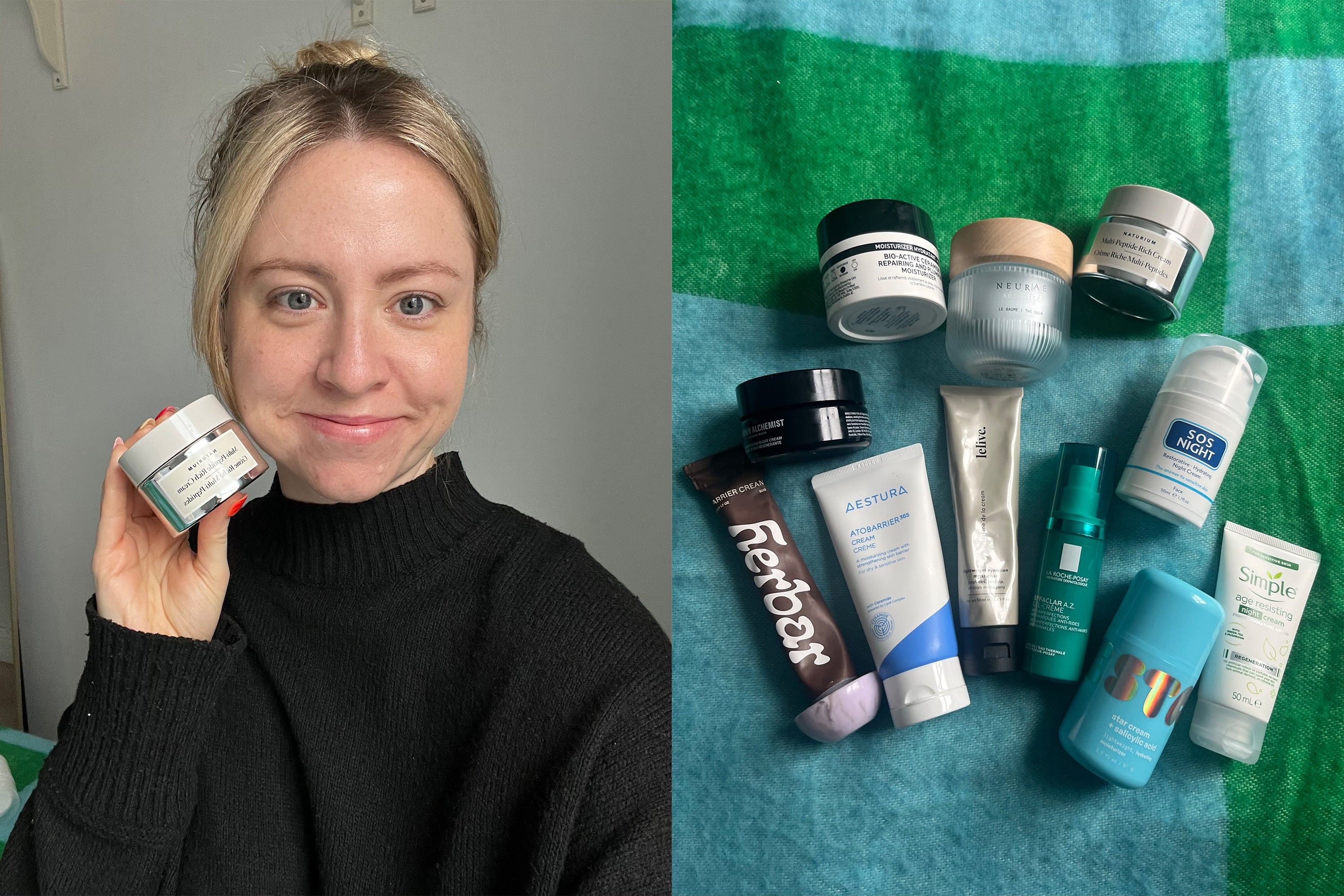
For those willing to spend slightly more, The Independent's 2026 testing found the Naturium Multi-Peptide Rich Cream (£27, approximately $34) to be its best overall pick — a peptide-forward formula that punches well above its price point for skin-plumping and texture-refining benefits.
At the absolute budget end, The Independent also tested the Simple Age-Resisting Night Cream at £8 (approximately $10) and found it a credible option for basic overnight hydration and barrier maintenance.
The honest caveat: budget formulas typically can't deliver the concentration of actives or the proprietary ingredient systems found in mid-range and luxury options. If your primary goal is basic hydration and barrier support, an $18 cream can absolutely do that. Targeting specific concerns — glycation, DNA repair, cell renewal, or significant anti-aging — will likely require a bigger investment.
What's the best night cream for dry or mature skin?
Dry and mature skin share overlapping needs: richer textures, higher lipid content, and ingredients that address the structural changes that come with age. Two formulas stand out for this category in 2026.
Allure designates the SkinCeuticals A.G.E. Interrupter Advanced ($185) as the best night cream for dry skin. The formula targets advanced glycation end-products (AGEs) — compounds that accumulate in skin over time and contribute to stiffness, dullness, and loss of elasticity. Its key actives include Proxylane, a hydroxypropyl tetrahydropyrantriol derived from beech tree wood that supports the skin's structural matrix, alongside blueberry extract and phytosphingosine for barrier reinforcement.
For mature skin specifically, Allure's 2026 Best of Beauty winner in the luxury category is La Mer The Rejuvenating Night Cream at $230. This formula introduced La Mer's proprietary MRA-3 (Marine Retinol Alternative-3), a plant-based complex designed to deliver retinol-adjacent benefits — primarily supporting cell renewal — without retinol itself. It still contains La Mer's Miracle Broth, a fermented blend featuring sea kelp that supports the skin barrier. For mature skin that finds retinol too irritating, or for anyone who prefers to avoid retinoids entirely, this is a compelling alternative.
NewBeauty highlights the SkinCeuticals Triple Lipid Restore 2:4:2 ($150) as a dermatologist favorite for dry and aging skin, citing its patented lipid ratio — 2% ceramides, 4% cholesterol, and 2% fatty acids — as particularly effective for restoring the moisture barrier and improving skin tone, texture, and radiance. Dermatologist Tiffany Libby, MD, specifically recommends this formula to patients who want to splurge on a single product that addresses multiple aging concerns simultaneously.
Clarins' Extra-Firming Night Cream is another well-regarded option for mature and dry skin, featuring the brand's [COLLAGEN]³ Technology to smooth wrinkles and improve firmness while providing rich, comforting hydration.
What's the best night cream for sensitive or acne-prone skin?
Sensitive skin requires night creams that deliver active benefits without triggering redness, breakouts, or barrier disruption. The challenge is that many of the most effective anti-aging actives — retinoids, exfoliating acids, fragrance — are also common irritants.
The Independent's 2026 testing identified the La Roche-Posay Effaclar A.Z. Gel-Cream (£25, approximately $32) as the best night cream for acne-prone skin. The gel-cream texture is lighter than most night creams, which suits oily and combination skin types that tend to break out under heavier formulas.
For sensitive skin more broadly, The Independent recommends the SOS Night Cream (£16, approximately $20) as a gentle, barrier-focused option that minimizes irritation risk while still providing meaningful overnight hydration.
Despite containing retinol, lactic acid, and glycolic acid, NewBeauty notes that the SkinBetter Science AlphaRet Overnight Cream ($135) is a surprisingly accessible option for sensitive skin. Dermatologist Lesley Loss, MD, reports that patients who cannot tolerate prescription-strength or many OTC retinols find this formula doesn't dry or irritate their skin — attributed to the inclusion of bisabolol and green tea extract to calm redness and counteract potential irritation.
NewBeauty also highlights CeraVe Moisturizing Cream ($18) as a dermatologist-recommended option for sensitive and eczema-prone skin, with ceramides and hyaluronic acid as its core actives. It's safe for face and body application and is one of the most widely recommended affordable options across dermatology practices.
The general principle for sensitive skin: start with one active ingredient at a time. InStyle recommends beginning with a single active like niacinamide — as found in The Outset's Restorative Night Cream — so it's easier to identify the source of any irritation if it occurs.
What's the best retinol night cream, and what if I can't use retinol?
Retinol is one of the most evidence-backed ingredients in skincare, with decades of research supporting its ability to accelerate cell turnover, stimulate collagen production, and reduce the appearance of fine lines, wrinkles, and uneven pigmentation. Night is the preferred application window because many retinoids are sensitive to light and can lose stability and effectiveness with UV exposure.
InStyle's best overall pick — RoC Retinol Correxion Night Cream at $30 — is a clear winner for aging skin on a budget. The formula absorbs quickly, noticeably evens skin tone, and addresses fine lines and wrinkles. For a retinol entry point that doesn't require a significant investment, this is the most consistently recommended option across expert and tester reviews.
For a more sophisticated retinol formula with built-in tolerance support, NewBeauty recommends the SkinBetter Science AlphaRet Overnight Cream ($135), which combines retinol with lactic acid, glycolic acid, niacinamide, ceramides, and vitamins C and E — essentially a full anti-aging formula in a single product, with bisabolol and green tea extract to minimize irritation.
For those who cannot or prefer not to use retinol, the options have expanded significantly. La Mer The Rejuvenating Night Cream ($230) introduces MRA-3 (Marine Retinol Alternative-3), a plant-based complex designed to support cell renewal without retinol itself. NewBeauty also highlights the OSEA Collagen Dream Night Cream ($68), which uses bio-retinol — a plant-derived retinol alternative — alongside vegan collagen to plump, soften, and smooth the look of fine lines without the potential irritation of synthetic retinol.
One honest note: plant-derived retinol alternatives are generally milder and less well-studied than retinol itself. They're a reasonable choice for those with sensitivity concerns or who prefer plant-based formulations, but the clinical evidence base for retinol remains stronger.
What ingredients should I actually look for in a night cream?
The ingredient space in night creams is broad, and marketing language can make it difficult to distinguish genuinely effective actives from filler. Here's a practical breakdown of the categories that matter:
Humectants draw water into the skin from the environment and deeper skin layers. Hyaluronic acid and its derivative sodium hyaluronate are the most common; polyglutamic acid (found in the Medik8 formula) is a newer, larger-molecule humectant that some research suggests may be even more effective at surface-level water retention. Glycerin is an affordable, well-studied humectant found in many budget options.
Barrier lipids — ceramides, cholesterol, and fatty acids — form the skin's protective outer layer. As dermatologist Tiffany Libby, MD, explains about the SkinCeuticals Triple Lipid Restore, the "patented lipid ratio of 2% ceramides, 4% cholesterol, and 2% fatty acids intensely nourishes skin and repairs the moisture barrier." This ratio mirrors the skin's natural lipid composition, which is why it's particularly effective for dry and aging skin that has lost lipid production capacity.
Occlusives form a physical barrier on the skin's surface to prevent transepidermal water loss overnight. Squalane, shea butter, and mineral oil are common examples. These are especially important in night creams because there's no makeup or sunscreen to apply over them — the occlusive layer can sit undisturbed for hours.
Retinoids are the gold standard for anti-aging actives. Retinol (the OTC form), retinaldehyde (slightly more potent), and prescription tretinoin all accelerate cell turnover and stimulate collagen synthesis. Night is the ideal application window because retinoids are photosensitive.
Peptides are short chains of amino acids that signal the skin to produce more collagen, elastin, or other structural proteins. The Medik8 formula's GF MiniProtein and carnosine are examples of next-generation peptide technology. Peptides are generally well-tolerated across skin types and can be layered with most other actives.
Exfoliating acids — AHAs like glycolic and lactic acid — accelerate surface cell turnover and improve texture and radiance. They're best used at night to avoid photosensitivity. The SkinBetter Science AlphaRet formula combines these with retinol for a comprehensive approach.
Niacinamide (vitamin B3) addresses multiple concerns simultaneously: it reduces redness, minimizes pore appearance, evens skin tone, and supports the barrier. It's one of the most broadly compatible actives and works well for sensitive skin.
How do I choose the right night cream for my skin type?
Skin type is the most practical starting point for narrowing down night cream options, but layering in your primary concern — hydration, anti-aging, texture, sensitivity — helps find the best match.
Dry skin benefits most from rich, lipid-heavy formulas with strong occlusive ingredients. The SkinCeuticals A.G.E. Interrupter Advanced, SkinCeuticals Triple Lipid Restore 2:4:2, and Cetaphil Rich Hydrating Night Cream all perform well here. Look for shea butter, squalane, ceramides, and cholesterol in the ingredient list.
Oily or combination skin can still benefit from a night cream — the key is finding a formula that hydrates without adding excess oil or clogging pores. The Medik8 Advanced Pro-Collagen+ Peptide Cream is noted by its tester (who has sensitive, oily skin) as absorbing quickly without causing buildup. Gel-cream textures like the La Roche-Posay Effaclar A.Z. are also well-suited to this skin type.
Sensitive skin should prioritize fragrance-free formulas and single-active introductions. CeraVe Moisturizing Cream, Cetaphil Rich Hydrating Night Cream, and The Outset Restorative Niacinamide Night Cream are all gentle starting points. If you want to introduce a retinoid, the SkinBetter Science AlphaRet Overnight Cream's built-in calming ingredients make it a more accessible entry point than many standard retinol formulas.
Mature skin benefits from formulas that address multiple aging mechanisms simultaneously: lipid loss, collagen degradation, glycation, and reduced cell turnover. La Mer The Rejuvenating Night Cream, SkinCeuticals A.G.E. Interrupter Advanced, and the Clarins Super Restorative Night Cream (rated 4.8 stars and described as an anti-sagging, anti-wrinkle lifting cream for ages 50+) are all designed with this profile in mind.
Acne-prone skin should avoid heavy occlusives like mineral oil and petrolatum, which can clog pores. Look for non-comedogenic formulas with niacinamide (which helps regulate sebum) or salicylic acid for active breakouts.
What's the difference between a day cream and a night cream?
The distinction comes down to both formulation goals and the skin's biological context. Daytime moisturizers are typically designed to layer easily under sunscreen and makeup — lighter in texture, sometimes SPF-containing, and often prioritizing antioxidant protection against UV and pollution exposure.
Night creams have the luxury of going richer. As Allure explains, they "can sneak in actives you might prefer to use after dark, such as retinoids, many of which are sensitive to light and can lose stability and effectiveness with exposure." The absence of sunscreen in a night cream isn't a flaw — applying SPF at night provides no benefit and can interfere with the absorption of other actives.
The richer texture also serves a specific physiological purpose: transepidermal water loss (TEWL) is higher at night, meaning skin loses more moisture while you sleep than during the day. A more occlusive formula helps counteract that loss and keeps hydration levels stable through the night.
For extra-dry or mature skin, Allure notes that a thicker cream may also make irritating active ingredients easier to tolerate — the additional cushioning of a rich base can buffer the skin against the potential irritation of retinoids or exfoliating acids.
Are luxury night creams worth the price?
Sometimes, depending on what you're paying for. The gap between an $18 Cetaphil cream and a $230 La Mer treatment is not purely marketing — but it's also not purely performance.
At the luxury end, you're often paying for proprietary ingredient systems (La Mer's Miracle Broth, Medik8's GF MiniProtein, SkinCeuticals' patented lipid ratios), higher concentrations of actives, and more sophisticated delivery systems that improve ingredient stability and skin penetration. Business Insider notes that the SkinCeuticals Triple Lipid Restore ($150) is "pricey but worth it" because it "targets many different skin concerns and works wonderfully for all skin types" — a formula that genuinely delivers across a broad range of concerns can justify a higher price point.
At the mid-range ($30–$100), there are genuinely excellent options. The RoC Retinol Correxion Night Cream at $30 delivers clinically studied retinol at a fraction of luxury prices. The Medik8 Advanced Pro-Collagen+ Peptide Cream at $99 offers a sophisticated peptide system that competes with formulas costing twice as much.
Budget options ($10–$20) are best suited to basic hydration and barrier support. They won't deliver the same concentration of anti-aging actives as a $150 formula, but for someone whose primary goal is soft, comfortable skin in the morning, they're entirely adequate.
The practical approach: match your investment to your concern. If you're in your 20s or 30s and primarily want hydration and barrier support, a mid-range or budget option is likely sufficient. If you're targeting specific aging concerns — glycation, significant collagen loss, cell renewal — the evidence-backed actives in mid-range to luxury formulas are worth the premium.
How should I apply a night cream for best results?
Application method affects both how well a night cream performs and how well your skin tolerates it. A few principles apply across most formulas.
Apply to slightly damp skin immediately after cleansing and any serums. The damp surface helps humectants like hyaluronic acid draw in water more effectively, and applying while skin is still warm from washing improves absorption.
Use a pea-to-dime-sized amount for the face, slightly more if you're extending to the neck and décolletage. Night creams are typically rich enough that a small amount goes a long way — using too much can lead to pilling or a heavy, uncomfortable finish.
If you're using a retinoid or exfoliating acid in your routine, apply it before your night cream. The cream's occlusive layer will help buffer any potential irritation and lock in the active ingredients. This is the approach Allure's tester uses with the Medik8 cream — applying it after a retinoid to minimize side effects.
Give the cream a few minutes to absorb before getting into bed, particularly with richer formulas. This prevents transfer to your pillowcase and ensures the formula has time to begin working.
Consistency matters more than any individual ingredient. Most night creams — even those with fast-acting humectants — show their best results after four to six weeks of regular use. Structural changes from peptides, retinoids, and lipid-restoring ingredients take longer, often three to six months of consistent nightly application.
If you're interested in complementing your night cream with a targeted serum, our guide to best plumping and collagen-boosting serums covers the layering approach in detail.
Sources
- 8 Best Night Creams 2026 for Softer, Plumper Skin by Morning | Allure
- Best night creams 2026, tested by a beauty writer | The Independent
- The 10 Best Night Creams of 2026, Tested and Reviewed - InStyle
- The 11 Best Night Creams of 2026, According to Dermatologists - Business Insider
- The 14 Best Night Creams For Softer, Smoother and Plumper Skin - NewBeauty
- Night Creams | Best Night Creams | CLARINS®
- Medik8 Advanced Pro-Collagen+ Peptide Cream
- SkinCeuticals Triple Lipid Restore 2:4:2
- SkinBetter Science AlphaRet Overnight Cream