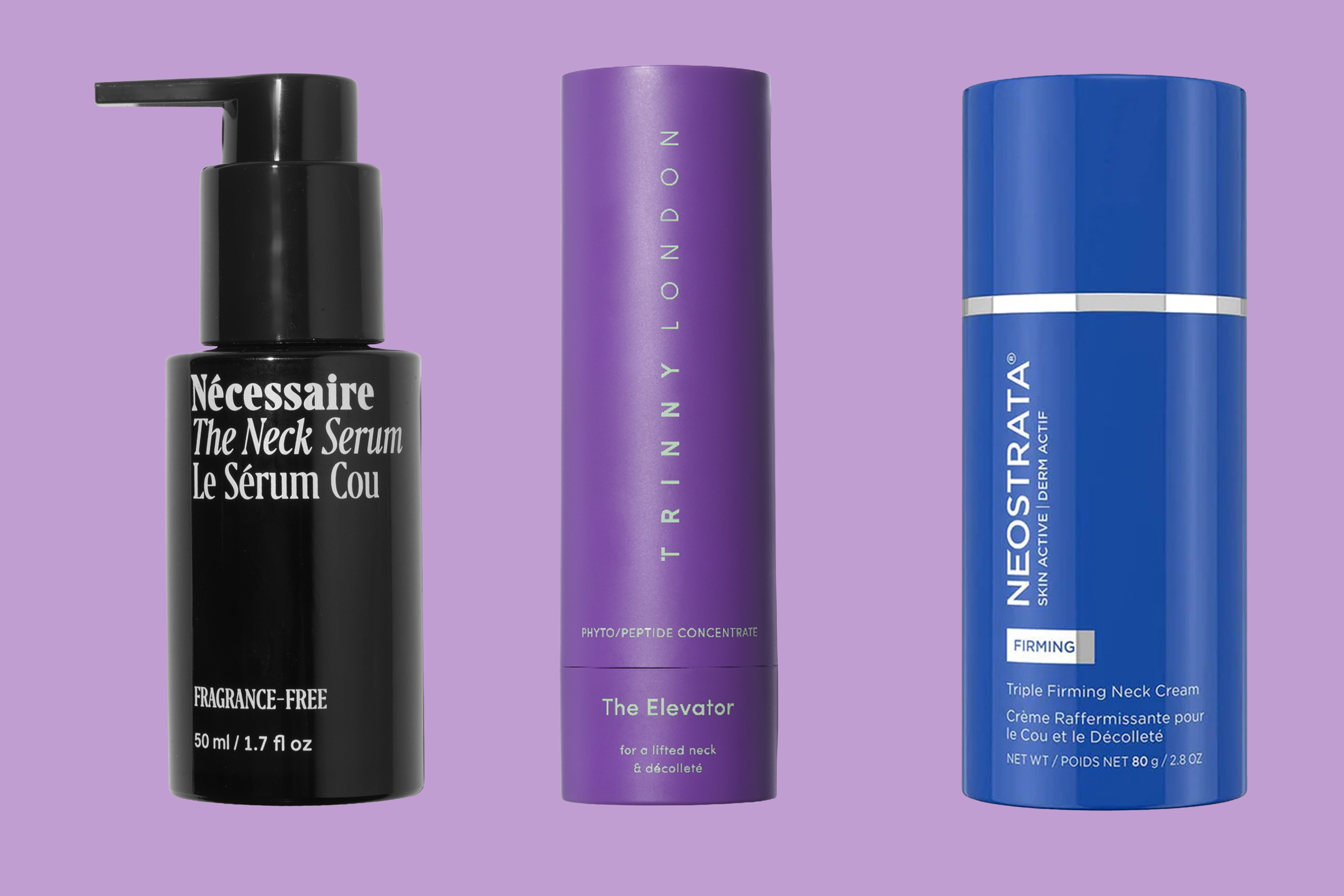
The top neck creams of 2026 range from $30 to $158 and work best when formulated with peptides, retinol, ceramides, and hyaluronic acid to address tech neck, crepey skin, and laxity.
Best Neck Creams for Firming and Smoothing (2026): How to Choose the Right Formula for Tech Neck and Crepey Skin
A neck cream is a targeted skincare formula designed specifically for the décolletage — the area from the chin to the chest — where skin is inherently thinner, has fewer oil glands, and loses collagen faster than the face. The best options in 2026 range from $30 to $158 and combine peptides, retinol, hyaluronic acid, and ceramides to address the most common concerns: tech neck fine lines, crepey texture, laxity, and hyperpigmentation.
Whether you've noticed horizontal creases from looking down at your phone, a softening jawline, or that papery texture that catches light in an unflattering way, the right formula can make a measurable difference — as long as your expectations are calibrated to what topical skincare can realistically deliver.
Here's how the top-recommended products compare at a glance:
| Product | Price | Key Ingredients | Best For | Fragrance-Free |
|---|---|---|---|---|
| SkinMedica Neck Correct Cream | $135 | Peptides, retinol, mushroom extract, microalgae | Overall / laxity / hyperpigmentation | Yes |
| Alastin Restorative Neck Complex | $158 | TriHex Technology, peptides | Sensitive skin / post-procedure | Yes |
| NeoStrata Triple Firming Neck Cream | $98 | Gluconolactone, peptides, antioxidants | Tech neck / brightening | No |
| L'Oréal Paris Revitalift Triple Power | $30 | Retinol, hyaluronic acid, Pro-Xylane | Budget retinol / cell turnover | No |
| Revision Skincare Nectifirm Advanced | From $64 | 8 peptides, Smart Antioxidant Technology | Moderate to advanced aging | Yes |
| Strivectin TL Advanced Tightening Neck Cream Plus | $99 | NIA-114, peptides | Firming / tightening | No |
| Trinny London The Elevator Neck Concentrate | £68 | Peptides, firming actives | Tech neck / décolletage | No |
Why does neck skin age faster than facial skin?
Neck skin is structurally thinner than facial skin, with a lower density of oil glands and less underlying collagen — a combination that makes it age visibly earlier and more dramatically than most of the face. As Dr. Loretta Ciraldo, a board-certified dermatologist and founder of Dr. Loretta Skincare, explains, neck skin care is too often overlooked, "with the net effect being that, for many of us, our necks show our age before most of the face".
The oil gland deficit matters more than most people realize. Oil is part of how skin retains water, so with fewer glands, the neck loses moisture more readily and struggles to maintain a healthy barrier. That's why crepey texture — that thin, finely wrinkled, tissue-paper quality — appears on the neck early, often before significant structural laxity sets in. The INKEY List describes crepey skin on the neck as very often a hydration and barrier story before it becomes a structural one.
Then there's the mechanical dimension. The Cleveland Clinic notes that the human head weighs roughly 10 to 12 pounds in neutral alignment, and as it tilts forward — as it does for hours daily when we look at phones and laptops — the load on the neck increases significantly. Repeated folding of the same skin in the same places creates the fine horizontal lines now commonly called tech neck. Dr. Rachna Murthy, co-founder of FaceRestoration, describes tech neck precisely as "fine horizontal lines that form from constant screen use".
Beyond mechanical stress, the neck receives the same UV exposure and environmental pollution as the face — but typically without SPF applied. That combination of structural vulnerability, mechanical stress, and sun exposure is why the neck often looks older than the face, even when your facial routine is dialed in.
What ingredients should I look for in a neck cream?
The ingredient framework for an effective neck cream breaks into three functional categories: barrier support, firmness support, and hydration. A product that addresses at least two of these at meaningful concentrations is likely to deliver visible results; one that addresses only one is probably relying on marketing language to carry the rest.
Peptides are short chains of amino acids that act as signaling molecules, encouraging skin to support its own structural proteins over time. This is where genuine firming action comes from, as opposed to film-forming agents that create a temporary tightening sensation and wash off. The INKEY List notes that both can feel convincing on day one — only peptides are doing structural work. The Revision Skincare Nectifirm Advanced uses eight different peptides alongside what the brand calls Smart Antioxidant Technology, and more than half the dermatologists consulted by CNN show recommended it.
Retinol is the ingredient dermatologists recommend most consistently for the neck, but with an important caveat: because neck skin is thinner and more reactive than facial skin, retinol should be formulated at lower concentrations in neck-specific products. Ron Robinson, a New York-based cosmetic chemist quoted by Allure, notes that retinol can help stimulate cell turnover as well as collagen production — both critical for addressing fine lines and laxity. The L'Oréal Paris Revitalift Triple Power Moisturizer delivers this at a $30 price point, making it the most accessible retinol option in the category.
Ceramides are lipids that occur naturally in the skin barrier and hold it together. On thinner neck skin with fewer oil glands, barrier integrity is foundational — a compromised barrier loses water, and skin that is losing water looks thin, dull, and finely lined. The INKEY List's Bio-Active Ceramide Neck Stick is built around this principle, with bio-active ceramide versions designed to work more efficiently than standard ceramide forms.
Hyaluronic acid draws water into the upper layers of the skin and plumps the surface, softening the appearance of lines almost immediately. That effect is real, but it's surface-level and temporary — not the same as structural change over time. Any brand presenting instant plumping as firming is conflating two different results.
Vitamin C brightens the skin and stimulates collagen production, making it useful for necks that show hyperpigmentation or sun damage alongside laxity. The SkinMedica Neck Correct Cream combines vitamins A, C, and E with peptides and mushroom extract, which is why board-certified dermatologist Noah Gratch, MD, recommends it for clients dealing with both hyperpigmentation and wrinkles: "It deeply hydrates, addresses hyperpigmentation, and tackles existing wrinkles while preventing new ones."
Antioxidants broadly protect against the environmental stressors — UV radiation, pollution, oxidative stress — that accelerate aging in neck skin. Look for formulas that include vitamin E, green tea extract, or similar antioxidant complexes alongside their primary actives.
One ingredient category worth understanding is gluconolactone, a polyhydroxy acid (PHA) used in the NeoStrata Triple Firming Neck Cream. PHAs exfoliate more gently than AHAs, making them suitable for the neck's sensitive skin while still promoting cell turnover and brightening.
Which neck cream is best overall in 2026?
The SkinMedica Neck Correct Cream ($135) earns the best-overall designation from Allure's editors and dermatologist panel for its unusually full ingredient profile: peptides, shiitake mushroom extract, microalgae, and vitamins A, C, and E work together to address hydration, laxity, hyperpigmentation, and cell regeneration simultaneously. It's fragrance-free, which matters for a skin area prone to irritation, and its serum-like texture absorbs quickly without stickiness — a practical advantage for a product worn twice daily under clothing.
Allure beauty director Sarah Kinonen, who uses it to target tech neck fine lines, describes it as "super lightweight and doesn't interfere with any of my other skin-care products, nor does it irritate my sensitive skin." Commerce editor Sarah Han notes that its "unique, silky lotion consistency absorbs incredibly fast — my skin feels so soft and almost velvety after the fact."
The $135 price is not trivial, but for a formula that addresses multiple concerns simultaneously and has earned an Allure Best of Beauty award, it represents reasonable value in a category where specialist products routinely cost more.
For those who want dermatologist consensus rather than editor consensus, both Forbes and Allure highlight the Alastin Restorative Neck Complex ($158) as the top expert-backed choice. Its TriHex Technology is designed to clear out damaged elastin and collagen while supporting the skin's ability to produce new structural proteins — a mechanism that dermatologists find compelling for post-procedure use and for sensitive skin that can't tolerate retinol.
What is the best budget neck cream?
The L'Oréal Paris Revitalift Triple Power Moisturizer ($30) is the strongest budget option in the category, delivering retinol, hyaluronic acid, and Pro-Xylane at a price point that makes daily use financially sustainable. Allure names it the best neck cream with retinol, and its formulation is designed to stimulate cell turnover and collagen production without the concentration levels that would cause irritation on thinner neck skin.
For sensitive skin on a budget, NBC Select recommends the Cetaphil Skin Activator Hydrating & Firming Cream (around $10) as a gentle, accessible entry point — particularly for those new to neck-specific skincare who want to establish a routine before investing in more expensive formulas.
The RoC Multi Correxion Crepe Repair Face & Neck Cream ($24.99) is another budget-friendly option flagged by NBC Select, specifically designed for crepey skin texture — the thin, finely wrinkled appearance that often appears on the neck before more dramatic laxity sets in.
The honest reality of budget neck creams is that they can deliver meaningful hydration and some degree of barrier support, but the peptide concentrations and proprietary complexes that drive more significant firming results tend to appear in mid-range and premium formulas. If your primary concern is hydration and mild texture improvement, budget options are entirely sufficient. If you're addressing visible laxity or significant tech neck lines, a mid-range or premium formula is likely to yield more noticeable results.
Is the Revision Skincare Nectifirm Advanced worth the price?
The Revision Skincare Nectifirm Advanced (from $64) is the most dermatologist-recommended neck cream in the CNN show panel — more than half the experts consulted named it as a top pick. Chicago-based dermatologist Dr. Caroline Robinson describes it as combating "the visible signs of moderate to advanced aging on the neck and décolletage by using eight different peptides and Smart Antioxidant Technology." New York-based dermatologist Dr. Hadley King also endorsed it, and aesthetician Cassidy Doucette from Face Haus noted it even has a fat-shrinking effect under the chin.
The original Revision Skincare Nectifirm ($95–$119) is the entry point in the line, with a lighter formula that Dr. Dara Spearman, a board-certified dermatologist and owner of Radiant Dermatology, has seen deliver "noticeable results" from its skin-tightening ingredients. For those with moderate aging concerns, the original Nectifirm is a reasonable starting point before committing to the Advanced version.
Both formulas carry strong dermatologist consensus, particularly for moderate to advanced aging rather than early prevention.
What is tech neck, and which creams address it specifically?
Tech neck refers to the pattern of fine horizontal lines, reduced skin firmness, and early sagging that develops from repeatedly folding the neck skin downward while looking at screens. The term captures both the postural habit and its visible dermatological consequences. Cleveland Clinic data cited by The INKEY List puts the head's weight at 10 to 12 pounds — a load that increases substantially as the neck tilts forward, which most people do for hours every day.
The NeoStrata Triple Firming Neck Cream ($98) is the product Allure designates specifically as best for tech neck, and The Independent names it best for brightening. Its gluconolactone-based formula exfoliates gently while peptides and antioxidants work on firmness — a combination that addresses both the texture changes and the laxity associated with tech neck.
The Trinny London The Elevator Neck and Décolleté Concentrate (£68) is the top overall pick from The Independent and is specifically flagged by British Vogue as best for combatting tech neck. Its concentrate format delivers a higher density of active ingredients per application, which suits the targeted, repeated-stress nature of tech neck lines.
Application technique matters as much as the formula. Applying cream with upward strokes — from the chest toward the chin — avoids adding downward mechanical stress to skin that's already being pulled in that direction repeatedly throughout the day. Some dermatologists also recommend applying neck cream to the back of the neck, where tech neck lines can develop from the same postural habit.
Do I really need a separate neck cream, or can I use my face moisturizer?
This is the question most people ask before buying their first neck cream, and the honest answer is: it depends on your concern and your budget. A well-formulated face moisturizer extended to the neck is meaningfully better than ignoring the neck entirely. Dedicated neck creams, though, offer two genuine advantages.
First, the active concentrations are calibrated for thinner, more reactive skin. Retinol, for instance, is typically formulated at lower concentrations in neck creams to avoid the irritation that a full-strength facial retinol can cause on the décolletage. Second, neck-specific formulas often include ingredients — like gluconolactone, TriHex Technology, or specific peptide combinations — selected for the mechanical and structural challenges of neck skin rather than facial skin.
British Vogue's expert panel is clear that skin improvement and rejuvenation should not start and end with the face. Dr. Rachna Murthy frames it practically: neck skin is uniquely delicate, thinner than the face, with fewer oil glands, which is why it often shows signs of aging first. A product formulated with that anatomy in mind will outperform a facial moisturizer applied as an afterthought.
If budget is a constraint, extending your face serum or moisturizer to the neck is a reasonable interim step — particularly if your formula contains peptides, hyaluronic acid, or retinol. But if you're seeing visible tech neck lines, crepey texture, or early laxity, a dedicated formula is worth the investment.
What are the realistic limits of topical neck creams?
This is where honest buying guidance matters most. A neck firming cream cannot replicate a clinical procedure. It will not remove significant skin laxity, and it will not restructure tissue. The INKEY List states directly: "If the change you are looking for is dramatic and architectural, topical skincare is not the tool, and no amount of marketing language changes that."
What a well-formulated product can do is support the barrier, improve hydration, and support elasticity so the area looks smoother, firmer, and more defined over time. That is a genuine, visible result — it's just a different result from the one implied by the word "lift" on most packaging.
British Vogue notes that the growing range of aesthetic treatments for the neck — from Profhilo to polynucleotides, radiofrequency to laser — reflects how seriously the dermatology community now takes the area. A neck cream is a preventative measure and a maintenance tool, not a replacement for clinical intervention when significant structural change has already occurred.
The products that genuinely work are the ones with barrier-supporting, hydration-delivering, and elasticity-supporting ingredients at meaningful concentrations, applied consistently. Consistency is the variable most often underestimated: the dermatologists and editors who report visible results from neck creams are using them twice daily, every day, for months.
How should I apply neck cream for best results?
Apply neck cream morning and night, using upward strokes from the chest toward the chin. This works with the direction of lymphatic drainage and avoids adding downward mechanical pressure to skin that already experiences significant downward stress from screen use. Use gentle pressure — the neck skin is thinner than facial skin and doesn't benefit from aggressive massage.
In the morning, follow your neck cream with SPF applied to both the neck and chest. CNN show's dermatologist panel is emphatic on this point: the neck receives the same UV exposure as the face, but most people apply SPF only to their face. Sun damage is a primary driver of the hyperpigmentation, texture changes, and collagen breakdown that neck creams are trying to address — skipping SPF on the neck undermines the entire routine.
If you're using a retinol-containing neck cream, start with every-other-night application and build to nightly use over four to six weeks. The neck's thinner skin is more prone to retinol-induced irritation than the face, so the same gradual introduction protocol applies.
For sensitive skin, the Alastin Restorative Neck Complex ($158) is the most consistently dermatologist-recommended option. Its TriHex Technology is designed to be tolerated by reactive skin and is frequently recommended after in-office procedures when the skin barrier is compromised. The Cetaphil Skin Activator Hydrating & Firming Cream is the accessible budget alternative, providing hydration and mild firming without common irritants.
What should I look for if I have crepey neck skin specifically?
Crepey skin is a thin, finely wrinkled, tissue-paper-like texture that results primarily from dehydration, barrier compromise, and collagen loss — often appearing on the neck before more dramatic sagging develops. The INKEY List describes it as "very often a hydration and barrier story before it is a structural one," which means the ingredient priorities for crepey skin differ slightly from those for laxity.
For crepey texture, prioritize ceramides and hyaluronic acid first, then add peptides for longer-term structural support. The RoC Multi Correxion Crepe Repair Face & Neck Cream ($24.99), flagged by NBC Select, is designed specifically for this concern at a budget-accessible price. The Strivectin TL Advanced Tightening Neck Cream Plus ($99), named best overall by NBC Select, uses NIA-114 (a proprietary form of niacinamide) alongside peptides to address both the texture and the firmness dimensions of crepey skin.
If your crepey skin is accompanied by visible sun damage or uneven tone, look for a formula that also includes vitamin C or a gentle exfoliant like gluconolactone to address the discoloration alongside the texture. The Alumier MD Neck and Décolleté Firming Cream (£75) is flagged by The Independent as best for dark spots and pigmentation, making it a strong choice when crepey texture and hyperpigmentation appear together.
When should I consult a dermatologist instead of relying on topical creams?
Topical neck creams are appropriate for prevention, early intervention, and maintenance. When the concern shifts to significant structural laxity — a dramatically softened jawline, pronounced turkey neck, or skin that has lost substantial elasticity — a dermatologist consultation is the right next step.
In-office options for the neck now include Profhilo (a hyaluronic acid-based bioremodeling treatment), polynucleotides, radiofrequency, laser resurfacing, and injectables. These treatments address structural change at a level no topical product can replicate. British Vogue's expert panel frames neck creams as "a preventative measure, or as a less drastic solution" — not a substitute for clinical intervention when the concern warrants it.
If you're using a neck cream consistently and not seeing any improvement after three to four months, that's a reasonable signal to consult a board-certified dermatologist. They can assess whether the concern is primarily a hydration and barrier issue (where topical products can help), a structural issue (where in-office treatments are more appropriate), or a combination of both.
The neck is one of the most visible markers of age and one of the most consistently undertreated areas in most skincare routines. A dedicated formula, applied consistently with SPF in the morning, is a straightforward and evidence-supported way to address that gap — whether you're starting in your 30s as a preventative measure or in your 50s addressing changes that are already visible.
Sources
- 7 Best Neck Creams 2026 for Firming and Smoothing Tech Neck | Allure
- Dermatologists reveal the 27 best neck creams | CNN Underscored
- 13 best neck creams, reviewed to reduce fine lines and wrinkles | The Independent
- Fight Tech Neck: INKEY's Bio-Active Neck Lift Stick Is Here | The INKEY List
- Best Neck Skin Firming Cream To Tighten, Lift And Smooth | British Vogue
- Best Neck-Firming Creams 2026: 10 Expert-Backed Anti-Aging Formulas | Forbes
- Best Neck Creams for Firming and Smoothing Skin, According to Experts and Editors | NBC Select
- SkinMedica Neck Correct Cream | SkinMedica Official
- Alastin Restorative Neck Complex | Alastin Skincare Official
- Tech Neck | Cleveland Clinic