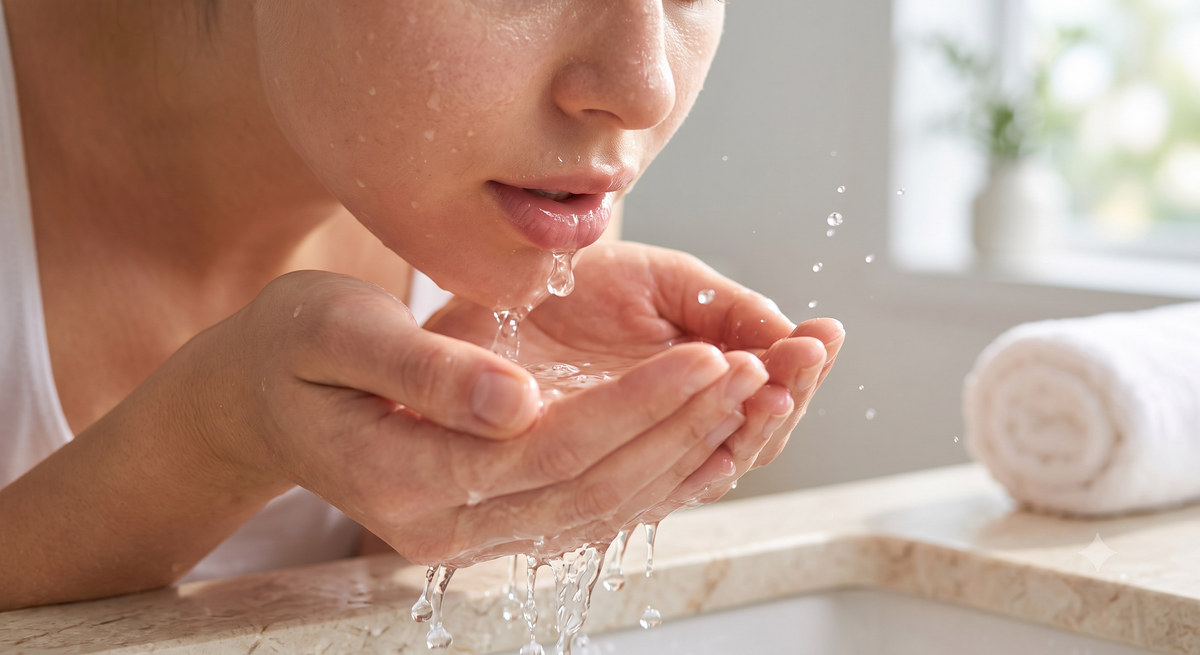
Top moisturizing face washes for dry and mature skin in 2026 range from $10 to $56, with glycerin, ceramides, and hyaluronic acid as the key barrier-protecting ingredients to look for.
Best Moisturizing Face Washes for Dry and Mature Skin (2026): How to Choose a Cleanser That Nourishes Without Stripping
A moisturizing face wash is a cleanser formulated with humectants, emollients, or barrier-supporting actives — such as glycerin, hyaluronic acid, ceramides, or squalane — that remove impurities without depleting the skin's natural moisture barrier. For dry and mature skin, where oil production is already reduced and the barrier is more vulnerable, this distinction isn't cosmetic, it's functional.
The best options in 2026 span a wide price range, from the $10 Vanicream Gentle Facial Cleanser to the $56 Elemis Nourishing Omega Rich Cleansing Oil, and they share a common philosophy: the goal is clean skin, not "squeaky-clean" skin, as board-certified dermatologist Dr. Kseniya Kobets told Allure.
Here's how the top-recommended picks compare across the most important buying criteria:
| Product | Price | Key Hydrating Ingredients | Texture | Fragrance-Free | Best For |
|---|---|---|---|---|---|
| Prequel Gleanser | $18 | Glycerin (50%), oat extract, aloe | Creamy, low-foam | Yes | All skin types, sensitive skin |
| CeraVe Hydrating Cream-to-Foam Cleanser | $12–$19 | Glycerin, hyaluronic acid, ceramides | Cream-to-foam | Yes | Normal to dry skin |
| Avène Tolérance Foaming Facial Cleanser | $20 | Avène Thermal Spring Water | Soft foam | Yes | Redness, reactive skin |
| Vanicream Gentle Facial Cleanser | $10 | Glycerin, coco-glucoside | Foaming gel | Yes | Mature, sensitive, over-50 skin |
| Dermalogica Intensive Moisture Cleanser | $49–$73 | Ceramide NP, coconut oil, murumuru seed butter, shea butter | Creamy | No (contains citrus oils) | Dry, depleted, dull skin |
| Elemis Nourishing Omega Rich Cleansing Oil | $56 | Omega-rich plant oils | Cleansing oil | No | Makeup removal, very dry skin |
What makes a face wash "moisturizing" — and why does it matter for dry skin?
A moisturizing face wash actively delivers or preserves hydration during the cleansing step, rather than simply removing dirt and leaving skin to fend for itself. This matters because conventional cleansers — particularly those with sulfates like sodium lauryl sulfate — can strip the skin's natural lipid barrier, producing that tight, uncomfortable feeling after washing.
For dry skin, this stripping effect is compounded by the fact that the skin already underproduces sebum. Board-certified dermatologist Dr. Hope Mitchell, founder of Mitchell Dermatology, advises that people with dry skin should avoid products containing alcohol, artificial fragrances, and harsh chemicals like sulfates and parabens, as these can trigger inflammation and worsen barrier dysfunction.
For mature skin specifically, the stakes are higher. As skin ages, ceramide production declines, the skin's ability to retain water decreases, and the barrier becomes more permeable. A cleanser that strips even a small amount of natural oil from mature skin can leave it visibly drier, more prone to fine lines, and more reactive to subsequent products.
The solution isn't to skip cleansing — it's to choose the right formula. Look for:
- Humectants like glycerin and hyaluronic acid, which draw water into the skin
- Emollients like squalane, shea butter, and plant oils, which soften and smooth
- Barrier-supporting actives like ceramides and fatty acids, which reinforce the skin's protective lipid layer
- Gentle surfactants like coco-glucoside and sodium cocoyl isethionate, which cleanse without over-stripping
The American Academy of Dermatology notes that using cleansers with hydrating ingredients like ceramides, glycerin, and hyaluronic acid can help strengthen the skin barrier and prevent further moisture loss.
Which moisturizing face wash is best overall in 2026?
Allure's 2026 Best of Beauty Award winner for moisturizing face washes is the Prequel Gleanser ($18), and the reasoning is hard to argue with. The name is a portmanteau of "glycerin" and "cleanser," and it earns that branding: glycerin makes up a full 50% of the formula, making it one of the most humectant-dense cleansers on the market.
"Glycerin gets underestimated, but it's an excellent humectant, meaning it attracts water and helps the skin hold onto it," Dr. Kobets told Allure. The formula also includes oat extract and aloe for additional soothing benefits, making it a strong choice when skin is feeling reactive or irritated.
One honest caveat: this cleanser produces minimal lather. If foam is your psychological signal that your face is truly clean, the Gleanser may feel underwhelming. For dry and mature skin, though, that low-foam profile is a feature — less foam typically means fewer harsh surfactants.
Allure beauty director Sarah Kinonen, who uses it as a full-body cleanser twice daily, notes it's fragrance-free and gentle enough for her sensitive, eczema-prone skin — a meaningful real-world endorsement for anyone with reactive skin.
What's the best drugstore moisturizing face wash for dry skin?
The CeraVe Hydrating Cream-to-Foam Cleanser ($12–$19) is the consensus drugstore pick across multiple expert roundups in 2026, and it earns that status through ingredient depth rather than just price accessibility.
The formula contains three essential ceramides alongside glycerin and hyaluronic acid — a combination that addresses hydration from multiple angles simultaneously. Ceramides are lipid molecules that make up roughly 50% of the skin barrier's composition; replenishing them topically helps restore the barrier's ability to retain moisture and resist environmental stressors.
Board-certified dermatologist Dr. Nazanin Saedi told Allure the formula "includes ceramides to help support the skin barrier as well as humectants to help pull hydration into the skin." Dr. Kobets called it "the best of both worlds" — the rich comfort of a cream cleanser that transforms into a soft foam as you work it in, giving a more thorough rinse than a pure cream while still being gentler than a traditional foaming wash.
Six of the dermatologists consulted by The Strategist independently named CeraVe's hydrating cleanser line as a top option for dry skin. Dr. Marisa Garshick specifically praised the "creamy consistency, which will leave dry skin feeling nourished and hydrated," and noted that non-foaming or low-foam formulas are less likely to strip the skin than traditional foaming cleansers.
CeraVe's full cleanser range is developed with dermatologists and uses the brand's proprietary MVE (MultiVesicular Emulsion) delivery technology, which releases moisturizing ingredients gradually over time rather than all at once. The CeraVe India product page describes this as ensuring "your skin receives a steady stream of nourishment and the skin's natural barrier is restored."
Is a $10 face wash actually good enough for mature, dry skin?
Yes — and the Vanicream Gentle Facial Cleanser ($10) is the clearest proof of that. Prevention's beauty writer Gina Way, who describes herself as having over-50, dry, and sensitive skin, called it "useful" after discovering it through a dermatologist sample.
The formula is built around glycerin as its second ingredient (after water), with coconut-derived surfactants — coco-glucoside and sodium cocoyl glycinate — that create a satisfying lather without the stripping effect of sulfate-based alternatives. It's free of fragrance, dyes, parabens, and other common irritants, making it one of the cleanest formulas available at any price point.
What's notable about the Vanicream story is that it resonated equally with a colleague in her mid-30s with normal-but-dry skin. That cross-generational appeal speaks to the formula's versatility: it's not just for mature skin, but it's particularly well-suited to it because it removes residue without compromising the barrier.
For those who prefer a foaming cleanser — and Way is explicit that non-foaming formulas can feel like washing with body lotion — Vanicream delivers genuine lather alongside genuine gentleness. That combination is harder to find than it sounds at the $10 price point.
What's the best moisturizing face wash for skin with redness or reactivity?
The Avène Tolérance Foaming Facial Cleanser ($20) is Allure's pick for redness-prone skin, formulated around Avène's signature Thermal Spring Water — a mineral-rich ingredient with documented soothing properties that has been used in dermatological contexts for decades.
For skin that reacts to almost everything, the Tolérance line's philosophy is minimalism: fewer ingredients means fewer potential triggers. The formula is designed to be as inert as possible while still cleansing effectively, which makes it a strong choice for those with rosacea, perioral dermatitis, or contact dermatitis alongside dryness.
If your dry skin also tends toward sensitivity or visible redness, this is worth prioritizing over a formula with a longer — even if well-intentioned — ingredient list.
When should you use a cleansing oil instead of a face wash?
Cleansing oils are oil-based formulas that dissolve makeup, sunscreen, and sebum through the "like dissolves like" principle, then emulsify with water to rinse clean. They're particularly effective for dry and mature skin because they add lipids to the skin during the cleansing step rather than removing them.
The Elemis Nourishing Omega Rich Cleansing Oil ($56) is Allure's pick for makeup removal, especially well-suited to those who wear heavy or waterproof makeup or SPF. Omega-rich plant oils — the kind that make up this formula — are structurally similar to the skin's own sebum, which is part of why they cleanse effectively without disrupting the barrier.
The trade-off is price and, for some users, the sensation of oil on the skin. Those who prefer a water-based feel may find a cream-to-foam cleanser like CeraVe's more intuitive. But for very dry or mature skin that struggles with tightness after any water-based cleanser, a cleansing oil used as a first step in a double-cleanse routine can be transformative.
The double-cleanse approach — an oil-based cleanser followed by a gentle water-based cleanser — is a method Prevention's Gina Way also uses for her mature, dry skin, pairing a micellar water first with Vanicream as the second step.
What premium options exist for very dry or depleted skin?
The Dermalogica Intensive Moisture Cleanser ($49–$73) sits at the premium end of the spectrum and is formulated specifically for dry, depleted, and dull skin. Its BioReplenish Complex combines ceramide NP, phytosterols, and lipid-rich plant butters — including murumuru seed butter, shea butter, and coconut oil — to actively nourish the skin during cleansing rather than simply avoiding damage.
Dermalogica describes the formula as helping to "minimize damage of vital proteins and lipids that defend against dryness," with invigorating extracts of citrus, palmarosa, and jasmine to refresh tired skin. It's available in two sizes (5.1 oz and 10 oz) and carries a 4.6-star rating from nearly 2,000 reviews on Ulta, where it's also available.
One honest note: unlike the other cleansers in this guide, the Dermalogica formula does contain fragrant essential oils (jasmine, citrus, palmarosa). For most dry skin types this is fine, but those with reactive or rosacea-prone skin may want to patch-test first or opt for the fragrance-free alternatives above.
What ingredients should you look for — and avoid — in a moisturizing face wash?
Look for:
- Glycerin: The most well-researched humectant in skincare. It draws water from the environment and deeper skin layers to the surface. The Prequel Gleanser's 50% glycerin concentration is unusually high; most cleansers contain 1–5%.
- Hyaluronic acid: Another humectant, capable of holding up to 1,000 times its weight in water. Effective in cleansers even though it rinses off, because it provides temporary surface hydration.
- Ceramides: Lipid molecules that are a structural component of the skin barrier. Board-certified dermatologist Dr. Davin Lim told The Strategist that emollients including ceramides "will help prevent your skin from losing moisture."
- Squalane: A lightweight, stable emollient derived from sugarcane or olives that mimics the skin's own squalene.
- Oat extract / colloidal oatmeal: Clinically recognized for soothing inflammation and supporting the barrier, particularly for eczema-prone or reactive skin.
- Gentle surfactants: Coco-glucoside, sodium cocoyl isethionate, sodium lauroyl glutamate — all effective cleansers that are significantly milder than sulfates.
Avoid (for dry and mature skin):
- Sodium lauryl sulfate (SLS) and sodium laureth sulfate (SLES): Effective but harsh surfactants that strip natural oils and can damage the barrier with repeated use.
- Alcohol (denatured or SD alcohol): Drying and irritating, especially for mature skin.
- Artificial fragrances: A leading cause of contact dermatitis. Dr. Mitchell specifically flags these as triggers for inflammation in dry skin.
- High concentrations of exfoliating acids: AHAs and BHAs are valuable in serums and treatments, but in a daily cleanser they can be too abrasive for already-compromised dry skin.
- Parabens: While the evidence on parabens is nuanced, many dry and sensitive skin formulas exclude them as a precaution, and the best options in this guide are paraben-free.
How often should you wash your face if you have dry skin?
The standard recommendation for dry and mature skin is once daily — typically in the evening, to remove the day's sunscreen, makeup, pollution, and sebum. In the morning, many dermatologists and dry-skin sufferers (including Prevention's Gina Way) simply rinse with cool water rather than cleansing again, preserving the natural oils that accumulated overnight.
If you exercise heavily or sweat significantly, a second gentle cleanse after exercise is reasonable, but using the most hydrating, low-stripping formula you can find becomes even more important when cleansing frequency increases.
The American Academy of Dermatology's general guidance is to wash your face no more than twice daily and after sweating heavily — advice that aligns with what most dermatologists quoted in this guide recommend for dry skin specifically.
Can a facial cleanser actually moisturize your skin?
This is a fair question, because most cleansers rinse off — taking some of their active ingredients with them. The honest answer: a cleanser can meaningfully support hydration, but it can't replace a moisturizer.
What a well-formulated moisturizing cleanser can do:
- Preserve the barrier by using gentle surfactants that don't strip natural lipids
- Deliver temporary surface hydration from humectants like glycerin and hyaluronic acid during the cleanse
- Leave a thin film of emollients (in cream or oil cleansers) that softens skin immediately post-rinse
- Improve absorption of the moisturizer, serum, or treatment you apply afterward
What it cannot do is provide the sustained, occlusive moisture retention of a dedicated moisturizer. Think of the cleanser as the foundation of your routine — it determines whether everything that follows works optimally. A stripping cleanser can undermine even the best moisturizer; a nourishing cleanser makes the whole routine more effective.
Board-certified dermatologist Dr. Stacey Pilkington put it plainly in her comments to Everyday Health: "A good face cleanser should clean thoroughly without stripping the skin of its natural moisture barrier... providing a clean slate without irritation or tightness, making it a staple in a well-rounded, skin-supportive regimen."
How do you build a complete routine around a moisturizing face wash?
A moisturizing face wash is the first active step in a skin-supportive routine — not the only one. For dry and mature skin, the sequence matters:
- Cleanse with a hydrating, low-stripping formula (the products in this guide)
- Tone (optional) with an alcohol-free, hydrating toner — options like La Roche-Posay Toleriane Hydrating Gentle Cleanser or hyaluronic acid-based toners from brands like ANUA and Beekman 1802 are widely available at Ulta
- Treat with a targeted serum — for dry and mature skin, a plumping or collagen-boosting serum can address both hydration and firmness concerns simultaneously
- Moisturize with a cream or balm that includes occlusives (petrolatum, beeswax, or dimethicone) to seal in the hydration delivered by earlier steps
- Protect in the morning with a broad-spectrum SPF — UV exposure accelerates the moisture barrier degradation that makes dry and mature skin more vulnerable
For those who also deal with scalp dryness alongside facial dryness, the same ingredient logic applies: gentle surfactants, humectants, and barrier-supporting actives are the framework for any nourishing cleansing product, whether for face or scalp.
What's the bottom line on choosing a moisturizing face wash in 2026?
The market in 2026 is genuinely well-stocked with effective options at every price point. The $10 Vanicream and the $18 Prequel Gleanser outperform many luxury cleansers on the criteria that matter most for dry and mature skin: gentle surfactants, meaningful humectant concentrations, and fragrance-free formulas.
For those prioritizing budget, the CeraVe Hydrating Cream-to-Foam Cleanser ($12–$19) remains the most dermatologist-endorsed drugstore option, with ceramides, hyaluronic acid, and glycerin working together in a formula validated across multiple independent expert roundups.
Redness or reactivity alongside dryness? The Avène Tolérance Foaming Facial Cleanser ($20) is the most targeted choice. Heavy makeup or SPF and very dry skin? A cleansing oil like the Elemis ($56) is worth the investment.
What all the best options share: no sulfates, no artificial fragrance, and a commitment to leaving the skin barrier intact. Those three criteria alone will eliminate most of the cleansers that cause problems for dry and mature skin — and narrow your search to the formulas that genuinely nourish rather than strip.
Sources
- 6 Best Moisturizing Face Washes to Nourish Dry, Mature Skin | Allure
- CeraVe Face Wash & Face Cleanser For Hydrating Skin | CeraVe India
- 12 Best Face Washes for Dry Skin | The Strategist
- 13 Face Washes for Your Dry Skin, Tested and Recommended in 2026 | Everyday Health
- Intensive Moisture Cleanser For Dry Skin | Dermalogica
- The $10 Face Wash That Saved My Dry, Sensitive Skin After 50 | Prevention
- Best Skin Care Routine for Dry Skin 2026 | Ulta Beauty
- Best Plumping & Collagen-Boosting Serums: How to Choose the Right Formula for Your Skin | Skin and Hair Insight